



The News
President Donald Trump has spent most of his second term bending congressional Republicans to his will. That’s not going to happen with Spirit Airlines.
Less than a week after the president confirmed officials are “thinking about” buying a stake in the struggling carrier, nearly a dozen GOP lawmakers told Semafor they either opposed the plan or harbored significant doubts about it. Critics of the idea ranged from moderates to conservatives and from rank-and-file lawmakers to party leaders.
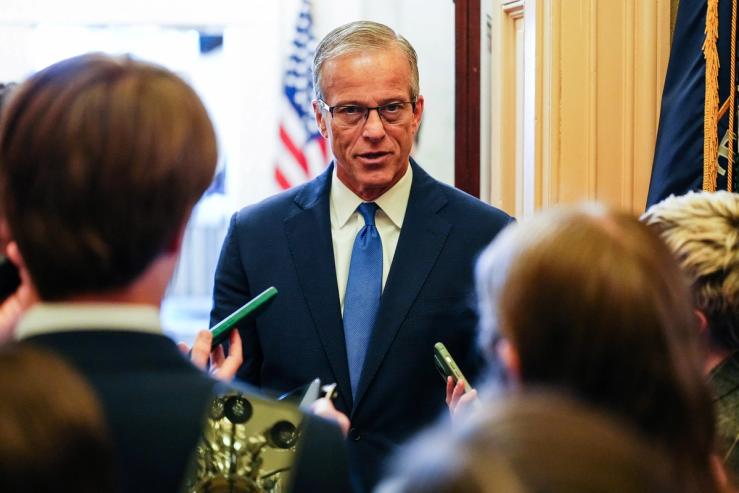
“This would be a really bad idea. I don’t think you want the government owning airlines,” Senate Majority Leader John Thune told Semafor Tuesday, adding that he would “share [that] view” with the Trump administration if officials ask.
It’s a strikingly unified front for congressional Republicans who break publicly with the president only on rare occasions, like when he suggested importing beef from Argentina last year. It took most GOP lawmakers far longer to signal their discomfort with the Justice Department’s investigation into Federal Reserve Chair Jerome Powell — and when they at last did, they were often more circumspect.
The Spirit proposal also marks a shift from Trump’s past bids for government equity in also-struggling companies like Intel and Lithium Americas, which drew quieter pushback. This time, the opposition was swift and nearly unanimous.
“It is a terrible idea; corporate bailouts are a mistake,” Senate Commerce Chair Ted Cruz, R-Texas, told Semafor. “The federal government doesn’t know a damn thing about running a budget airline — so I hope that this ill-conceived idea is put back on the shelf.”
A White House official told Semafor that the criticism is “premature” since “the Trump administration has not released any concrete plan on potential federal assistance for Spirit Airlines.”
The Spirit bid for a Trump lifeline — and a counterproposal from another group of discount airlines — is the latest wedge between the GOP’s MAGA-friendly economic populists and its more traditional free-market wing. Republicans in the latter camp have also been frustrated with the Pentagon and Commerce Department’s purchases of stakes in other firms officials say are crucial to the US supply chain.
“It’s horsesh*t,” Sen. Thom Tillis, R-N.C., told Semafor of the Spirit talks. “My God: 10% stake in Intel, 5 to 10% stakes in three or four mining companies, ‘golden share’ of US Steel — and now a half-a-billion dollar stake in Spirit Airlines.”
But even the president’s populist allies voiced potential concerns, including over Spirit’s performance record. Among them: Sen. Josh Hawley, R-Mo., who on Tuesday called the Spirit proposal “not my favorite thing in the world.”
“I don’t really want to help Spirit,” Hawley said. “Maybe I don’t get it. But Spirit is one of the worst in terms of how they treat their customers.”
Spirit did not immediately return a request for comment.

Know More
Transportation Secretary Sean Duffy said Monday that Congress might need to sign off on the other airlines’ counterproposal, which would see the US government spend $2.5 billion to help a coalition of carriers also facing higher fuel costs from the Iran war.
“Why Spirit above everybody else?” Sen. Lisa Murkowski, R-Alaska, told Semafor. “I don’t get it, actually.”
It’s so far unclear whether Duffy thinks lawmakers would also need to greenlight the Spirit deal, which he’s also expressed concerns about. Either way, the preemptive resistance from a wide swath of conservatives could make it extraordinarily difficult for either plan to materialize.
“Right now, we can’t pass gas around here, much less a bill doing a Spirit deal,” said Sen. John Kennedy, R-La., who added that Commerce Secretary Howard “Lutnick is giving the president incredibly bad advice.”
The Commerce Department did not comment.
For many congressional Republicans who are still upset by previous government interventions in the private sector, the proposed airline takeover would be the latest affront — not least because it would mean taxpayer dollars propping up an otherwise failed business model. Kennedy and others questioned why the Trump administration would pursue a deal that private-sector players have rejected.
“Where does it end? I mean, next thing you know, we’ll be bailing out football teams. I’m not a big fan of it,” said Rep. Troy Nehls, R-Texas, a member of the Transportation and Infrastructure Committee.
Spirit is currently struggling to emerge from its second bankruptcy after the Biden administration shut down a proposed merger with JetBlue. Even its GOP critics have joined the Trump administration in pointing the finger at the former president.
“If they had let that go through, then we wouldn’t be looking at a bailout right now,” Rep. Thomas Massie, R-Ky., who chaired House Judiciary’s antitrust subpanel during the attempted merger, told Semafor.
Still, Massie made clear that he’s opposed to the latest Spirit proposal, calling it “rewarding failure.”
“What happens if they go bankrupt is, somebody buys their planes; somebody takes over their leases at the gates; and somebody hires their employees and their pilots who are trained,” he added. “But the shareholders who failed to address a bad business model lose out — and they should.”
Even lawmakers who work closely with airlines are reluctant to bless the government taking over part of Spirit. Sen. Jerry Moran, R-Kan., the Commerce Committee’s aviation subpanel chair, said he’s been coordinating with the airline industry but is “concerned about further government involvement in other businesses.
“We don’t want to lose a carrier. But it just philosophically troubles me about this endeavor to put money into a private corporation,” Moran said.

Room for Disagreement
GOP Sen. Bernie Moreno, a Spirit gold-level frequent flyer, said his family has frequently used the airline to get between his home state of Ohio and Florida.
Moreno said he didn’t think “it’s unreasonable to have a conversation” about Spirit’s future, particularly given the potential job losses Trump has cited.
“When one of these budget airlines leaves a market, all of a sudden … airfares go up,” Moreno told Semafor. “And I think the president is concerned about both of those things.”

Eleanor, Burgess, and Nicholas’ View
The Spirit proposal is easy for Republicans to bash: It’s taxpayer dollars propping up a failed business that doesn’t affect national security like the other firms the Trump administration has purchased a stake in.
And though that may not have been a dealbreaker for populists like Hawley, Spirit’s customer-service reputation isn’t helping them: The airline simply doesn’t conjure the same American pride as US Steel or Intel.
Trump, who suggested last week the US government could eventually sell its stake for a profit, could still push through the deal on his own. But it’s looking like the type of intraparty throwdown the administration may want to avoid just months before the midterms.

Notable
- Two Spirit Airlines creditor groups have signaled they support the bailout plan, the Financial Times reported.