



The News
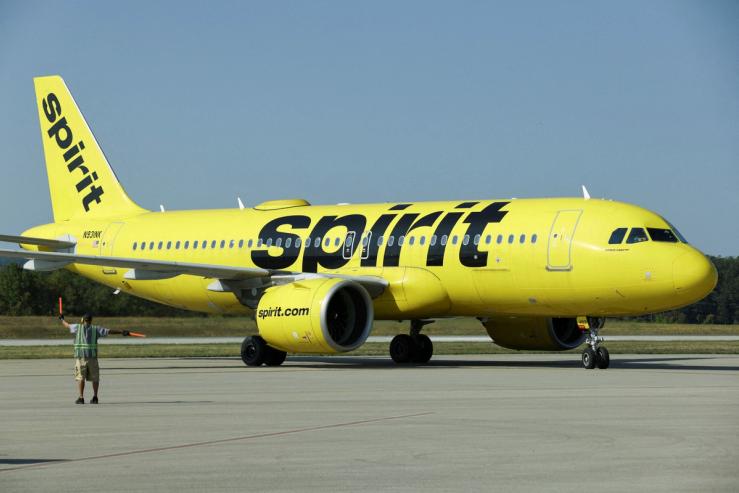
Spirit is on the verge of a $500 million bailout from the US government, according to people familiar with the matter.
The talks are advanced and a deal could be announced as early as Thursday, one of the people said, adding that the structure would likely result in the US government being positioned at the top of the debt stack.
On a contentious conference call Wednesday, Spirit’s lawyers at Davis Polk briefed the company’s bondholders on the terms, which contained no details on where the government’s money would come from, one of the people said. While some of the creditors may be willing to work with the government on a package, the creditor’s lawyers at Akin Gump said on the call that they found the proposal unacceptable — a government-sanctioned “cram-down” — and that they’d fight it. A spokesperson for the bondholders declined to comment.
The US would have the option but not the obligation to purchase as much as 90% of Spirit’s outstanding shares, that person said, a scenario first reported by Bloomberg.
The potential deal follows President Donald Trump’s comments Tuesday that he would “love somebody to buy Spirit. It’s 14,000 jobs.” The process, first reported by the Wall Street Journal, is being led by the Departments of Commerce and Transportation.
“Maybe the federal government should help that one out,” he said in a CNBC interview. The struggling low-cost airline has filed for bankruptcy protection twice, but has been buffeted by surging fuel costs and tepid customer demand for its products, even as other airlines that have skewed to more premium and business travels have seen their shares — and profits — surge.
Spirit’s troubles date back to the Biden administration, when a planned merger with JetBlue was blocked by antitrust regulators. Both airlines are now in dire straits, although Spirit is faring far worse: JetBlue has considered potential merger partners, should it have to sell itself, Semafor reported, although its CEO has ruled out a bankruptcy filing in a message to employees.
In this article:

Know More
“Spirit Airlines would be on a much firmer financial footing had the Biden administration not recklessly blocked the airline’s merger with JetBlue,” White House spokesperson Kush Desai told Semafor. “The Trump administration continues to monitor the situation and overall health of the U.S. aviation industry that millions of Americans rely on every day for essential travel and their livelihoods.”
The potential bailout has already stirred questions from lawmakers. “I have an open mind on how we work with Spirit, because it’s an important company,” Sen. John Hoeven, R-N.D., told Semafor. “Now, anytime the government gets involved with any kind of investment in a private company, that raises concerns in terms of how you do it and what’s going on. So that’s something I’d have to look at.”
Another possible skeptic? Transportation Secretary Sean Duffy, who told Reuters Tuesday that “what we don’t want to do is put good money after bad, and there’s been a lot of money thrown at Spirit, and they haven’t found their way into profitability.”
The final contours of the deal, as well as next steps, remain unclear. A spokesperson for Spirit declined to comment.

Rohan’s view
The potential Spirit deal stands in stark contrast with the US government’s 10% stake in Intel, which was a good business move for Americans. Getting involved with Spirit is not.
Intel’s government infusion was a great deal for Americans, Commerce Secretary Howard Lutnick said at Semafor World Economy last week. For one, it bolstered America’s domestic chipmaking capabilities at a time the US is desperately trying to keep China at bay. It also sent a strong message to Wall Street that the US wouldn’t let Intel fail, providing cover for other investors to pile into the stock and for companies to sign partnership agreements with the chipmaker.
It was a happy convergence of partisan, economic, and policy interests — that also came with some ROI for the US government.
“Why don’t we get something for it?” Lutnick said of the decision to transform Intel’s $10 billion grant into an investment, which served as a template for other transactions in rare earth and defense industries.
Core to national security, though, Spirit is not. Its outdated business model, exorbitant levels of debt, and years of general mismanagement is unloved by investors and out of step with what the market demands today — more premium seating targeting affluent and business travelers.
The Trump administration is driven by a desire to score an affordability win and sell a story about saving the American people money at a time when Trump’s approval ratings have crumbled.
But it’s making the same mistake the Biden administration made when it blocked the merger of JetBlue and Spirit in the name of maintaining competition among ultra low-cost carriers and keeping prices down. At this point Spirit is so diminished, and such a small part of the airline industry, that keeping the airline alive will have little impact on airline prices.
Says United CEO Scott Kirby: “Spirit was going to fail because the business model doesn’t work.”
And since Spirit’s problems can’t be solved by a $500 million infusion — it’s contending with an unwieldy debt load, surging fuel costs, and customer dissatisfaction — it will just end up costing the American taxpayer more money.

Room for Disagreement
Proponents for keeping Spirit alive say that every bit helps to keep prices low for American consumers, even with the meager 3% of the market it currently commands.
“Spirit’s troubles are not good for the traveling public, both because Spirit itself may disappear, and because the discipline it imposes on the other carriers will disappear as well,” one economist told NPR.