




The News
South African miner Sibanye-Stillwater has warned that the European Union’s “strategic project” label for its $870 million lithium operation falls short of necessary protections to survive global price shocks leaving Europe’s nascent lithium supply chain exposed to aggressive competition from low-cost Chinese refiners.
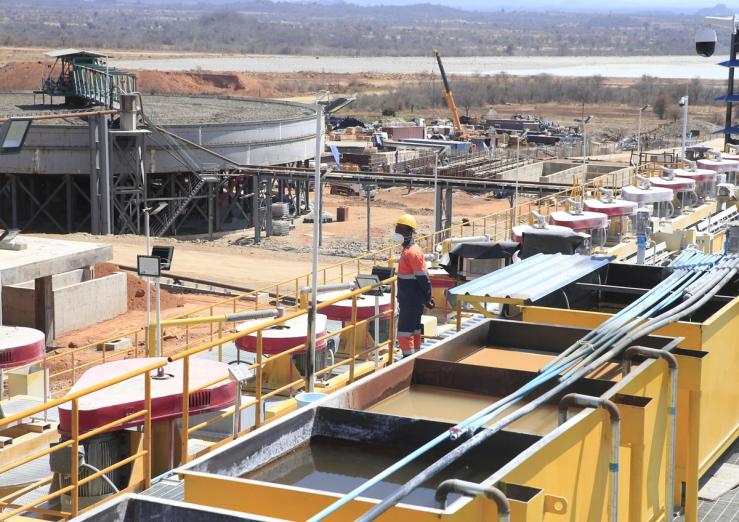
Sibanye, a global top three platinum metals (PGM) miner, is currently developing the Keliber project in Finland, a mine intended to produce battery-grade lithium hydroxide from local ore. It is due to come on line in the coming months, some five years after the Johannesburg-based miner first bought into Keliber.
But the EU badge has been disappointing for Sibanye’s CEO Richard Stewart, who told Semafor that the tag does not guarantee a market or protect it from predatory pricing. Keliber still faces the prospects that low-cost Chinese imports could undercut its commercial potential unless Brussels accepts some form of demand-side support or risk-sharing.
Stewart’s comments are likely to put European policymakers in the corner, where they would have to wrestle with remaining open to global trade or accept measures that guarantee a minimum share of local demand for domestic producers. One option under discussion in Brussels is a form of mandatory local use — effectively reserving a portion of European lithium demand for local processed material, Stewart said. Such a rule would create a floor under prices for domestic producers during the fragile scale-up period, he said.

Know More
The project has been positioned as one of Europe’s first domestic lithium refining operations. For Sibanye, it will help move the company out of its historic dependence on PGMS and South African operating risk into a future-facing energy transition metal.
Sibanye sits alongside some of the biggest names in a list of 47 projects formally recognized as “strategic projects” under the EU’s Critical Raw Materials Act a year ago. The cohort includes industrial champions such as BASF — one of Europe’s most important players in the battery metals value chain — and Anglo-Australian mining giant Rio Tinto.
Stewart said the EU process — which identified projects deemed strategic to securing the European supply chain — was “useful” for focusing attention and ensuring teams are available to clear avoidable hang-ups, but he was blunt about its challenges: “It’s of limited use. It’s nice to get some funding, but it’s not free money.” In his experience, prioritized permitting did not materially accelerate delivery.
At the heart of Sibanye’s argument is market structure. China remains dominant across much of the battery-metal supply chain — from refining to production and cell manufacturing — and that scale gives Chinese producers the ability to exert downward pressure on prices.
For a high-cost, early stage European refinery, a deliberate price squeeze could be damaging before the plant ever reaches full scale. “We need to know that if that happens, you’re going to protect us… we’re not asking for anything special,” Stewart said.

Step Back
Countries around the world are scrambling to secure lithium supply — the linchpin of electrification, energy storage, and industrial competitiveness — in a bid to avoid supply shocks, protect jobs, and ensure that their clean energy transitions are held hostage by a few global players.
While ore deposits are geographically dispersed, the processing and refining capacity that makes raw material into battery-grade chemicals is heavily concentrated in a handful of countries — making countries vulnerable to price supply shock, export controls, or deliberate price undercutting by dominant producers.
Stewart pointed to the scale of many Chinese producers as the central commercial challenge. Large, low-cost refiners can exert downward pressure on prices in a way that a single, high-cost European plant cannot easily withstand during its fragile ramp up. That dynamic, he said, is why Keliber’s strategic tag does not itself make the project commercially secure.
Even projects backed by industrial heavyweights have not been immune. Rio Tinto’s $3 billion Jadar lithium project in Serbia was mothballed after permitting setbacks, raising questions about whether the EU badge is enough to override local politics and market cycles.

Tiisetso’s view
Sibanye’s Keliber project may have won an EU “strategic project” tag, but that badge risks doing more harm than good. Political recognition brings attention, but it also tethers a commercial miner to shifting policy priorities and public scrutiny — all of which can raise execution and operational risks. Brussels’ favors can be rescinded, reinterpreted, or tied to conditions that complicate operations. The strategic tag is a spotlight, and spotlights burn as well as illuminate.
If Europe wants a homegrown lithium industry, it needs to offer clear rules and short term guarantees that companies can plan around. Not just a strategic badge that leaves them exposed when politics shifts. For Sibanye, the label brings attention, for investors, it adds a layer of uncertainty. Policy makers need to accept that these trade-offs are already in play.

Room for Disagreement
The European Investment Bank, which finances projects that advance the EU’s policy goals, has already led a $172 million loan, part of the broader $575 million financing package for Keliber, the first time the EIB has backed the mining of critical raw material in the EU. That funding signals institutional willingness to underwrite projects that are embedded in the EU’s industrial goals.
Sibanye’s European head Mika Seitgovirta has said the green financing package “provides cost effective funding” to complete the development of the project.
Other supporters of the strategic tag point to political cover. The Critical Raw Materials Act’s projects “will benefit from coordinated support” by the European Commission, member states, and financial institutions to become operational, regarding access to finance and support to “connect to relevant off-takers,” according to the Commission.

Notable
- Several African countries have adopted critical-minerals frameworks, but their approaches vary widely and only a handful have formal, codified lists comparable to the EU or the US.