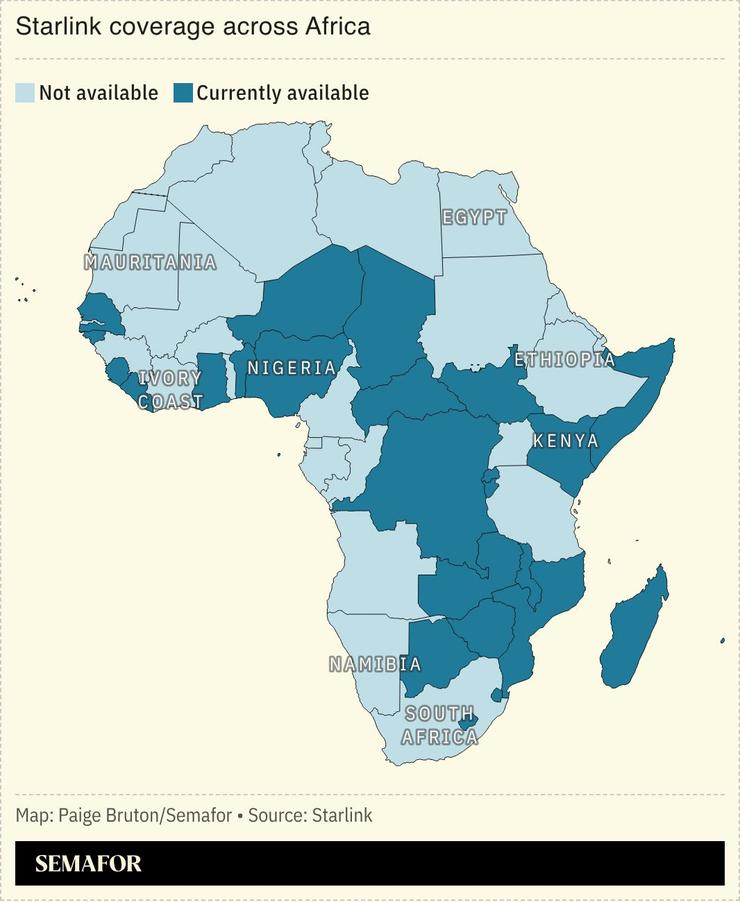
Namibia blocked Elon Musk’s Starlink from entering its telecoms market, enforcing local ownership rules that have become a point of contention for foreign firms operating in Africa.
The pushback underscores a widening divide of values between Musk and some African governments that are tying ownership rules to post-liberation efforts to broaden economic opportunity.
Several African countries have relaxed regulations around ownership to allow access to Starlink, which has set up operations in nearly 20 countries across the continent. Namibia’s hard-line approach makes South Africa’s look moderate, by comparison: Pretoria has created a formal pathway for equity equivalents, allowing foreign operators to propose alternative contributions in place of direct shareholding — a move that has triggered sharp criticism across political, labor, and policy circles.