




Liz’s view
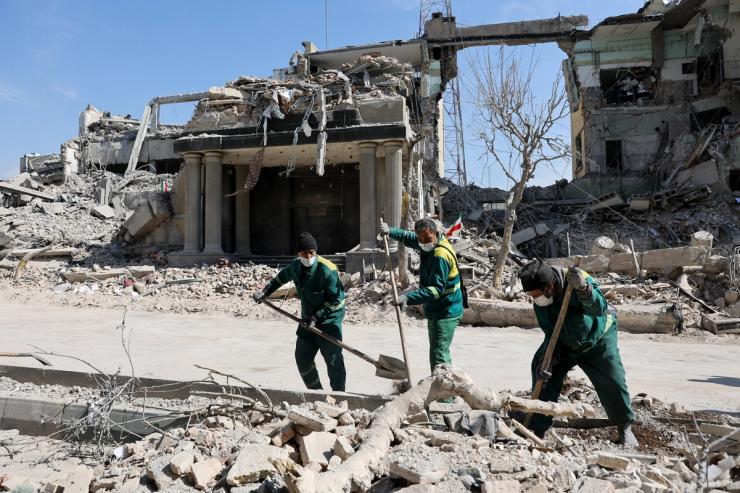
It’s too early to call a turning point for Iran, Venezuela, Ukraine, Gaza or, even further out the neocon wishlist, Cuba. But Wall Street is already thinking about the investment opportunities that could rise from the geopolitical rubble.
Admiral James Stavridis, a former NATO supreme allied commander who is now at investment giant Carlyle, compared the outlook for Iran and other conflict zones to the rebuilding of South Korea in the mid-20th century. “Go forward 50 years and it’s the ninth-largest economy in the world. That’s reconstruction,” he told me yesterday. “That could be [Iran], that could be Cuba, that could be Venezuela, that could be Ukraine. Those are investment opportunities that ought to be taken very seriously.”
The fundamentals are enticing: Iran’s educated population across a country as big as France, Germany, Spain, and the UK combined, Cuba’s mineral and agricultural prospects, Venezuela’s oil, Ukraine’s grain fields and tech sector.
The problem is that countries increasingly want their capital to stay put. President Donald Trump has made it clear he wants Wall Street investing at home. Saudi Arabia is directing more of its sovereign wealth toward domestic projects. The UK has been trying to pressure its pension funds to buy British stocks.
BlackRock CEO Larry Fink channeled this push in his annual letter to shareholders yesterday. “For decades, capital chased returns around the world — often without enough benefit to the people back home. Money should still move freely toward opportunity,” he wrote. “But it doesn’t mean countries can’t also do more to help channel capital into their own growth.”
US investors are spinning up patriotic investment plans, and corollaries are cropping up in the UK, Germany, and India. We talked to one of those investors, Andreessen Horowitz’s David Ulevitch, on a recent episode of our new show Compound Interest. He was hopeful that “America-first” capitalism will outlast Trump.
But over the long term, money chases returns. And the smartest money runs toward investments others are too squeamish to touch. A new asset class rising from the global rubble — call it “Extraction, Stability, and Growth,” or ESG, just spitballing here — will test the push toward country-first capitalism.

Notable
- Venezuela’s laws will need to change further to entice the investments required to restore the country’s past oil production capacity, Chevron CEO Mike Wirth said at CERAWeek.