




Liz’s view
The trouble at Blue Owl may be a blessing in disguise for the private credit industry, which has gone from Wall Street’s shiny toy to the dumping ground for its anxieties.
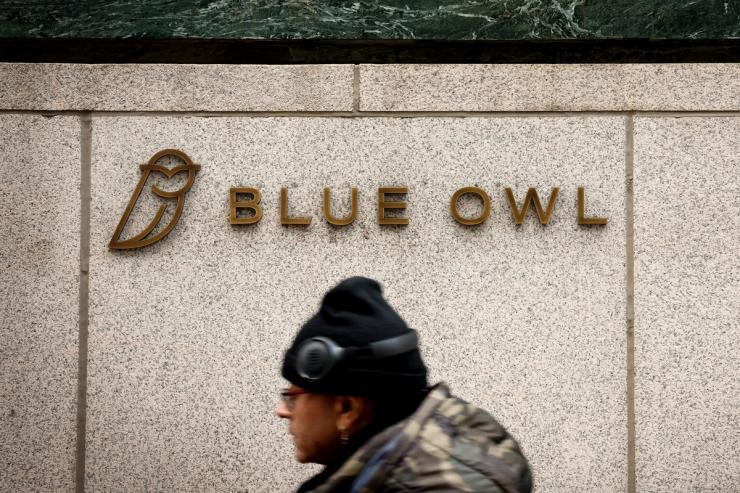
A quick recap: Blue Owl is the $300 billion poster child for private credit. Founded by alumni of Goldman Sachs, KKR, and Blackstone, it has tripled in size over the past four years and endured some growing pains.
Late last year, investors in one of its loan funds, known as OBDC II, got spooked and asked for their money back. Their withdrawal requests exceeded Blue Owl’s industry-standard limit of 5% per quarter. Last week, it sold $1.4 billion of loans at essentially face value to give investors 30% of their money back and said it would wind down the fund. This was, a bit unfairly, described as “halting redemptions.” This certainly wasn’t a proud day at 399 Park Ave., but it’s the sign of a good actor — Blue Owl could have slow-walked those withdrawals and collected fees for another year and a half.
But here’s the thing to keep in mind: If Blue Owl were a bank, it would already be out of business. Banks are vulnerability machines. They transform overnight deposits into decade-long loans, and once depositors lose confidence, the spiral is usually fatal. There’s a reason old banks built those cavernous marble lobbies — to prevent panic-inducing lines from spilling onto the street.
Private credit, for all the worries about what panic in the opaque market could do to the bigger financial system, does a better job than banks of matching the money it borrows to the money it lends. Banks turn overnight deposits into long-term loans. Private credit firms raise money with the promise that they’ll return it in five to seven years, then lend it out for about as long. Just 8% of Blue Owl’s money is, practically speaking, runnable.
The redemptions at Blue Owl was a kind of bank run, but the bank was tiny in the scheme of things. The firm is liquidating that bank without a death-spiral fire sale: It got 99.7 cents on the dollar for the loans it sold last week.
It likely sold its most pristine loans to keep that number high, leaving its remaining portfolio a little heavier on clunkers. (Here’s one, and you can look through every loan it owns and find a few more.) And you can question how honest private credit firms are about their marks. (We did!) But if you think private credit loans are toxic garbage, consider that before they lose money, the private equity underneath them will be wiped out. I don’t see a line of withdrawal requests at Blackstone’s retail buyout fund.
Credit quality is still a risk, but a slower-moving one: Silicon Valley Bank’s bad loans might eventually have eaten through its capital, but it was taken down by its panicky depositors before it had a chance to plug the hole in its balance sheet.
The episode should make private credit rethink its recent romance with retail investors, who reliably panic when given the chance. I suspect Blue Owl is done with mom and pop for a while. But it’s also proof that duration mismatch is a feature, not a bug, of banking — one that private credit has shown it can largely avoid.
In this article:

Room for Disagreement
That mismatch will get harder as private credit chase after retail money. The most common vehicle for mom-and-pop investors in private credit, known as BDCs, have grown from $127 billion in assets in 2020 to $451 billion last year, according to law firm Mayer Brown. And new “semi-liquid” fund structures are popping up all the time.
“Semi-liquid” is a misnomer, Carlyle CEO Harvey Schwartz told Semafor in December. “The industry would behoove itself to call [it] ‘sometimes not liquid at all.’”
If Blue Owl’s liquidity risk was manageable, it’s only because the run for the exits happened before it had built a bank too big to unwind in an orderly fashion.

Correction
OBDC II is a non-traded fund. A version of this column that appeared in the Semafor Business newsletter on Feb. 26 said it was publicly traded. Blue Owl does have publicly traded funds, but the fund in question is non-traded.