



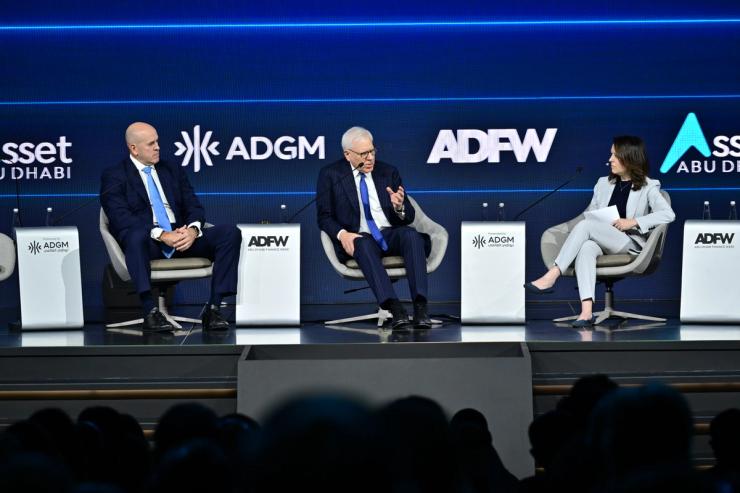

The Scene
As the private-equity world pushes to raise money from wealthy individuals, the CEO of one of its biggest firms has a bone to pick on word choice.
“Semi-liquid” — the catch-all term for funds that invest in non-tradable assets but occasionally open windows for retail investors to take money out — is a misnomer, Carlyle CEO Harvey Schwartz told Semafor’s Liz Hoffman at Abu Dhabi Finance Week. “The industry would behoove itself to call [it] ‘sometimes not liquid at all.’”
Less catchy on a prospectus, but a more accurate description of Wall Street’s latest gold rush: Taking the funds they’ve offered for decades to pensions, endowments, and governments — investors with the patience to ride out market cycles — and pitching them to individuals.
In the process, firms like Carlyle and Blackstone have added features to provide occasional but incomplete liquidity. Most funds allow investors to redeem quarterly but cap the total outflows at around 5% to avoid being forced sellers of illiquid assets — a recipe for losses. In a true run for the exits, it could take investors five years to get their money back and risk cascading firesales.

Know More
An early warning sign came in 2022, when investors in Blackstone’s giant nontraded property fund, BREIT, ran for the exits. The firm sold some assets, its clout and track record in real estate allowing it to command good prices. Redemptions quieted, and the industry resumed its growth.
Assets in those funds increased 60% between 2021 and the end of last year, according to Morningstar. That push is getting a boost from the Trump administration, which is opening up 401(k) accounts to investments beyond stocks and bonds.
Carlyle now has eight retail strategies, taking in about $3 billion every three months today, up from about $300 million when Schwartz became CEO in 2023. While in Abu Dhabi, Schwartz attended the Formula 1 Grand Prix to cheer on a driver whom Carlyle sponsors as a way to get its brand in front of global high rollers. Chasing a similar crowd, Blue Owl recently sponsored more than 100 players at the US Open tennis tournament.
“To describe these as liquid instruments like ETFs or stocks, that’s a complete misunderstanding,” Schwartz said. “We need to be very, very clear with all of our [distribution] partners … about the performance and the expectations.”

Notable
- One of the largest managers of such funds, Cliffwater, has built a business big enough to tempt Goldman Sachs to consider a takeover earlier this year.