


The staggering year began with a little-known Chinese startup called DeepSeek roiling the stock market. We saw Elon Musk break up with President Donald Trump and then get back together. Meta hit the AI reset button and redefined talent poaching. The US took a 10% stake in Intel and a cut of Nvidia’s sales to China. There were breakthroughs in quantum computing, AI-enabled biotech, and space flight. Astonishing amounts of money poured into AI and infrastructure.
In other words: tech is unpredictable. Whatever you’re guessing about the tech industry in 2026, it will likely undershoot our next crazy year. Nevertheless, we have done our best to look into the hazy crystal ball and give you our ideas on what the year will look like.
- 2026 will be the year of the deals
That includes acquisitions, private equity takeovers, IPOs, and SPACs. The “acquisition in disguise,” (à la Inflection, Adept, Character, and Groq) won’t be as necessary anymore, which will be welcome news for venture capitalists burned in the Biden-era crackdown.
While some of that antitrust regime continued under Trump, his administration will begin to loosen regulations to support the tech industry, which has already returned the favor to Trump.
2. Quantum will get presidential backing
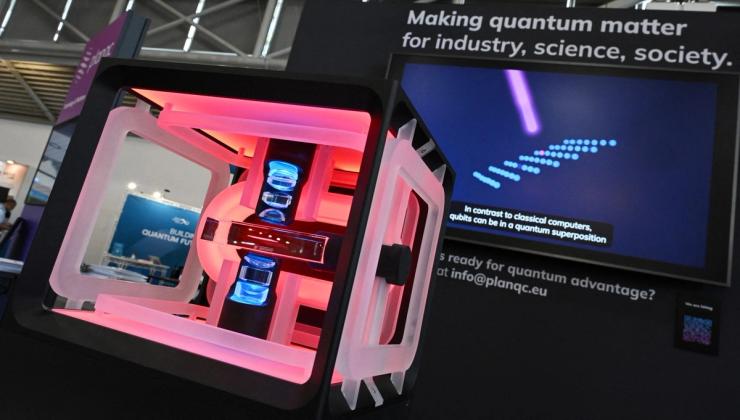
We’ve seen major breakthroughs in quantum computing over the last couple of years, and big tech CEOs have signaled the technology is becoming more like a medium-term ambition, rather than the “moonshot” technology it was for decades.
Dario Gil, undersecretary for science at the US Department of Energy, has already signaled that this is a presidential priority. In 2026, we’ll see an executive order aimed directly at quantum computing. The goal will be to beef up the national supply chain by removing any bottlenecks to progress. The Chinese are putting billions into the technology and the United States is at risk of losing its advantage.
Quantum will become part of Trump’s Genesis Mission, aimed at using AI to advance science, because scientists ultimately need the kind of data generated by quantum computers to fully utilize AI in science.
3. Anti-AI candidates won’t win
AI will be a major talking point in the midterms, where Republicans and Democrats agree more than they won’t. The China threat will be central to the conversation, and some Democrats will make AI safety, data center sprawl, and AI-related energy prices central to their campaigns. They’ll get a lot of media attention, and raise quite a bit of money — but fewer votes. This is still a country whose voters remain broadly optimistic about technology — and whose hyperscalers (and allies) will dump tens of millions of dollars into winning elections.
4. Data centers will become community spaces
As data center NIMBYism roils the US and becomes a political issue, tech companies will start investing in the curb appeal of facilities, making them more design-forward, replacing the traditional square-white-box look of data centers. The spaces won’t be reserved for server equipment alone, but sections of new builds will incorporate places for residents to gather, like community gardens, playgrounds, restaurants, and stores. The addition of community spaces will attempt to ease negative sentiment towards data centers, though facilities handling the most important information will remain secluded from the public. The physical security of such facilities will become a point of innovation to account for additional foot traffic near the technology, though cybersecurity remains the biggest threat. Simultaneously, we will see a PR push for data centers revolving around the economic value they bring to localities as a way to thwart political backlash.
5. Memory will become a huge issue
Reminiscent of the chip shortage that plagued many industries, from autos to consumer electronics, the AI-driven memory shortage will become a huge issue in 2026, prompting a renewed push to diversify supply chains to avoid economic disruptions and national security risks.
The AI industry has significantly boosted demand for memory in data centers and chips, which is causing price hikes in consumer products. Higher prices will create even more anti-AI sentiment, which could slow the rollout.
6. Autonomous driving will make headlines
Autonomous driving will have a big year, which could be a good thing or a bad thing. On the one hand, Waymo is expanding nationwide, and Tesla is a breakthrough or two away from actual self-driving cars that can scale almost anywhere. On the other hand, it’s inevitable that as self-driving cars become more prevalent, there will likely be an accident involving a human, not just a pet. It’s unclear whether self-driving cars are established enough to survive such an incident. A single accident was enough to stop Uber’s autonomous driving ambitions, and Cruise barely exists because of a separate incident.
7. The AI bubble won’t burst
Plenty of people would like to see it happen, from journalists who cover the industry to short sellers who bet against it. But there’s too much demand to sink the AI boom. Some companies will certainly fail and get acqui-hired, or just fizzle out. But that’s normal in any venture-backed tech boom. Still, it won’t be the year 2000 all over again. And if we got this wrong, we’ll buy you a drink you can’t afford next December.