


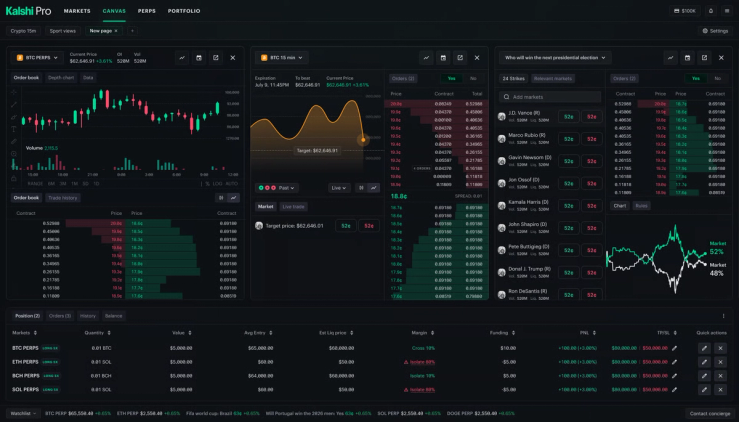
Kalshi continues its push onto Wall Street. The prediction market platform on Thursday launched 13 contracts that let users bet on the outcome of clinical drug trials, distilling the biggest milestones for biotech stocks into a simple yes or no. In recent days, it has also expanded its contracts that track the cost of AI compute — a useful tool for hyperscalers, neoclouds, and companies whose token budgets are exploding — and it launched its own version of the Bloomberg terminal.
I’ve long argued that prediction markets can evolve past their casino roots to become key players in financial markets and useful economic hedges. Home Depot could hedge its lumber costs; Vail Resorts could hedge its snow risk (though it isn’t, yet, CEO Rob Katz told us recently); a mediocre soccer team could protect itself against relegation. They can replace some market activity — biotech IPOs will be a tougher sell if investors can get the same binary exposure on Kalshi — but also grow the pie: Insurers will offer more policies on better terms if they can offload some of that risk to prediction markets. CFTC Chairman Michael Selig has made a similar argument to justify elbowing the states out of regulatory oversight of these platforms.
Kalshi’s recent moves, which also include a crackdown on insider trading (the latest nab is President Donald Trump’s teleprompter operator), show it wants to bolt on institutional financial markets to its legally questionable sports trading. These companies are “worth far more as the platform where companies like Meta hedge their future AI compute-pricing risk than as an OTB window for US black-op nighttime raids,” I wrote last month. Self-interest will rule the day.