




Liz’s view
Tucked into Nvidia CEO Jensen Huang’s essay on AI this week were two paragraphs that will be recalled as either the forward to a great American Renaissance or the epitaph of end-stage capitalism.
“You do not need a PhD in computer science to participate in this transformation,” he wrote in the essay, part AI primer for the layman, part roadmap for the way forward.
Hyperscalers like Meta, infrastructure players like Nvidia, and financiers like BlackRock admittedly have no idea the extent of the havoc AI is wreaking on white-collar jobs — they just know it will be ugly. But they are pivoting hard to support the blue-collar workers whose labor is crucial to building out AI. That’s partly out of necessity: Without the electricians, plumbers, and pipe fitters to finish them, their data centers will languish, leaving models dumber and IRRs deteriorating by the day. It also points to a recognition that jobless growth — an economy that is expanding but not taking people with it — ends with (metaphorical, probably) heads on pikes.
That worry was on full display in Washington this week at BlackRock’s infrastructure summit, where I interviewed CEO Larry Fink about the dire shortage of skilled labor.
AI “is going to create many jobs and we’re not prepared as a society to fulfill those jobs,” Fink told me, touting the company’s $100 million donation to trade-work training, announced Wednesday. “This is a crisis.”
Fink brought along Mike Rowe, TV’s patron saint of manual labor, who talked touring a BlackRock-owned data center in Plano, Texas, where he met electricians making more than $240,000 a year.
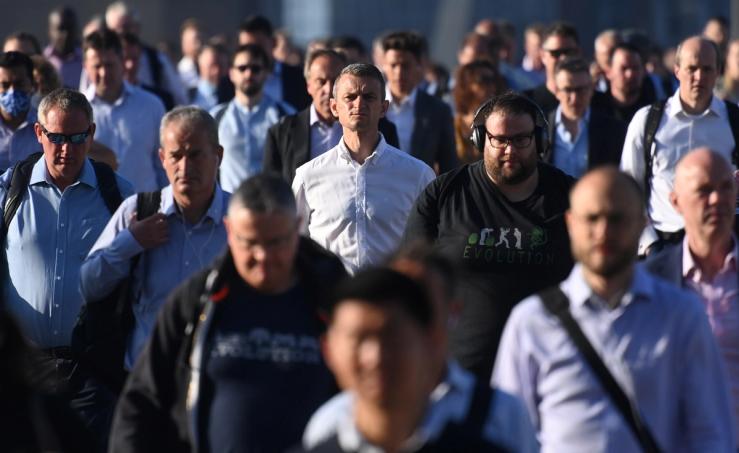
But what about the white-collar wipeout? “This May when our college graduates are graduating, we may see the highest unemployment rate of that group” without an accompanying recession, Fink acknowledged. Couple that with the astronomical wealth that’s accumulating in the hands of AI’s private backers, and it’s a powder keg.
In the past few weeks, there’s been a distinct change in the posture of Big Tech and financial firms. They are waking up to the backlash and rushing to get ahead of it. “A post-grad jobs wipeout and baby boomers aging in their four-bedroom house because of interest rates is a witch’s brew for intergenerational strife,” Matt McDonald, CEO of DC corporate advisory firm Penta Group, tells me. “The ‘OK boomer’ movement is going to pale in comparison to what’s coming.”
It’s much easier to see the knowledge-economy jobs AI is destroying than the ones it will create. And AI job losses could certainly drag out (who among us hasn’t nailed our thesis but botched the duration call?) Here’s an idea for Silicon Valley: Put your in-house futurists in a room and don’t let them out until they have some ideas.

Notable
- US politicians are increasingly tuned into the plight of white-collar workers, NBC News reported: Florida Gov. Ron DeSantis called the H1-B visa program “especially galling” at a time when AI “is forecast to reduce a significant number of white-collar jobs.”