





Rachyl’s view
At this point in the AI craze, we’ve moved past the doomsayer proclamation that AI will obliterate all our jobs. We know AI will displace some jobs and create new ones, but the question most CEOs are wrestling with right now is, how long will the lag period — and friction — between these two cycles last? My bet is that it will take longer than we think — let me tell you why.
If past is prelude, a good example of how rapid technological change can upend economies is the invention of the telephone, which, as Semafor’s J.D. Capelouto writes this week, is celebrating the 150th anniversary of Alexander Graham Bell’s first-ever phone call.
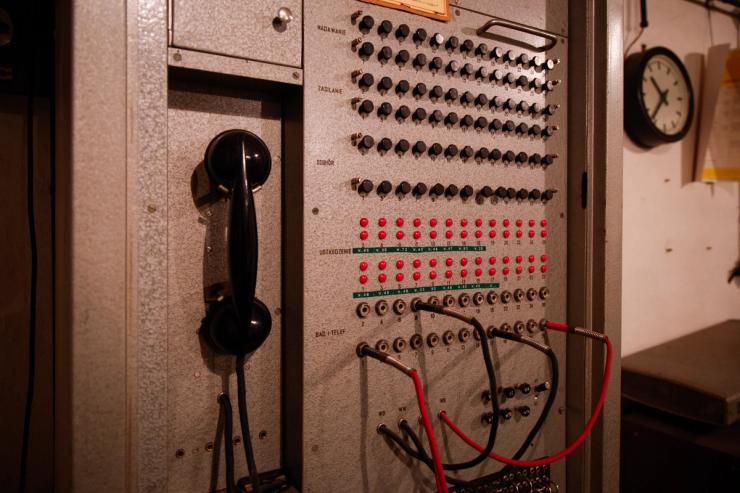
No one in my generation remembers the huge labor force of switchboard operators, but in the 1950s there were 340,000 workers physically plugging cords into jacks to connect callers to one another (roughly equivalent to the number of dental assistants today). Those switchboard jobs are a thing of the past now, but they weren’t phased out overnight.
It took at least six decades after the automatic switching system was invented — even though that tech was more than capable of doing the operator’s job — to phase the jobs out.
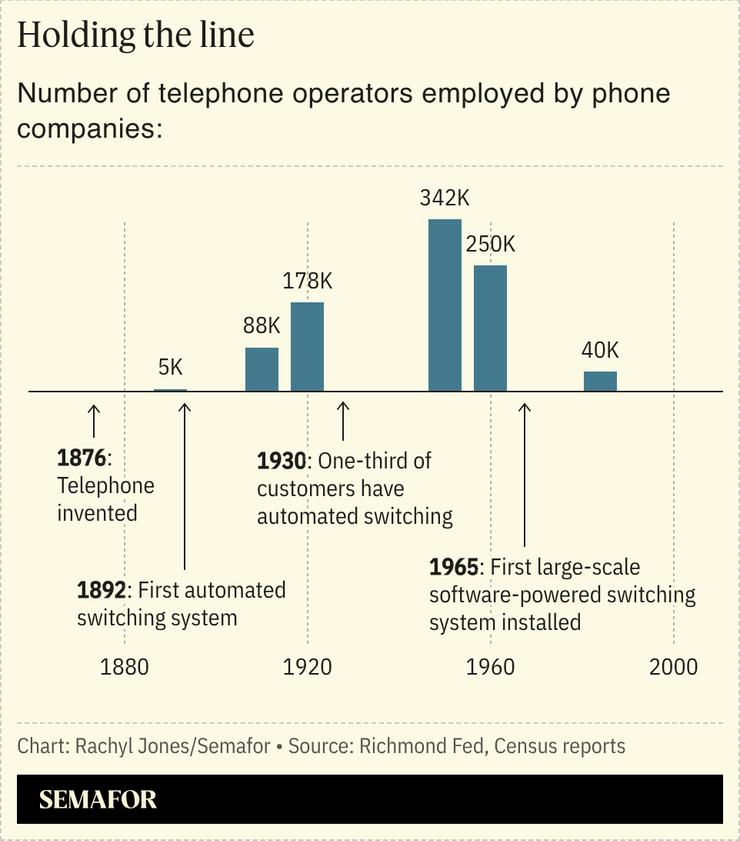
At the time, phone companies thought making users dial their own phones was too laborious. Switchboard operators (most of whom were women) were viewed as service providers, according to research from the Richmond Fed. The operators got to know many of their customers personally, passed important messages along if the receiver didn’t pick up, and chatted callers up about the weather, sports games, and big news. In other words, it was their human attributes — service, knowledge, and flexibility — that kept them useful.
Fast forward four years into the AI boom, and the human attributes workers bring are more important than ever. Even though Claude can offer recommendations on how to deal with, say, a sensitive client issue, I still seek out my (human) boss’ advice.
Eventually, telecom operators succumbed to automation, largely due to financial pressure and software development, but it took a while. And if history continues to repeat itself, today’s working-age employees will mostly hang on to their jobs. Their kids, however, will be a different story.
In this article:

Room for Disagreement
Economist Anton Korinek told The Atlantic he’s “super worried” about major job losses in the US as soon as this year. “Whenever I speak to people at the labs on the West Coast, it does not strike me that they are trying to artificially hype what they’re producing,” he said. “I usually have the sense that they are just as terrified as I am. We should at least consider the possibility that what they are telling us may come true.”