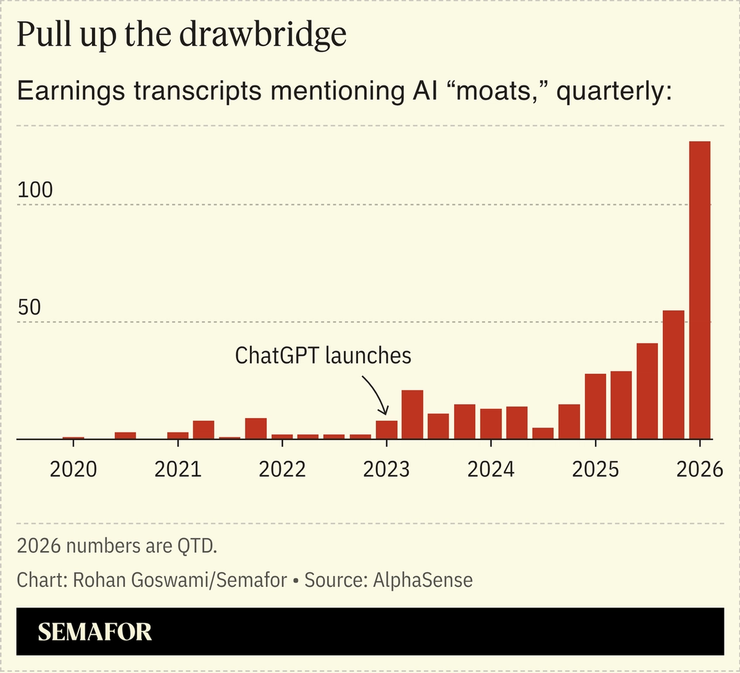
CEOs have a new favorite word: “moat.” At least 118 companies touted the moats they have, or are building, against AI this quarter, AlphaSense data shows. That’s a record, and the quarter isn’t over yet.
They’re trying to pull up the drawbridge against the oncoming agentic hordes, and looking to tamp down on investor panic about which SaaS businesses will survive the vibe-coding era. “[Investors are] trying to figure out who’s the Amazon.com and who’s the Pets.com,” says Autodesk CEO Andrew Anagnost, drawing a comparison with the dot-com era.
Etsy’s moat is its handmade goods in an AI slop world — “being able to buy something that is really meaningful,” CEO Kruti Goyal said earlier this month at an industry conference. CH Robinson, the trucking company whose stock has been one of the stranger casualties of the AI panic, says its moat is “domain expertise.” Banking app Dave says its moat is its regulatory relationships and its credit underwriting. For Palantir, it’s just sweat equity, I guess. “Twenty years of grinding has built a unique moat,” Palantir CTO Shyam Shankar said earlier this year.
The moat discourse is a grim flip on the buzzwords of past earnings cycles — remember when every company had a blockchain strategy? — and shows how executives are nervously watching their stock prices as AI barrels toward them.
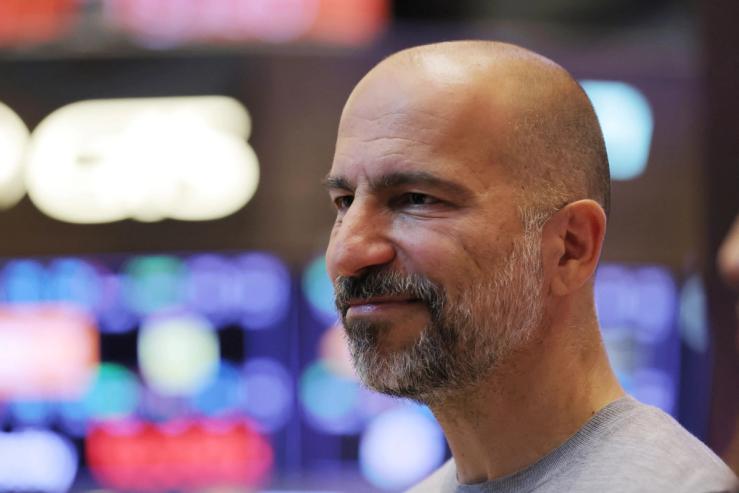
There’s little evidence that investors are buying most of those narratives. (Palantir is, of course, doing fine.) And software companies that help organize companies’ data without bringing any of their own are in trouble, Uber CEO Dara Khosrowshahi told us last week on Semafor’s Compound Interest show: “If you’re a thin UI layer on top of, let’s say, systems of record, you’re going to have to earn your keep,” he said.