




The News
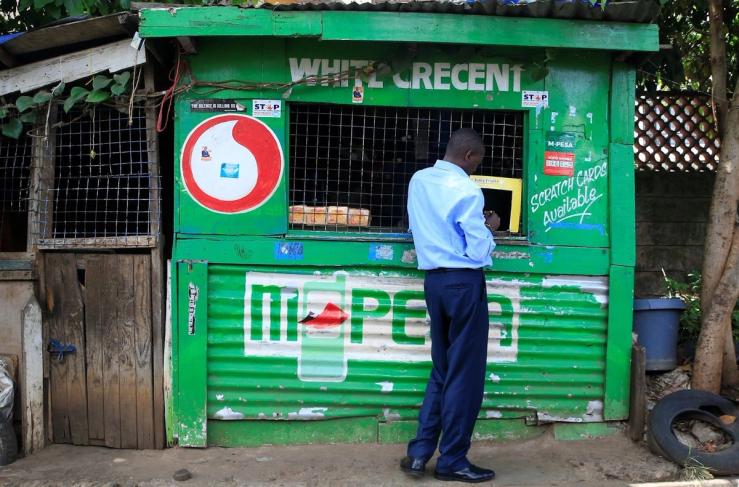
An Abu Dhabi-based financial technology initiative plans to extend its blockchain technology to millions of Africans through a partnership with mobile money platform M-Pesa, one of the executives leading the project told Semafor.
It marks the latest step in efforts by the Emirate to establish Abu Dhabi as a global financial hub and bolster ties between the Gulf and Africa. The ADI Foundation, which is backed by the digital arm of a $240 billion conglomerate chaired by the UAE president’s brother, aims to bring 1 billion people onto its blockchain, ADI Chain, by 2030 by providing access to its blockchain infrastructure in emerging markets. The mobile money service M-Pesa — which allows customers to send and receive money, and pay for goods — has more than 60 million monthly users across eight African countries.
Huy Nguyen Trieu, council member on the ADI Foundation’s board of advisers, told Semafor a “large proportion” of the users targeted would be in Africa, and a memorandum of understanding agreed with M-Pesa this month was part of a drive to scale up access to the ADI Chain.
“M-Pesa has been amazing in terms of financial inclusion,” he said during an interview in Abu Dhabi this month. “Our view is that we can push it further again by providing the right digital infrastructure, both for individuals and SMEs,” he explained, adding that the foundation’s infrastructure could act as “the building blocks to accelerate digital transformation.”

Know More
M-Pesa was launched in Kenya by local telecoms company Safaricom in 2007. It is now also used in DR Congo, Egypt, Ethiopia, Ghana, Lesotho, Mozambique, and Tanzania.
“We are excited to partner with ADI Foundation to tap into their expertise around new technologies and how these can transform financial services,” said Sitoyo Lopokoiyit, CEO of M-Pesa Africa, a joint venture between Safaricom and Vodacom, in a statement.
ADI Foundation was launched in December 2024. In October, Semafor reported that ADI Chain is part of a project encompassing international payments, digital identity, and energy trading in emerging markets that would have an initial focus on Africa.
Nguyen Trieu told Semafor that a stablecoin to be used on ADI Chain was expected to be launched in January 2026. He said the goal was for companies with a base in Abu Dhabi to be able to settle international payments “anywhere they have business,” with that technology being deployed in other countries.

Step Back
The financial regulator at ADGM, Abu Dhabi’s international financial free zone, was an early mover in providing a framework to regulate cryptocurrency. Its approach has prompted the world’s largest crypto exchange, Binance, to put down roots in the Emirate after securing three licences from the regulator.
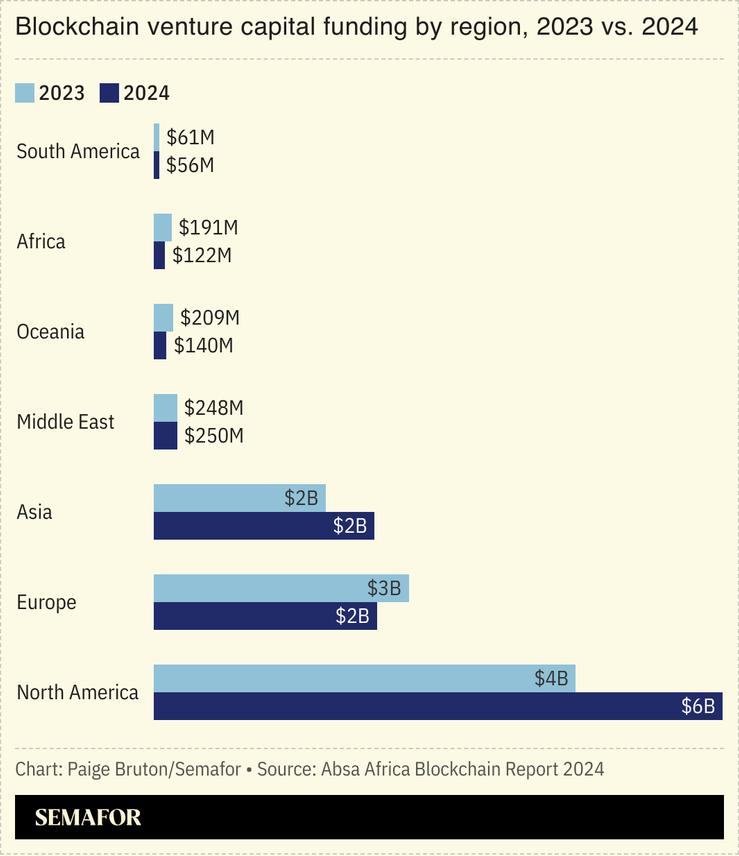
Crypto has already proven to be popular among Africans trying to hedge against currency volatility. Nigeria’s Securities and Exchange Commission estimated that residents carried out $50 billion in crypto transactions in the 12 months to June 2024. Stablecoins are attractive due to the dollar peg. Research by blockchain data analytics company Chainalysis found stablecoins are “frequently used in high-value transactions tied to trade flows between Africa, the Middle East, and Asia.” Researchers pointed to “regular multi-million dollar stablecoin transfers that support sectors such as energy and merchant payments” in regions where traditional financial infrastructure may be limited or slow.

Room for Disagreement
A recent report from the California-based Milken Institute think tank pointed to obstacles that could limit the widespread adoption in African countries of the digital technology needed to drive financial inclusion. “Infrastructure and financial education challenges persist, especially in rural areas with limited broadband,” wrote authors Maxwell DeGregorio and Nicole Valentine. “Regulation is also fragmented: Some countries have clear rules for crypto, while others oscillate between caution and permissiveness, creating uncertainty for entrepreneurs and consumers.”

The View From Britain
Africa countries need robust cross-sector collaboration and supportive ecosystems to drive financial inclusion, according to a new report by British accounting firm EY. Regulators, financial institutions, telecoms companies, and development partners must work together to drive innovation, scale impact, and attract investment, it said. Financial inclusion remains a challenge in sub-Saharan Africa, where around 42% of adults remain unbanked, but the growth in mobile money platforms is widening access to banking services.
The EY report spotlights Nairobi, dubbed “Silicon savannah,” as a successful example of a thriving ecosystem to drive financial inclusion that has seen companies benefit from Kenya’s regulatory innovation and position as one of East Africa’s most mature fintech landscapes. The report also highlights Nigeria’s strength in innovating in credit-building via remittances and mobile-first payment infrastructure.
— Additional reporting by Preeti Jha

Notable
- Investors will be able to buy and sell shares on the Nairobi Securities Exchange using M-Pesa from January 2026.