




The Scoop
With the rapid buildout of infrastructure taking center stage in the tight AI race between tech giants, Google is tapping one of its veteran leaders for a new role overseeing the complex strategy, according to an internal memo reviewed by Semafor.
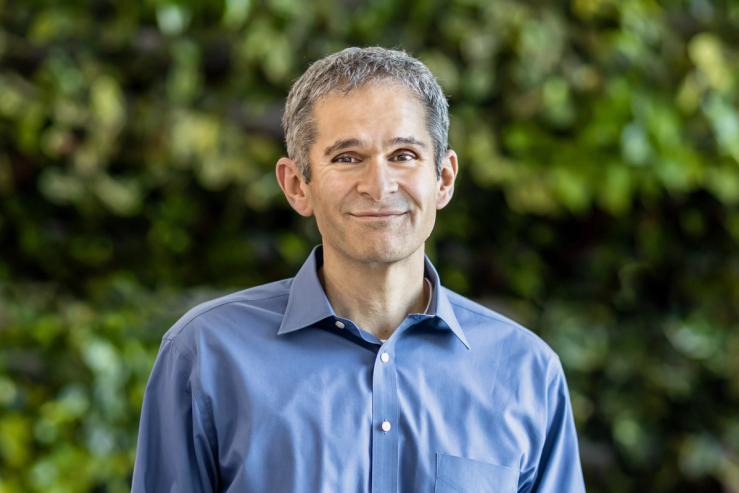
Amin Vahdat, who joined Google from academia roughly 15 years ago, will be named chief technologist for AI infrastructure, according to the memo, and become one of 15 to 20 people reporting directly to CEO Sundar Pichai.
Google estimates it will have spent more than $90 billion on capital expenditures by the end of 2025, most of it going into the part of the company Vahdat will now oversee.
“This change establishes AI Infrastructure as a key focus area for the company,” wrote Google Cloud CEO Thomas Kurian in the Wednesday memo congratulating Vahdat.
Google has been on a roll lately, with high praise for its latest Gemini 3 AI model that has spooked even OpenAI, whose CEO recently declared Google’s ascendance as an emergency for the maker of ChatGPT.
But Google’s advantage over OpenAI isn’t just its AI research capabilities: It’s the ability to serve its AI-enabled products to a massive user base efficiently.
That capability stems from a decade-long pursuit of custom AI chips, which it calls Tensor Processing Units, and all of the software and equipment built around them to maximize performance and at the lowest possible cost.
The Google DeepMind team works with the TPU team to optimize chips for Gemini’s capabilities, and the company has built everything from optical circuit switches to liquid cooling around them in a vertically integrated technology and software stack.
Vahdat has been at the center of that effort for years, according to people familiar with his role at the company, long before the AI race put it under the microscope of everyone from tech journalists to Wall Street analysts.
In a 2022 blog post that got little attention at the time, Vahdat laid out how his team had transformed the company’s Jupiter network, the system for connecting everything inside data centers.
The result was reduced costs for serving core products like YouTube, Search, and Cloud. But it would also prove to be key in the upcoming AI race, where data center interconnects have become a key bottleneck. Frontier models require huge amounts of data to be passed back and forth between processors, allowing a cluster of hundreds of thousands of computers to act as one.
Vahdat has also overseen the company’s Borg initiative, a software system that orchestrates a massive number of data center operations, another critical element in today’s AI race. The ability to shuffle an impossibly large number of tasks to ensure every drop of usable compute power is available is crucial to making the economics of AI data centers work. In the AI age, it’s like a game of Tetris but on a galactic scale.
In August, Google disclosed in a paper co-authored by Vahdat that the amount of energy used to run the median prompt on its AI models was equivalent to watching less than nine seconds of television and consuming five drops of water. The numbers were far less than what some critics had feared and competitors had likely hoped for.
There’s no single answer for how to best run an AI data center. It’s small, coordinated efforts across disparate teams that span the globe. The job of coordinating it all now has an official title.
In this article:

Know More
Vahdat began his career in academia, although he was a research intern at the storied Xerox PARC in the early 1990s. Some of his most well-known research focused on how to network computers more efficiently, making them work as one machine, or efficiently when built at a large scale.
The work directly related to Google’s biggest challenges at the time — how to serve more internet users and data than anyone had ever dreamed would exist.
The company hired him in 2010 to work on optical circuit switching. Over the years, his responsibilities grew and, according to people who work with him, he was mentored on management by Google leaders Luiz Barroso and Urs Hölzle, an academic who became Google’s eighth employee.
Google, like other hyperscalers, must also find enough power to run data centers of unprecedented size while they deal with growing resistance from communities who oppose the projects. It all must happen with perfect timing so that expensive AI chips don’t sit around unused, all the while ensuring the company does not overestimate customer demand for AI products.
What sounds like a daunting task may actually be a competitive advantage for Google. Vahdat’s elevation to the C-suite is an indication that all the disruption also means it’s returning to its roots.

Reed’s view
People like Vahdat are unusual in a lot of ways. First, very few people have the technical acumen to do what they do, and even fewer want to spend their time doing work that is painstakingly difficult. And, until maybe now, those roles offered little glory compared to becoming a startup founder or a CEO in the tech industry.
But it’s also rare to have someone who spent years banging away at difficult technical problems in academia to rise to a leadership position at a company like Google, where management skill and strategic business thinking are as necessary as technical chops.
Google has more of these people than most. Some are very well known, like Jeff Dean and Demis Hassabis. Others, like Vahdat, are rising in stature.
It is worth keeping an eye on how the business landscape changes the C-suite at big tech companies. Who gets elevated says a lot about how each company plans to compete.

Room for Disagreement
Across the board, tech companies have been elevating engineers through the ranks for years, including Microsoft’s Satya Nadella, Nvidia’s Jensen Huang, and IBM’s Arvind Krishna. The complexity of AI requires technical know-how at the top of organizations. Even outside the industry, chief technology or information officers are increasingly tapped for the top spot, where that job previously went to the finance or operations heads.

Notable
If you want to really understand how Google was built, the Acquired podcast’s exhaustive history of the company offers some great gems from the past that inform the company’s current DNA.