




The News
The head of the World Bank’s private-sector arm said investors “absolutely” overprice risk in Africa, inflating borrowing costs across the continent by treating dozens of diverse markets as a single investment story.
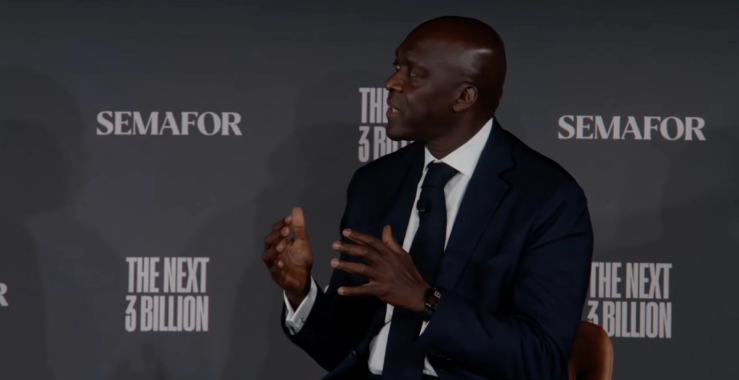
Speaking at Semafor’s The Next 3 Billion event, Makhtar Diop, managing director of the International Finance Corporation, said a “contagion effect” means shocks in one country are often used to justify higher risk assessments across the continent, regardless of underlying economic fundamentals.
“Whenever you have a shock in Africa, people tend to say that it affects the whole continent,” Diop said. Investors behave as though “something happening in Ethiopia is affecting Dakar,” he added.
To challenge this perception, the IFC is opening up its Global Emerging Market Risk Database to investors and rating agencies, hoping that hard data on credit performance will help narrow what many policymakers and business leaders call the “Africa risk premium” and bring down the cost of capital.

Know More
The effort is part of a broader push to narrow the so-called “Africa premium” — the higher cost of borrowing African governments and businesses face because investors often view the continent as riskier than comparable markets elsewhere.
In a time of heightened political risk globally, the IFC is changing how it seeks to attract private capital, Diop said, increasingly absorbing first-loss risk on its own balance sheet through an “originate-to-distribute” strategy to make projects more attractive to commercial investors.
That approach has helped raise the IFC’s mobilization ratio from $1.90 to $3 for every dollar of its own capital invested, he said.
Diop questioned the suitability of the traditional private equity model for small African businesses, arguing that the industry’s typical five-year investment horizon often forces exits before companies have fully matured. Instead, he said, the IFC is using grant funding and risk-sharing instruments to support more “patient” forms of capital that allow businesses to grow over longer periods.
The IFC head also pushed back against predictions of sustained capital flight from African markets, arguing that strong domestic demand for local assets remains an underappreciated source of financing.
As an example, he cited overwhelming investor interest in a recent local market issuance by Nigerian billionaire Aliko Dangote. “The phone crashed in Lagos because they were not expecting so many calls,” Diop said.