


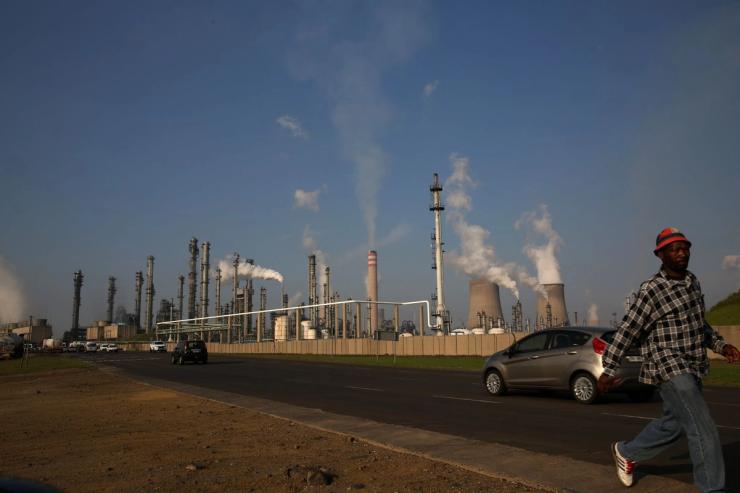
South African energy company Sasol faces mounting climate scrutiny after researchers tied emissions from its flagship Secunda plant to about 1,000 premature deaths annually. A study by the Centre for Research on Energy and Clean Air, a Finland-based nonprofit, found emissions from the plant had an overall health cost of nearly $1 billion. The findings underscore the tension in Africa’s biggest economy between its climate commitments and its reliance on Sasol — widely recognized as the world’s largest single-site emitter of greenhouse gases — for macroeconomic stability.
Last month, regulators said they were preparing to reinstate criminal charges against Sasol after alleged unlawful discharges of chemical waste into a river. Sasol denies wrongdoing. A separate study from the University of Cape Town, meanwhile, warned that a rushed closure of the Secunda as part of the green energy transition could wipe $550 million off South Africa’s $400 billion economy.
South Africa remains locked into coal, which provides more than 80% of its power, making Secunda and the wider coal-fired power station fleet both national economic assets and global climate liabilities.