




The Scene
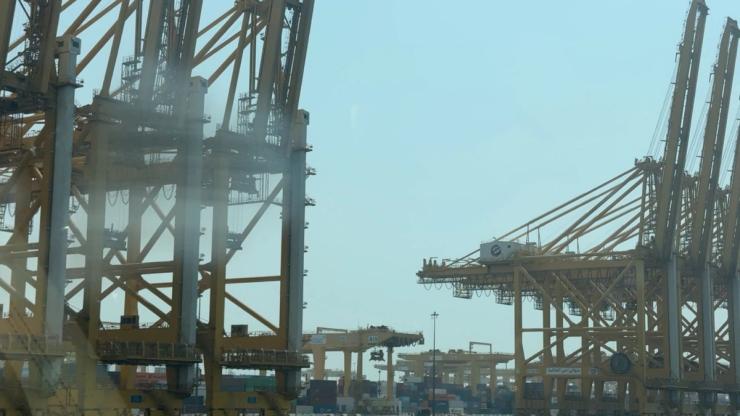
Jebel Ali is one of the largest container ports in the world. Driving through the port and free zone last week, I saw a single crane in operation: A jarring scene for those used to the symphony of ships, trucks, and people moving stuff, some bound for the domestic market, most for Africa, Europe, and the rest of the Gulf.
The Strait of Hormuz has been effectively closed to container shipping since Feb. 28, with all tracked transits down to a handful a day from around 90 before the war. Berths that normally work more than 80 scheduled services a week sit under raised cranes, the way they rest when there are no ships to work. The port moved 15.5 million twenty-foot equivalent units (TEUs) in 2024. In the second quarter of this year, it handled 374,000 TEUs, down 90% from the same period last year.
Stranded containers were stacked in nearly every yard I passed, and most tenants have locked up shop. Dubai’s government-owned port operator DP World is spending about $100 million a month — its prewar operating cost — so it can return to full capacity within 48 hours, if normal shipping traffic resumes, a company official told Semafor.
Beyond the eerie silence of Dubai’s economic engine — the port and connected free zone contribute around a third of the emirate’s GDP — I caught a glimpse of how DP World plans to make its operations here, and globally, more efficient. By one gate stands “BOXBAY”, a steel tower that stacks containers up to 16 tiers high, each box retrievable without moving another — what the company calls a giant vending machine for containers. The Jebel Ali prototype has handled nearly 500,000 TEUs in trials, and DP World is spending £170 million ($225 million) on the first full-scale version at its London Gateway port.

Know More
When Sheikh Rashid bin Saeed Al Maktoum, Dubai’s ruler at the time, began building Jebel Ali in the 1970s, 35 kilometers outside his city, Dubai’s merchants worried the new port would starve the one they already had. Queen Elizabeth II inaugurated it on Feb. 26, 1979, as the largest man-made harbor in the world. It grew into a global trade node.
The war has scrambled that network, and cargo is now rerouted overland from Khor Fakkan and Fujairah, on the UAE’s east coast, where trucks queue as long as 12 hours against a 27-minute turnaround at Jebel Ali. DP World is building two terminals at Fujairah, outside the strait. While the other facilities give it flexibility, moving cargo overland from Fujairah or Khor Fakkan can be roughly four to five times more expensive than sailing through Hormuz to Jebel Ali, the official said.