




The News
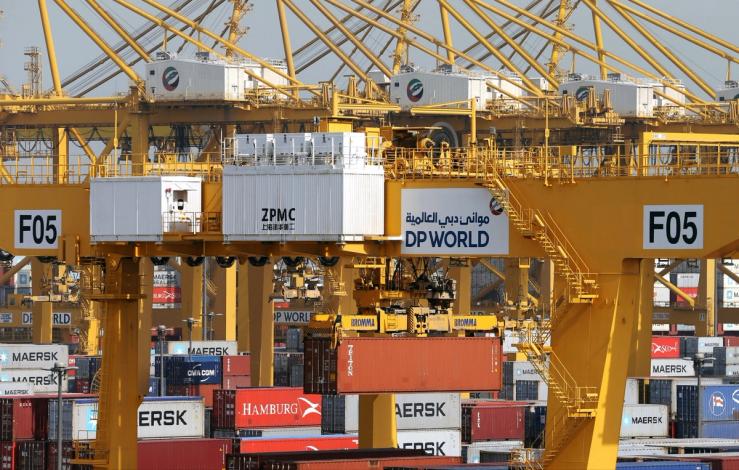
DP World weathered a near-collapse in traffic at its flagship Jebel Ali port in the first half of the year, as the closure of the Strait of Hormuz forced it to reroute cargo overland through other ports in the UAE and neighboring countries.
Container throughput at Jebel Ali fell 86% in the second quarter to 374,000 twenty-foot equivalent units (TEUs), from 2.7 million in the first quarter. However, an increase across the company’s global network of more than 60 ports helped to offset the damage of the Gulf conflict, reflected in a 13% year-on-year increase in revenue to $12.7 billion. Even so, net profit for the first half was down 39% year-on-year.
While some observers have cast doubt on the long-term future of the group’s home port in Dubai given the ongoing Iranian threats to shipping through Hormuz, the economics that made Jebel Ali a dominant regional trade hub also make it exceedingly difficult to replace. Alternative routes through ports including Fujairah and Khor Fakkan can cost four to five times more once inland transport is included, a company official familiar with the matter told Semafor, a cost gap that gives DP World confidence displaced cargo will return.

Know More
The crisis has nonetheless changed the company’s assumptions. DP World is developing two terminals in Fujairah, on the UAE’s east coast and outside the Strait of Hormuz, adding about 2.5 million TEUs of capacity and reducing its long-term strategic reliance on the waterway.
DP World has deployed trucks and staff across the UAE to keep essential goods flowing, with emergency rerouting largely provided at cost to its customers, the official added. However, the process can be frustratingly slow, with trucks facing queues of as long as 12 hours to enter and leave the alternative ports, against a roughly 27-minute turnaround at Jebel Ali.
Hormuz has shown that Dubai’s dominant trade gateway is difficult to replicate, yet relying on a single maritime entrance is a risk the UAE no longer wants to take.

Notable
- Fujairah’s rise didn’t start with this war. Abu Dhabi spent the past decade building the emirate into the UAE’s energy gateway beyond Hormuz, through the Habshan pipeline and vast oil storage, and DP World’s new terminals extend that hedge from oil to containers, AGBI’s logistics columnist argued.