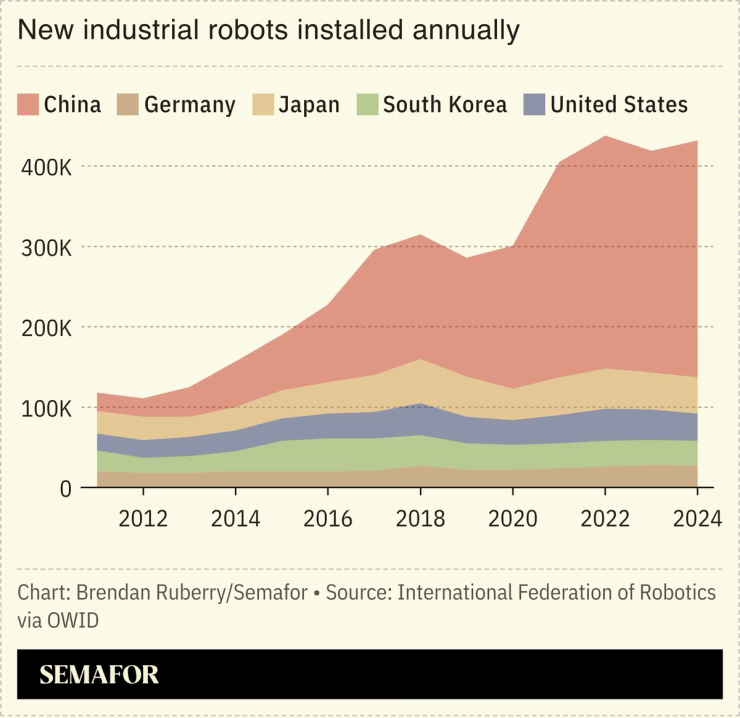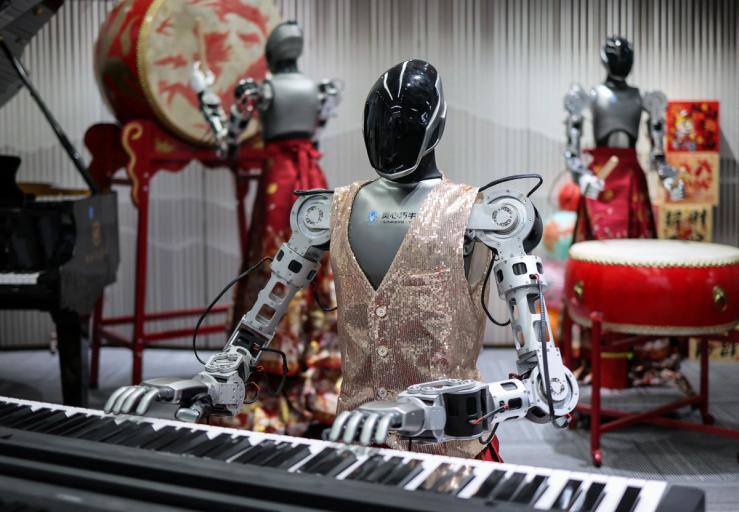
The US’ ban on new foreign humanoids opens another front in Washington’s campaign against Chinese tech — but it also adds a new layer of pressure on domestic bot makers.
Some in the industry speculated the US might put tariffs on Chinese robots, but Washington routed its ban through the FCC, using equipment-approval rules to block new foreign humanoids and quadrupeds in the same way it banned foreign drones in December, citing national security.
US robot makers have been lobbying Washington for months to take action to counter the spread of cheap Chinese humanoids before they enter American factories — they are, for now, almost solely used for entertainment and research purposes in the US.
The ban, which allows humanoid makers to seek case-by-case approvals, could give Washington a bargaining chip in future talks with China. It also means American robot makers may have to move quickly to onshore their supply chains: Many still rely on Chinese components or do some assembly overseas, which could make them ineligible to sell in the US under the new FCC rule. It’s also likely to increase the cost of making and selling a robot domestically, given China’s lower-cost hardware.
“I don’t know if something so extensive is the best option,” Andrew Kang, CEO of robot-investment company RoboStrategy, told Semafor. The limitations the new rule presents, he said, are “almost impossible to solve for in the short term.”
Evan Beard, the CEO of Standard Bots, which makes industrial robot arms and designs almost all of its parts using a heavily American supply chain, said he was up late Tuesday night taking calls from prospective customers. “We need to be owning the technology. We need the robots to be made here,” he said.