




what’s at stake
Artificial intelligence is already making its mark on the US economy as workers put new tools to use and planned initial public offerings power the stock market.
One of the central questions vexing lawmakers, meanwhile, is what the technology’s eventual impact on the US jobs market will look like.
Nearly one in five US employees believe it’s somewhat or very likely that the job they currently hold will be eliminated by AI or new technology within the next five years, according to Gallup polling taken in February.
Evidence suggests younger Americans will bear the brunt. A Stanford analysis found that the number of early-career jobs has declined by 4.8% year over year in AI-exposed fields. And those who’ve newly graduated from college are already struggling to land jobs, Semafor’s Rachyl Jones reported earlier this year.
But the data has hardly been consistent. A recent study from Ramp found that companies using AI actually grew their workforce by 10.2% in the two years after adoption, and that entry-level employment grew by an even larger amount.
In this article:
who’s making the case
Gina Raimondo, former commerce secretary who now leads a $500 million effort to prepare the US workforce for the AI economy, predicted that AI would be a net job creator when all is said and done:
“I still come down in the place that, in the end, AI is going to create more jobs. It’s hard to know what jobs, in what timeframe, in what industries. But what we know is, every general purpose technology increases productivity, increases jobs, increases job growth, increases wages. And I don’t know anything about AI that would make me think that this would be different. Now, I don’t know. Some people say I’m wrong. But I am just very focused on the transition, because even if I’m right — let’s say AI does generate new companies, new jobs, higher growth — that still takes time, and I’m worried about the transition from here to there. And I’m worried about the winners and losers, and not taking care of the folks who are going to be displaced.”
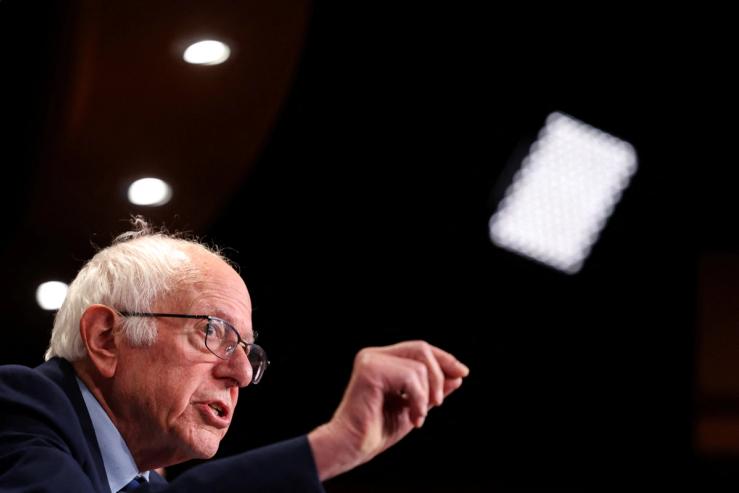
Sen. Bernie Sanders, I-Vt., said warnings about “many millions” of job losses should be taken seriously:
“Nobody can tell you for sure. Nobody really knows. But there are some pretty smart people out there who worry that many, many millions of jobs will be lost over the next decade. When you have people like [Amazon founder Jeff] Bezos spending many billions of dollars to automate factories, that means the end of manufacturing jobs, warehouse jobs being replaced by robots. There’s a real, serious concern about that.”

Notable
- Legislation introduced by Sanders would give the American public a direct ownership stake of major AI companies, the Associated Press reported.
- AI models “can’t do the vast majority of human jobs without skidding into disaster here and there,” one columnist writes in The New York Times.
- Tech CEOs have been offering more optimistic predictions about the impact of AI on the US workforce as of late, The Wall Street Journal reported.