




David’s view
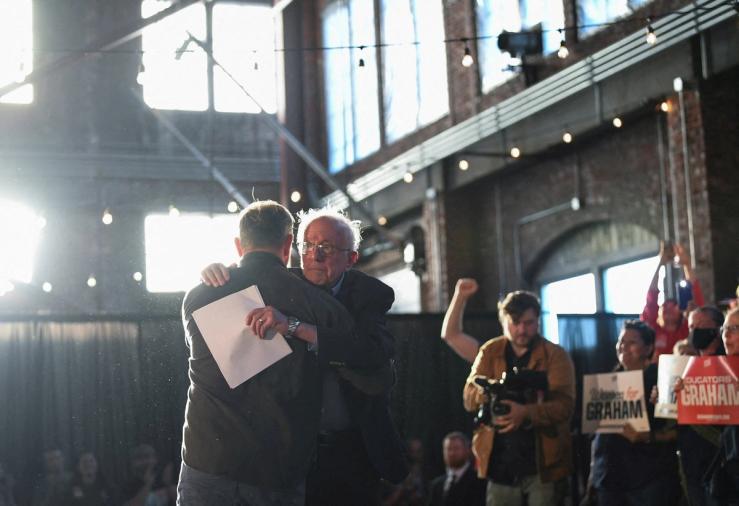
For 21 hours, while Bernie Sanders said nothing about the sexual assault allegation destroying Graham Platner’s campaign, speculation grew that the Vermont senator might be trying to talk his ally out of Maine’s Senate race.
Sanders helped write the Platner story, after all, so he could close the book. It sounded good, but this story — and Sanders’ entire movement — doesn’t work that way.
The founding myth of the Sanders camp, now entering its second decade at the arguable peak of its power as a left-wing electoral force, is that it sits outside the Democratic Party. Sanders can style himself that way because he never won the presidential primary.
But the reality is that he, and his faithful, are inside the party — competing in its primaries, voting for most Democratic candidates, and communicating in all the forums where Democrats get news and opinions. It’s a very successful case of entryism, in which left-wing activists join a larger organization to move it in their direction.
So as much as mainstream Democrats are frustrated by what the left’s rise has given them, particularly the collapse of Platner, they’re unlikely to see the Maine mess discredit Sanders and his wing of the party. There are two main reasons for that.
First, establishment Democrats don’t have leaders who can command the grassroots crowds and fundraising of Sanders, as displayed at last year’s “Fight Oligarchy” rallies. They don’t have a figure who excites people and grabs attention like New York Mayor Zohran Mamdani does; in New York, some of them unnecessarily resisted him and tried to breathe life into Andrew Cuomo.
Second, their party has been more welcoming to the entryists than most Democrats want to admit. In 2016, Sanders refused to release his delegates until the weakened Clinton campaign and the rest of the party gave Sanders a big role in drafting their platform. In 2018, the DNC reformed its primaries on Sanders’s preferred terms, curtailing the role of superdelegates.
And in 2020, when Joe Biden quickly beat Sanders (including in Maine), the failed challenger walked out of the race with a “unity task force” that gave his wing a coequal role in shaping Biden’s platform.
Why would Sanders’ movement look at those facts, then give ground in Maine? Why would it not try to extract concessions, and argue that Platner’s primary victory over the sitting governor amounted to a mandate that the party needed to respect? The Sanders faction has plenty of evidence that the party wants its grassroots energy, and its votes, so there’s little reason for them to offer all that without a role in whatever happens next.
As for what that outcome is, well, Platner remains Maine’s Democratic nominee for Senate at the time I write this; that probably won’t remain the case for long.
Many of Platner’s allies, though not Sanders, are urging Maine Democrats to replace him with logger-turned-legislator Troy Jackson, who lost last month’s race for governor after running on a pseudo-ticket with Platner. The Platner campaign, mortally wounded but still breathing, is fighting with the state party over a successor.
There’s a bad tendency in punditry to claim that one race, with its unique timing and circumstance, explains everything in politics. In Maine, this instinct isn’t wrong. As soon as Kamala Harris conceded in 2024, Sanders declared that Democrats had abandoned the “working class,” vowing to recruit candidates to save the country from right-wing populism.
The model for that was Dan Osborn, a union welder who dramatically out-performed Democrats with a populist Senate bid in Nebraska. Platner was Osborn 2.0: Rather than run as an independent in a red state where DC Democrats had no candidate, he challenged party leaders’ preferred candidate in a must-win swing state.
The goal of the Platner-Sanders effort was not just winning, but proving that their politics could win where Senate Minority Leader Chuck Schumer’s politics lost. Despite the humiliation of Platner’s collapse, which came with plenty of warning signs that his backers looked beyond, that remains the case.
Platner’s story will end with either a loss to Susan Collins or a negotiated exit. The Democratic story continues, with the left having taken advantage of the establishment’s weakness — dealing possible damage to the whole party.
The party will have to put up with it.
In this article:

Room for Disagreement
The establishment is still winning more than it’s losing. It’s hampered by the credibility-killing results of 2024, but in states where Schumer has gotten his preferred Senate candidates — Ohio, Alaska, North Carolina — there has not been a lot of Democratic infighting about what it all means.
Next month’s race in Michigan, which was always going to be a marquee battle between the left and center-left, will be a real check of where the base is. A victory by Rep. Haley Stevens, over progressives who see Abdul El-Sayed with all the momentum (and talent), would truly reset expectations about where the party is heading.

Notable
- Punchbowl News assessed the damage that Platner’s collapse might do to the “Senate fight club,” which was trying to nudge Schumer and his politics aside in favor of more aggressive liberalism.
- In his Slow Boring newsletter, Matthew Yglesias frets that Democrats who want “fighters” are being duped into supporting losers.
- In Jacobin, Bhaskar Sunkara argues with Jonathan Chait over the meaning and strategy of Democratic Socialists of America’s organizing to beat other Democrats in primaries.