




Alexis’s view
The Ebola outbreak in DR Congo is a reminder of the challenges created when informal economies collide with global supply chains and weak governance.
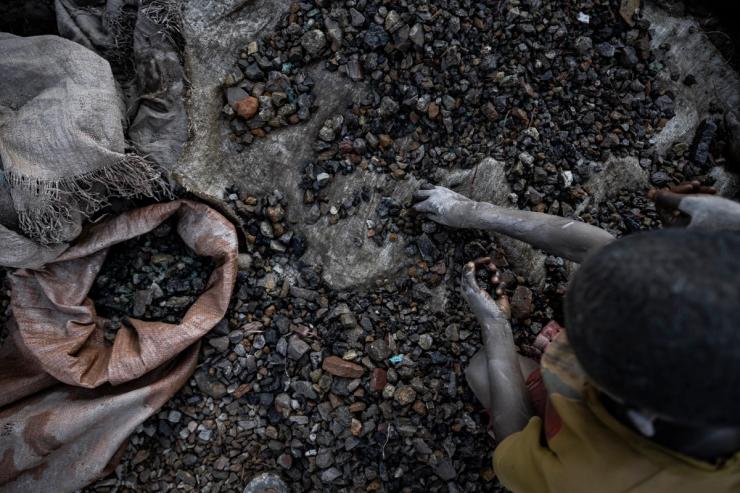
The epidemic has so far been concentrated in eastern DR Congo, a region whose economy relies heavily on artisanal and small‑scale mining. Once smelted, gold, tin, tantalum, and tungsten from the area enter global supply chains, feeding demand for electronics, jewellery, and car parts.
The fear is that the Bundibugyo strain, for which there is no vaccine yet, was circulating for weeks before being discovered. That raises the prospect that it could have spread undetected among workers who flew below the radar of the formal economy and can cross the region’s porous borders — a particular concern with DR Congo, which counts nine countries as its neighbors. The World Health Organization estimates there have been 1,000 suspected cases and more than 200 deaths in DR Congo, but the true scale remains unknown.
Informality, as Yinka recently wrote, is often a rational adaptation to weak public services, scarce formal employment, and low state capacity. Eastern DR Congo has been gripped by fighting between the Congolese military and M23 rebels for years, making it difficult for the government to take control of the region and complicating relief efforts. The head of the WHO summed up the challenge in a post on X in which he said eastern DRC “now faces a catastrophic collision of disease and conflict.”
It’s clear that this multi-pronged emergency will require multifaceted solutions, as a former USAID director argues in a Semafor column. This is the 17th recorded Ebola outbreak in DR Congo, so it’s unlikely to be the last, raising the question of what the country could do differently.
The long-standing conflict in eastern Congo is proving to be intractable, but Kinshasa has control over the way it uses the funds raised from its natural resources. The Congolese government has agreed deals with Washington to provide US companies access to its minerals in the east of the country. This move to formalize the mining sector, along with efforts to raise more money from mining-related taxes, is an opportunity to plough revenues from extractive industries into improving public health facilities in the hinterlands.
If all that happens, the dynamics in the relationship between mining, governance, and healthcare may actually change.

Notable
- US policy towards Africa has changed a great deal since the last major Ebola outbreak and Trump’s “America First Global Health Strategy” has failed to impress, argues Michael T. Osterholm, director of the Center for Infectious Disease Research and Policy at the University of Minnesota, in the Washington Post.