




The News
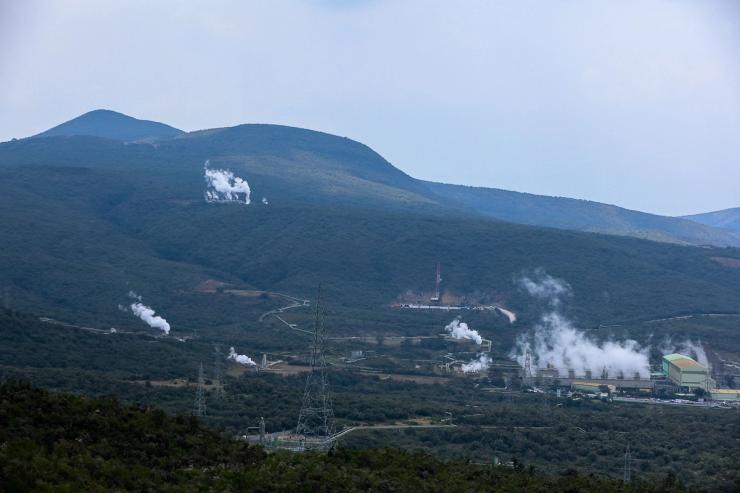
A $1 billion geothermal energy-powered data center project in Kenya by Microsoft and UAE’s G42 is unlikely to go ahead after President William Ruto blamed inadequate power capacity for its stalling.
Ruto had announced plans for the huge facility during a state visit to Washington in May 2024. Orchestrated by the Biden administration, Microsoft and G42 originally promised to invest in the site around 60 miles (100 kilometers) northwest of Nairobi to provide government and business cloud services on the US tech giant’s Azure cloud computing platform. They said it would run on geothermal power — which accounts for around 40% of Kenya’s energy mix — a sustainable source of baseload power that was seen as an advantage.
Semafor reported last September that the once-hyped project had stalled, with developers yet to break ground and questions mounting on its future. Ruto, speaking to grassroots leaders in Nairobi last week, said Kenya was forced to reconsider the plans after learning that it would require a third of the country’s total installed capacity of around 3,000 megawatts. “To switch on that one data center, we would need to shut off power for half the country,” he said of the project. “That’s when I knew there was a problem.”
The Kenyan leader argued that it was necessary to raise Kenya’s energy capacity to 10,000MW by 2030 to support such projects. He used the data center as an example to justify his government’s controversial push to raise $38 billion for energy infrastructure and other major projects from the sale of government assets and crowding in private capital.

Know More
Government officials, speaking on condition of anonymity, said that last year, Kenya’s technology ministry developed a project concept note for the data center, which was presented to the National Treasury to unlock the required funding for the project. The National Treasury did not, however, give its approvals, pushing the project off the rails. During a meeting between Kenyan government officials and Microsoft executives in August last year, it became clear the data center would not be online by its original target of May 2026.
G42 declined to comment on this story. Microsoft did not immediately respond to a request for comment.
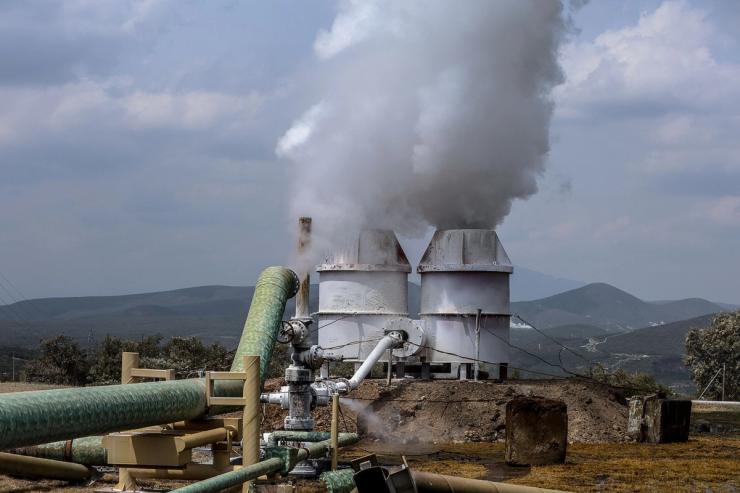 A geothermal wellhead station at the Olkaria geothermal complex. Donwilson Odhiambo/Semafor.
Martin’s view
The deal with Microsoft was seen as a symbol of strengthening relations between Kenya and the US, with Washington keen on countering Chinese influence in East Africa. Its stalling is a reminder to temper expectations regarding MoUs and Letters of Intent signed at international summits and bilateral forums, as they can often be hurriedly announced to showcase perceived political wins without adequate consideration for their actual feasibility.
The reality is that Kenya, like many other African countries, isn’t capable of taking full advantage of economic opportunities presented by the boom in AI and data centers due to the inadequacy of basic underlying infrastructure.
Kenya’s data center market is projected to triple to $805 million by 2031, according to a new report, with the country’s renewable energy mix among the factors boosting its attractiveness. But existing requirements to power local industries, businesses, and homes mean that larger data centers will be a strain on the national grid regardless of the revenue they may generate.
It’s also important to consider the context in which Ruto made his comments. With the president eyeing reelection next year, delivering big-ticket infrastructure projects is seen as one way of shoring up popularity after youth-led protests against his government in 2024 and 2025.

Room for Disagreement
Kenya accounts for more than three-quarters of fresh data center capacity expected in East African markets by 2030, according to a report by the African Union. Growth is expected to be driven by hyperscalers. Nxtra, a subsidiary of Airtel Africa, in September last year launched the construction of East Africa’s largest data center in Kenya’s Tatu City. The 44MW facility, slated for completion this year, is meant to support AI-driven solutions and cloud services for businesses, startups, and governments.

The View From South Africa
Microsoft in April announced plans to invest $329 million in the expansion of its cloud services in South Africa, and ramp up AI skills training in the country. Microsoft President Brad Smith said the funding would go toward “securing land for future data center growth, improving power and water readiness, and increasing capacity in our existing data center regions.”

Notable
- Kenya’s government is fast-tracking new energy deals to boost its capacity following the lifting of a seven-year moratorium on new power purchase agreements.