




The News
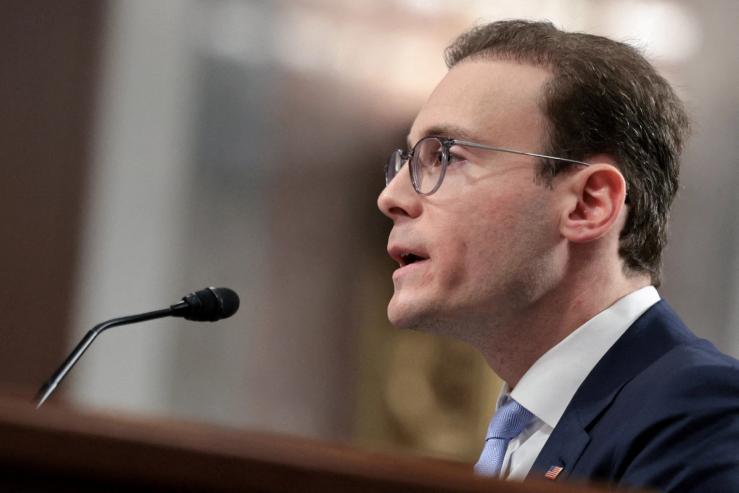
As the Commodity Futures Trading Commission takes a growing number of states to court over prediction markets, Chair Mike Selig is monitoring Minnesota and other states that advance legislation that would ban or regulate them, a person familiar with his thinking told Semafor.
Selig, who has so far filed lawsuits against five states that tried to crack down, praised a district judge’s Tuesday decision to block Arizona from suing Kalshi as “reaffirm[ing] what we all know: the CFTC has full jurisdiction.”
That ruling comes after a federal appeals court sided with Kalshi over New Jersey last month, boosting the fledgling industry’s hopes that the Supreme Court takes up the issue — and discourages Congress from passing any bill that might protect states’ lane.
Like Minnesota’s legislature, federal lawmakers have recently shown an interest in weighing in despite messy faultlines.
“It should be that legislation isn’t required because the court should decide things in a way that makes unambiguous what the law is,” one industry executive told Semafor.
The executive pointed to a Kalshi-backed bill from Sens. Dave McCormick, R-Pa., and Kirsten Gillibrand, D-N.Y., as one exception. Their proposal to update the CFTC’s statute for prediction markets would “build a more fulsome regulatory structure … as more edge cases and questions arrive,” the executive said.

Know More
The Supreme Court may be more likely to bite if federal appeals courts draw opposite conclusions. The industry is closely watching the Ninth Circuit, whose judges have so far appeared more skeptical of federal preemption than the Third Circuit’s.
States and tribes say that prediction markets offer gambling, so they should fall under their jurisdiction (and comply with their laws). Selig has sided with prediction markets by arguing that users are really trading event contracts, which should make the CFTC “the exclusive regulator.”
McCormick and Gillibrand’s bill, if passed, would strengthen Selig’s case by building out the CFTC’s role. A different bipartisan proposal from Sens. Adam Schiff, D-Calif., and John Curtis, R-Utah, would push back on it by banning prediction markets from offering wagers on sports.
Meanwhile, the House could soon follow the Senate in blocking its members and their staff from using prediction markets. A spokesperson for House Minority Leader Hakeem Jeffries, who said earlier this year that it would be “reasonable for us to take a look at what can be done in this space,” told Semafor he was generally supportive of the Senate’s push.
Nicholas Wu contributed reporting.