




Liz’s view
The oldest question in business — who is your customer — turns out to be the one OpenAI still can’t answer.
Setting aside the many doubts raised by that 11,000-word New Yorker piece, OpenAI makes most of its money from consumers. In business jargon, it’s a B2C company. Anthropic sells mostly to big businesses; it’s B2B. Each has ambitions in the other’s lane — see OpenAI’s Codex tool and Anthropic’s Super Bowl ad — but this is their hard-coded DNA, a difference reinforced by comments from both companies this week. On Monday, Anthropic announced it has doubled its base of customers paying $1 million a year. OpenAI, meanwhile, said it’s “focused on building products people love.”
So who wins?
Consumer business models dominated the 2000s and early 2010s as mobile and e-commerce opened up new sales channels. The decade since has belonged to B2B models.
I’d bet on the latter. Consumer models can mint giants, but they tend to produce one winner and a graveyard of also-rans: Google vs. Bing, Facebook vs. Friendster. There’s room for many winners in the enterprise world. (Enterprise software is in trouble now, but only because it might be vibe-coded away, not because companies no longer need it.) Even Uber, which became a household verb, now sees its future in servicing corporate robotaxi fleets.
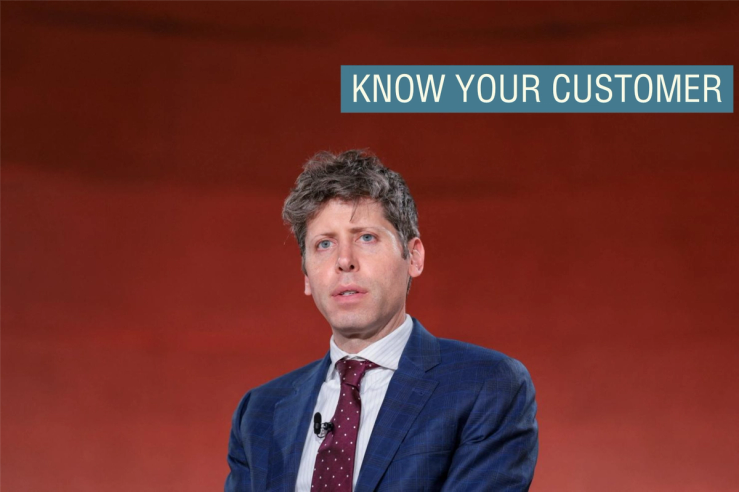
That’s one reason OpenAI looks weak right now. Its everyone-uses-us model only works if everyone uses them. That requires everyone to trust them, which requires them to trust Sam Altman, which brings us back to that New Yorker piece.
There is, though, a third path — and it’s OpenAI’s best argument. Call it B2C2B: Be so ubiquitous and user-friendly that companies have to buy your product because their employees are using it anyway. Microsoft started as a consumer play — IBM was the 1970s’ enterprise giant, Steve Ballmer recalled last year — but got enough users hooked on its software that companies were forced to buy it wholesale. Its journey to becoming the digital backbone of the office is a playbook for Altman.

Notable
- Sam Altman is publishing a detailed blueprint for how government should tax, regulate, and redistribute the wealth from AI, Axios reported.