




Liz’s view
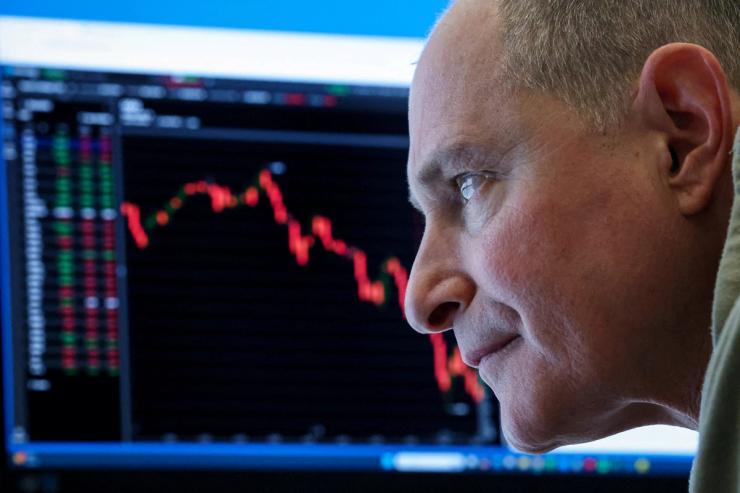
World leaders are doomscrolling. Why aren’t investors?
“I am forced to know things about what could happen in the coming week, and the effects it will have on the economy and our daily lives, that no longer allow me to sleep,” Italy’s defense minister said yesterday.
Also staring at the ceiling are South Korea’s president and European Central Bank chief Christine Lagarde, who is talking about shocks “beyond what we can imagine.” If you’re the last one sleeping soundly, here’s Germany’s military chief: “Conflict with Russia in the next few years is inevitable.”
These are people with real-time data feeds and classified briefings. Markets have flinched but haven’t freaked out: Oil is well short of where many analysts think it should be, and the Nasdaq’s correction territory is driven by AI fears not global shocks.
The two leading answers are resiliency and complacency. The world is either so flush with money that it can absorb any risk, or investors figure they’ll be bailed out (again) by governments if things get too bad.
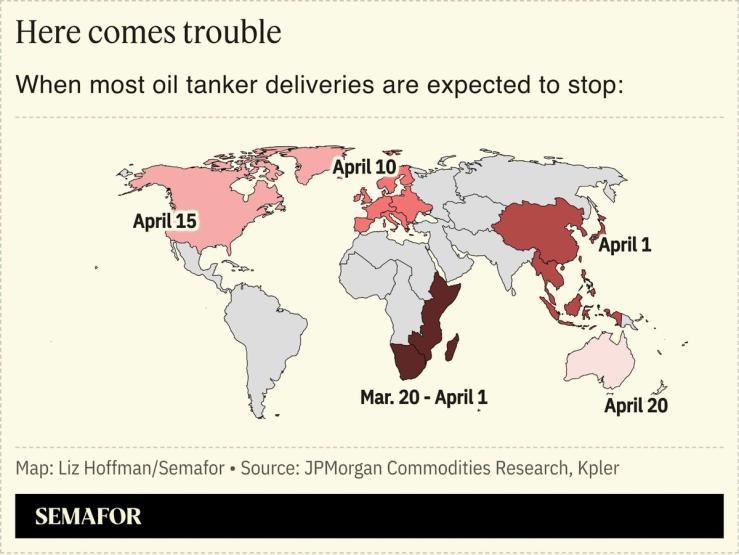
But there’s a third option: We’re on borrowed time. The buffer provided by oil already at sea and releases from national reserves “is now being exhausted in real time,” write the usually sanguine experts at Rystad Energy. (See this handy chart on when the last prewar tankers will arrive at your local ports, and maybe buy some call options on Australian stocks while you’re at it.)
One way to think about it is that we’re living in the supply-side version of the pandemic’s demand shock. Scientists were warning us, and we went out to dinner anyway. Then we didn’t for a very long time. The second and third-order effects of the Iran war haven’t hit yet: crops stunted by fertilizer shortages, Asian factory blackouts, MRI rationing due to helium shortages, grocery prices hit by higher trucking costs. They will arrive in the same way the pandemic’s economic effects did, slowly and then all at once.
The rise of high-frequency trading convinced us that everything is priced in instantly, obscuring pockets of friction. Oil tankers move slowly. So do Marines. And all the while, the slow-motion bank run happening inside private credit marches on. For now, these funds are funding their own collapse, at quarterly intervals. It’s Silicon Valley Bank, but with some structural lag.
In this article:

Room for Disagreement
That’s what economists said about tariffs, whose effects on prices were always just about to hit, the conservative think tanker Oren Cass chided in an X thread Monday as Liberation Day’s anniversary approaches. “Most data is encouraging, some is not,” he wrote. “Take a look and decide for yourself.”

Notable
- The Philippines declared a national energy emergency; Sri Lanka cut its work week to four days; and Myanmar limited drivers to alternate days, as South Korea weighs a similar measure, Reuters reported.