



The Scoop
Top US antitrust officials rejected allegations of improper lobbying in merger reviews while acknowledging that they aren’t independent of the White House.
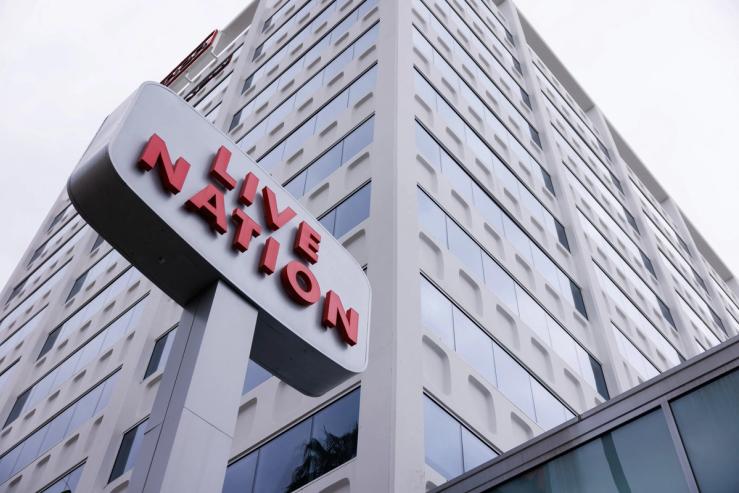
“We’ll meet with anybody. If you want to come and discuss your matter … we’ll always give you an audience, but that doesn’t entitle you to anything,” Omeed Assefi, the Justice Department’s acting antitrust chief, told Semafor on stage at a Washington, DC event Thursday, in response to a question about Live Nation. He added: “Lobbying wasn’t invented in 2025.”
He defended the Live Nation settlement, which divided the DOJ’s antitrust division and contributed to the ouster of Assefi’s predecessor, as a deal to be “proud of.” Live Nation will have to sell some venues and pay roughly $200 million in damages, avoiding a trial over whether to break the company up along the lines of its 2010 takeover of Ticketmaster.
This is regulators’ third bite at the ticketing giant, having demanded some fixes during the original deal and again in 2020 to blunt the company’s power over the live events business. “I told my staff, ‘You were able to get more relief than anyone in history ever has against Live Nation,’” Assefi said.
Former Justice Department officials have publicly alleged that backdoor lobbying stymied the antitrust division’s efforts under Gail Slater to push a breakup at trial. A bipartisan group of state attorneys general are continuing the lawsuit.
In this article:

Know More
Federal Trade Commission Chairman Andrew Ferguson, speaking alongside Assefi, also rejected the idea that MAGA-connected lobbyists are improperly influencing merger reviews. “My job is to hear out the arguments, and then make up my own damn mind, and do it consistently with the law, and the agenda that the American people voted for in November 2024,” he said. The FTC last year sought to block more mergers than DOJ did.
But he said the FTC, historically considered an independent agency, answers to the White House. Otherwise, “I am a little king in my tiny little fiefdom,” he said. “And I can tell you that if an agency believes it is independent from the political system at all, and that it answers to no elected person in its decision-making, it is the deep state.”
“To the extent that they are executive branch agencies, which everyone seems to agree now, well, then the executive has to control them,” Ryan Baasch, deputy director of the National Economic Council at the White House, said in a conversation at the event.
Baasch argued that “this is a place where we’ve heard that consumers feel like they’re getting a raw deal, and the administration’s actions have reflected that.” He questioned states’ decision to continue litigating the case following the Live Nation settlement.
“It’s very discordant for those states who are not in the driver’s seat — in the passenger seat, if anything, really the back seat for much of the life of those cases — to suddenly spring to life at the end,” Baasch, who previously worked in the Texas attorney general’s office said. “To the extent that they were happy riding shotgun when the federal government was leading these cases, it’s not apparent to me why … when the federal government decides to settle the cases, they decide, ‘Well, now we have to change course.’”

Room for Disagreement
Following the ouster of Slater in February and the Live Nation settlement earlier this month, Sen. Amy Klobuchar, D-Minn., introduced legislation that would broaden the judiciary’s abilities to approve — or reject — antitrust settlements, and give state attorneys general a say into federal settlement approvals.
With Live Nation, “the American people got the raw end of the deal,” Klobuchar said last week, adding that her legislation would ensure “courts have the tools to independently review settlements and approve only those that benefit the American people.”

Notable
Ferguson also likened big media companies’ demands to get paid when AI models train on their content to collecting undue “tolls” without adding any real value, calling it “rent-seeking.”
Other takeaways from Semafor’s conversations with top antitrust officials:
- “Country-first” antitrust is taking shape. Narrow, data-based assessments of whether a market is competitive are butting up against other priorities, in the US and other countries, as national security takes center stage. Ferguson suggested he would allow a merger that would lead to high concentration in a market if it strengthened a key sector against Chinese competition. “Maybe the hyper libertarian, highly academic economist version of consumer welfare is at odds with the considerations about foreign competition and risks to our industrial base and to our national survival,” he said. “I don’t think about consumer welfare quite that narrowly.” Ferguson added, “Am I going to turn a blind eye toward our national competitiveness against our principal, economic and strategic adversary? No.”
- DEI politics are messier than they look. “I cannot imagine what DEI has to do with antitrust policy,” Baasch said. He was speaking at the event after Ferguson, who is investigating Apple for allegedly downranking conservative articles in its news app as well as several financial services companies for allegedly dropping conservative customers, and just before Federal Communications Chief Brendan Carr, who has explicitly tied merger approval to companies rolling back their diversity efforts.
- Antitrust independence isn’t just a US question. The UK Competition and Markets Authority, another ostensibly independent antitrust enforcer, has been drafted into the Starmer government’s all-out push to grow Britain’s economy and show that the country is business-friendly. The agency’s previous chairman was ousted for being too anti-business. “We can get a little bit too caught up in competition as an ideological goal,” Cardell said. “We are taking our mandate to promote competition and protect consumers, but putting it to serve that purpose, serve that ultimate goal of helping to drive growth.”