




The Scoop
South Africa’s anti-trust regulator is holding private talks with the telecoms industry about relaxing competition rules, signaling that regulators in Africa’s biggest economy may be willing to make changes that could unleash a wave of mergers and acquisitions in the sector.
The discussions, confirmed by the Competition Commission to Semafor, are a direct response to calls for looser rules from an industry led by MTN Group, Africa’s biggest mobile operator, which argues that existing rules, written for cheap voice calls, risk leaving the country behind as operators worldwide consolidate to finance 5G and AI.
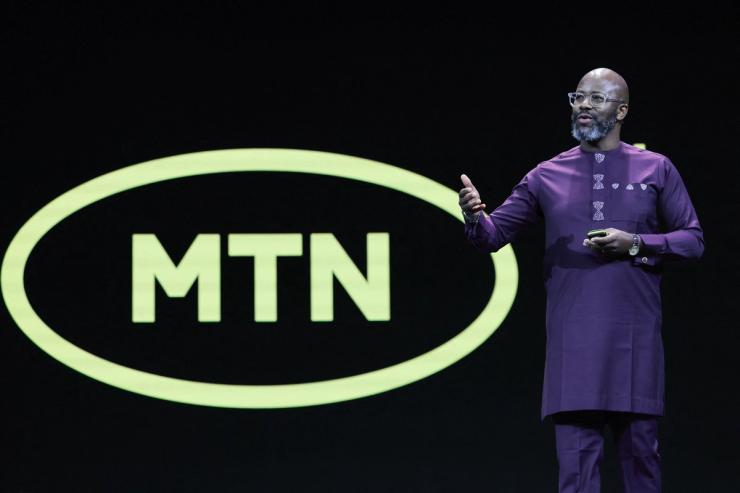
Speaking to Semafor this week, Ralph Mupita, who currently chairs GSMA, a global mobile industry body, drew examples from China, India and the US, where a handful of dominant players have marshalled the scale to roll out nationwide 5G and fiber, and South Africa should consider a similar consolidation to attract the investment needed for 5G, 6G and AI.
“Those are the conversations we are having with regulators and policymakers, so that South Africa can avoid Europe’s underinvestment,” said Mupita, referring to merger rules that slowed expansion. The European Commission is redrawing merger rules and aims to publish proposals in April.
If the regulator acts on Mupita’s plea, it would put Telkom, which is partly owned by the government, into the mix of a possible merger and acquisitions spree that is likely to follow the reforms. The South African competition framework was one of the biggest barriers to MTN’s pursuit of Telkom, the third largest network which also runs the biggest fiber optic network in Africa’s biggest economy.
Although Mupita is prioritizing Nigeria and Ghana for higher profits, he said he would pursue South African acquisitions if attractive in the “medium-to-long-term” — in comments that put Telkom in the spotlight. Serious talks between the two collapsed in 2022 over regulatory concerns but the idea has resurfaced as MTN seeks to bulk up its fiber infrastructure.
In this article:

Know More
South Africa is a mid-sized telecom market — roughly 60-65 million people that on paper supports five national mobile network operators, including the incumbents, MTN and Vodacom. That headcount makes the market look crowded, but market power is heavily concentrated in two incumbents, and the rest lack the balance sheet to underwrite nationwide 5G and fiber rollouts.
Last year, the Competition Commission blocked a deal that would have pulled fiber resources of Vodacom and another domestic player, giving vocal activists such Mupita a prime example of how regulators are focused on the theoretical loss of rivalry while overlooking billions in promised investments. Although the Commission did a U-turn after the parties sweetened the deal, the episode underscored that merger outcomes can bind companies with social taxes that may undermine their commercial merits.

Tiisetso’s view
South Africa’s competition regime is built around the view that more operators automatically mean better outcomes for consumers, a logic that made sense in the early mobile era, Mupita said.
But once the industry moved deeper into the data era, and now into the AI area, it needs big, long-term investment and patient capital.
Mupita’s push for a looser, investment-friendly regulatory regime echoes a broader shift in global telecoms. European operators from Vodafone to Orange and Deutsche Telekom have spent years warning that strict competition rules and fragmented markets have left Europe trailing the US and Asia on 5G investment.
The tide, however, has turned around since 2024 after former ECB President Mario Draghi’s report for the European Commission, which argued that Europe’s economy is being held back by outdated competition rules.
Scale matters more than headcount in the era of 5G, fiber and AI. South African regulators should take note. With Vodacom and MTN spending more on network infrastructure, a market that looks competitive on paper but is concentrated in practice risks underinvestment and patchy coverage.
Regulators who reflexively block mergers in the name of persevering choice could end up with slower networks and higher running costs. That trade-off matters for jobs, connectivity, and the country’s digital competitiveness. South Africa can repeat Europe’s decade of missed upgrades or adapt its rules to the realities of modern telecoms. That is a policy choice, not fate.

Room for Disagreement
Although the Commission caved on the Vodacom deal to fold its fiber assets into Masiv, which is owned by South Africa’s richest man, Johann Rupert, it fundamentally views South Africa’s economy as already too dominated by a few big players.
In practice, that means the Commission is wary of big mergers, unless they are paired with social taxes — protecting jobs, expanding network coverage in poorer areas and ensuring the Black majority benefits.

Notable
- European telcos have been calling for relaxed merger rules, saying the move would lift investments in digital infrastructure and help them compete with Asian rivals.