




The News
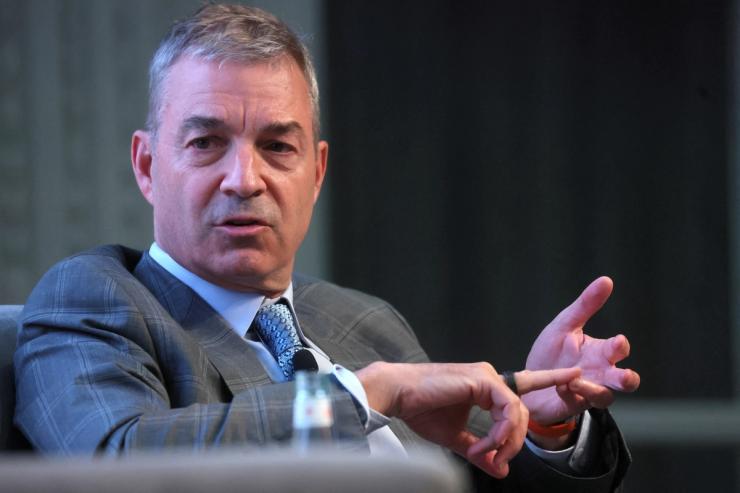
Dan Loeb’s Third Point last mounted a proxy fight 10 years ago, delighting shareholders with his biting letters and scorched-earth attacks on management. Now, the billionaire activist investor is ready to mount another campaign, at a real estate giant he says has badly lost its way.
Loeb alleges that the “anemic performance” at CoStar Group, the $30 billion company behind Homes.com and a suite of commercial real estate products, “can be ascribed entirely to the misallocation of billions of dollars” into its residential expansion.
Loeb reserved particular vitriol for CoStar CEO Andy Florance. “Like an elementary school child who wins a prize even for finishing last, Mr. Florance’s bonuses are perhaps the costliest ‘Participation Award’ our firm has witnessed,” Loeb wrote in a blistering letter to shareholders.
Loeb and multi-strategy hedge fund D.E. Shaw had struck a deal to avert a proxy fight last year, but the agreement expired Tuesday at midnight. Now, Loeb wants to replace a majority of CoStar’s board and go after the CEO’s “exorbitant pay packages,” he said. CoStar refutes Loeb’s assertions but says it will continue to engage with Third Point.
“Over the past year, CoStar Group has conducted extensive engagement with stockholders to inform our updated strategic vision and capital allocation priorities,” a spokesperson told Semafor. “We intend to continue to engage with our stockholders, including Third Point, to help them better understand our strategic plan, which has already garnered support from many stockholders and analysts.”
In this article:

Rohan’s view
Loeb’s hardly been in exile — he issued letters about Intel and took positions in US Steel and Kenvue, both of which were taken over. But his emergence from a bit of proxy-fight hibernation is a bullish signal for activist investors and M&A bankers alike — an indication that the market dislocations of Trump 2.0’s early term are now more digestible and navigable, and that the robust pipeline bankers have been promising might actually start coming to fruition.
Bankers have for months now been predicting that 2026 would be a banner year for dealmaking, with Bank of America CEO Brian Moynihan telling Semafor last week that “the pipelines are full.” Of course, they also said that about 2024 and 2025, on the cusp of what was expected to be a dealmaking renaissance ushered in by US President Trump’s laissez-faire approach to antitrust enforcement.
But activist presence is one of the top catalysts for M&A. That’s certainly true here, where Loeb is looking for CoStar to get out of a major business altogether. Should more activists come out of the woodwork, bankers’ M&A dreams may finally, durably come closer to reality.

Room for Disagreement
Most of the big deals seen last year were generational, now-or-never pieces of M&A — see Union Pacific’s acquisition of Norfolk Southern. If anything, the environment has gotten muddier for CEOs looking to do big deals, with disruption in Europe and trade continuing. As the US midterm elections near, and the president refines his focus on affordability, some form of Trump-style antitrust enforcement may come back into vogue and potentially derail deals.