




The News
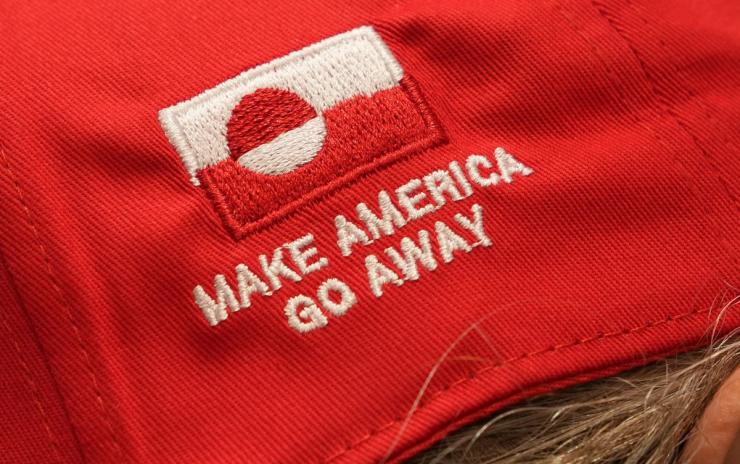
President Donald Trump’s pursuit of Greenland looks increasingly at odds with his efforts to bring down the cost of living for Americans.
Following Trump’s vow to impose tariffs on longtime US allies that sent troops to the Danish territory, stocks collapsed and the dollar faltered. Gold — which investors typically treat as a retreat from geopolitical turmoil — gained more than it had in months. In yet another sign of eroding confidence, investors dumped US Treasuries, sending their prices down and yields up.
Trump appeared frustrated with the turn, which threatened to eclipse his own recent push to lower mortgage rates (not to mention the so-called wealth effect that keeps people feeling good about the economy). The president dropped into Tuesday’s White House press briefing to tout “the best stock market in history” and progress fighting inflation, pointing to bigger retirement accounts and lower gas prices while bemoaning a disconnect between his policies and public perception.
“Maybe I have bad public relations people, but we’re not getting it across: We inherited high numbers and we brought them way down,” he told reporters.
Since the president’s April tariffs reveal, investors have shrugged off what otherwise would be market-rattling news — most recently, the administration’s criminal investigation into Federal Reserve Chair Jerome Powell. And Trump has shown some interest in shifting his focus to flagging approval ratings on the economy, rolling out proposals this month that aim to boost consumer sentiment ahead of the midterm elections.
Despite GOP skepticism of some of Trump’s ideas, they seemed to be paying off: After Trump approved the purchase of $200 billion in mortgage bonds, long-term rates hit their lowest point in more than three years.
But as tension grows between Trump and European leaders, some of those recent gains are disappearing fast — leading some economists and policymakers to question whether the Wall Street tides might be turning.
“The thing that I’m watching and others are watching is: Is it going to be simply sequential resets … or is this more a cumulative process, a little bit like a mound of sand?” Mohamed El-Erian, chief economic advisor at Allianz, said of recent market moves.
“You keep on adding particles of sand, nothing happens — and then suddenly, the shape of the mound changes completely. We don’t know … but this is becoming a really important issue.”
If the US’ relationship with Europe sours further, it could spell bigger trouble. Countries like the UK, Belgium, and France hold trillions of dollars in US assets like Treasuries. If they decide to sell those, it could send interest rates skyrocketing.
At a minimum, Trump’s antagonism toward NATO over Greenland does more than risk overshadowing his planned economic speech at Davos on Wednesday; it also further distracts the rest of his party from touting the tax cuts they’ve acknowledged they’ll need to sell harder on the campaign trail.
“He’s undermining his own political strength and he’s undermining the GOP; he’s not able to stay on message with what the voters want to hear,” Rep. Don Bacon, R-Neb., said. “He’s got a beautiful opportunity to talk about economic growth and he’s thrown it away on the stupidity of Greenland.”
“The S&P 500 is up over 10 percent and 10-year Treasury bond yields are down nearly 30 basis points over the past year because the markets have confidence in the Trump administration’s pro-growth, pro-business policies,” White House spokesperson Kush Desai said in a statement.
“Accelerating GDP growth, cooled inflation, and over a dozen historic trade deals all prove that this administration continues to deliver for American workers and companies.”
In this article:

Know More
Trump’s escalating play for Greenland wasn’t the only thing contributing to Tuesday’s selloff, El-Erian said. He pointed to Japan’s bond market, where concerns about Tokyo’s fiscal straits boiled over Tuesday.
“It’s very difficult to disaggregate the market reaction from what’s going on endogenously in Japan,” Treasury Secretary Scott Bessent said in Davos.
Danish firm AkademikerPension, which added fuel to the “sell America” fire when it announced plans to eventually sell all $100 million of its US Treasuries, attributed its decision primarily to the US’ growing debt.
“It is not directly related to the ongoing rift between the [US] and Europe,” the firm’s investing chief said (though he noted “that didn’t make it more difficult to take the decision”).
For now, investors may take some comfort in GOP lawmakers’ reluctance to antagonize Denmark. Though Congress has not yet moved to restrict Trump on Greenland, even his staunchest allies on Capitol Hill are treading carefully on the issue — including new tariffs.
“We’ve had a great relationship with [Greenland] in the past, and there’s a significant military presence” already, Senate Majority Whip John Barrasso, R-Wyo., told reporters Tuesday. “We need to build on that.”
Notably, congressional resistance to investigating Powell appeared to help calm markets last week.

Room for Disagreement
The White House isn’t alone in downplaying Tuesday’s volatility: Bank of America CEO Brian Moynihan told Semafor in Davos he sees little evidence of a US economic slowdown.
As for a European selloff of US assets, Bessent shrugged off the possibility, telling reporters in Davos it “defies any logic”.

Eleanor’s view
It’s starting to feel a little like the market reaction to last April’s “Liberation Day” tariff unveiling — but there are some signs this week’s post-Greenland tumult could ease in the same way.
European countries aren’t dumping their US assets en masse. And as El-Erian said, there’s a real possibility investors wind up shaking off this weekend’s news — especially if the short-term volatility spurs Trump to change tack.
“No elected official controls the market,” Rep. Frank Lucas, R-Okla., told me. “We’ll see over the course of the next few days what happens — but [Tuesday’s sell-off] was a strong statement.”
In the meantime, we reported back in November that Republicans were eager to see Trump pivot away from foreign policy and toward the US economy after Democrats notched big off-year electoral gains. It’s fair to say that the president has not taken that advice yet, as he posts memes envisioning US control over Canada.

Notable
- Anthony Gutman, co-CEO of Goldman Sachs International, told CNBC Tuesday’s chaos “is the new normal.”