



The News
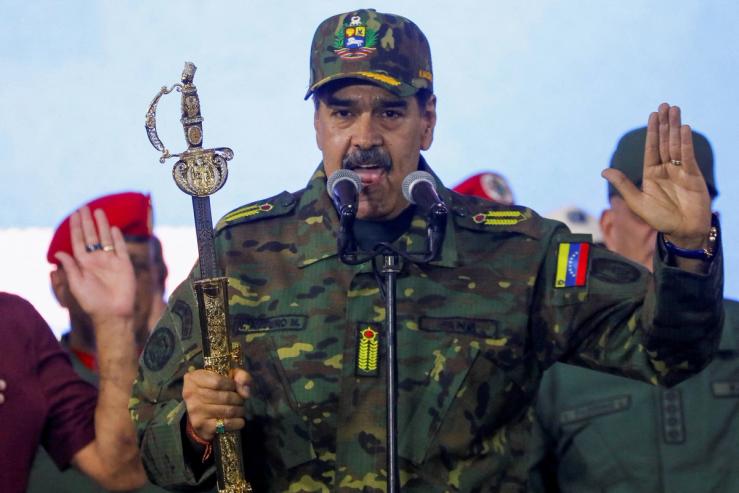
President Donald Trump laid the political groundwork for the capture of Venezuelan leader Nicolás Maduro for months in the halls of Congress, gradually quelling any coordinated internal opposition from his own party for his goals to oust the strongman leader.
Trump deployed Cabinet secretaries to brief skeptical Republicans 23 times over the past four months, according to Secretary of State Marco Rubio, and even faced a tough — but ultimately failed — vote on the Senate floor to curtail his military campaign. In the end, Trump earned just two defections against his campaign against alleged drug smuggling boats off the coast of Venezuela from GOP Sens. Rand Paul of Kentucky and Lisa Murkowski of Alaska, setting the stage for strong party backing on Saturday morning as the world digested the news of Maduro’s capture.
“President Trump’s decisive action to disrupt the unacceptable status quo and apprehend Maduro, through the execution of a valid Department of Justice warrant, is an important first step to bring him to justice,” said Senate Majority Leader John Thune, R-S.D., who spoke to Rubio on Saturday and said he expected further briefings on the administration’s “comprehensive counternarcotics strategy.”
Even in the wee hours of Saturday, though, it was apparent that the Trump administration was working to quiet any GOP concerns. Several Republican lawmakers reported conversations with Rubio after the strikes — including one skeptic.
Sen. Mike Lee, R-Utah, publicly questioned the constitutional operation absent a declaration of war or congressional vote for military action. But less than two hours later, he said he’d received a call from Rubio stating military action in Venezuela was to protect those arresting Maduro and that this weekend’s action “likely falls within the president’s inherent authority under Article II of the Constitution to protect U.S. personnel from an actual or imminent attack.”
It’s clear the president is barely concerned with getting Democrats on board. A spokesperson for Senate Minority Leader Chuck Schumer said the “Gang of 8 was not notified ahead of time,” referring to a group of top congressional and Intelligence Committee leaders.
That doesn’t mean Trump won’t face more scrutiny of his actions in the region from Republicans like Paul, Murkowski, and Rep. Thomas Massie, R-Ky., or other quieter Republicans who prefer congressional authorization of military strikes. Sen. Tim Kaine, D-Va., said he will force a vote next week “stipulating that we should not be at war with Venezuela absent a clear congressional authorization,” once again putting Republicans on record.
Still, Trump isn’t facing much vocal pressure from rank-and-file Republicans to adhere to his occasional dovish instincts. Instead, he has a louder contingent of Republicans — particularly from Florida — urging him to decisively oust Maduro, who lost a presidential election in 2024 but refused to leave office.
Sen. Lindsey Graham, R-S.C., among a group of Republican senators who cheered on Trump’s Venezuela offensive this fall, concluded a celebratory post on Saturday by suggesting a potential next target: “With Maduro’s capture, the drug caliphate is moving toward collapse. Free Cuba.”
And Sen. Bernie Moreno, R-Ohio, another top Maduro detractor, plans to attend Trump’s press Saturday conference about Maduro’s ouster.

Know More
Maduro’s capture was months in the making. As Trump’s top advisers worked the lawmakers in Congress, the administration slowly ratcheted up a pressure campaign culminating in Saturday’s strike and capture. The Trump administration doubled a bounty for Maduro’s arrest and formally linked him to cartel activity while bringing more military assets to the region and, eventually, bombing alleged drug boats and facilities inside the country.
But big questions remain, including whether (and how) the US plans to help facilitate a transition away from Maduro in Venezuela. And Trump’s decision to capture Maduro without notifying Congress first will rankle Democrats and critical Republicans like Paul, particularly after chief of staff Susie Wiles said in interviews published in Vanity Fair last month that strikes inside Venezuela would require prior approval.
Trump also risks charges of hypocrisy after pardoning the former president of Honduras Juan Orlando Hernandez, who was convicted of drug trafficking, as he tries to flex a tough-on-drugs stance in Venezuela (a country harboring vast oil reserves).

burgess and shelby’s view
Today represents a big win for Rubio, a top Maduro critic who helped influence Trump this term to take stronger action in the country. And the public backing from Republicans like Lee and moderates like Rep. Mike Lawler, R-N.Y., demonstrates Trump’s continued sway over the Republican Party — a positive sign for the president as polls show growing discontent over his handling of the US economy. But Trump and his team now own what happens next in Venezuela, and helping a country transition to a new leader is fraught with challenges.
Saturday’s announcement also raises questions about whether the administration will plan similar actions in other adversarial countries, like Cuba. And it will test the president’s support among a portion of his MAGA base, who became accustomed to Trump’s more isolationist approach to US foreign policy.

The View From democrats
Democrats asserted for months that Trump does not have the authority to strike Venezuela or boats off of the coast of it. Sen. Andy Kim, D-N.J., said lawmakers were misled by the administration during recent briefings.
“Secretaries Rubio and Hegseth looked every Senator in the eye a few weeks ago and said this wasn’t about regime change,” Kim said. “Trump rejected our Constitutionally required approval process for armed conflict.”

Notable
- As Trump ratched up his pressure campaign on Maduro, international investment giants eyed the potential benefits of the authoritarian leader’s ouster, Semafor reported in November.
- Maduro and his wife are facing federal drug-trafficking charges in New York, according to the Justice Department.