




Ben’s view
“The president will speak to anyone — that’s one of the great things about him,” the White House deputy chief of staff, James Blair, told me before a Semafor convening in Washington earlier this month.
That even includes — perhaps especially includes — the hated news media, members of which are on the phone more with Donald Trump than with any recent president.
Blair’s observation reminded me of something one of his White House predecessors, former Obama political director Patrick Gaspard, mentioned recently in his capacity as Zohran Mamdani’s éminence grise.
The New York City mayor-elect, who cheerfully talks even to the New York Post, has told aides that “part of the responsibility of democracy is to be subject to this conversation and the back and forth and the give and take,” Gaspard said. “That’s only going to make you stronger as a public official, stronger as somebody who can deliver an argument and land it well.”
So here’s some holiday cheer for our embattled profession: Successful modern political figures don’t hide from journalists. They may not like us; they may recognize the reality that legacy media doesn’t have the power it once did. But they retreat into friendly bubbles at their peril.
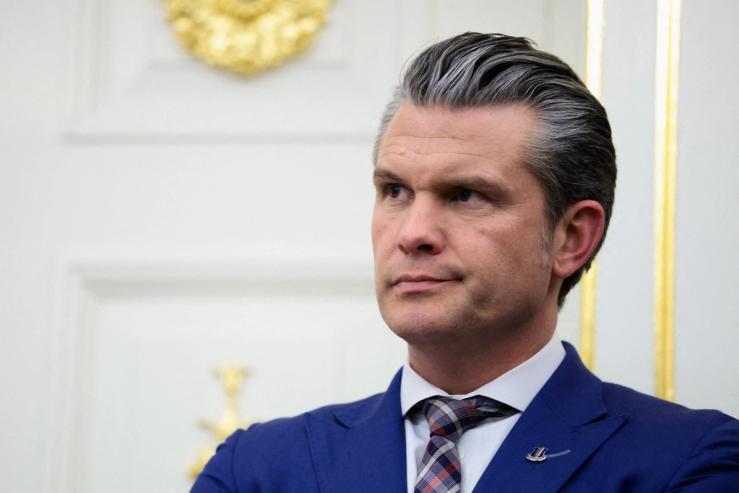
That was true of Joe Biden. And if anyone was in doubt about this, Defense Secretary Pete Hegseth is proving it again.
He’s a fluent communicator and former TV host in what’s usually a fairly popular role, and he still seems to have the president’s support. He has some ideas that many Americans might welcome, from his controversial efforts to masculinize the military to his deputy Stephen Feinberg’s attempts to modernize the gear.
But he’s only figured out half of Trump’s media strategy — the public conflict — without realizing that Trump is in on the joke. Hegseth blamed journalists for Signalgate, theatrically tossed beat reporters out of his building, and managed to make himself among the least popular members of Trump’s Cabinet. He has yet to brief the press on the unpopular US adventure in Venezuela or to release key details of the buildup (in contrast to Secretary of State Marco Rubio, who held a marathon press conference Friday).
When I asked the Pentagon about this thesis, an aide responded quickly to note (and prove) that the administration will answer. “Any claim that the Pentagon is inaccessible, or hiding are completely false,” Pentagon press secretary Kingsley Wilson said in an email.
That begs the question of what Hegseth thinks he’s getting out of the posturing. There’s an old journalistic saying that “access is a curse.” It means that if you’ve got reporters wandering your building, you can tell them your story. Send them packing, and lose all control of the narrative.
The good news is that no ambitious politician looking back at Trump and Mamdani on one hand, and Hegseth on the other, is going to have any doubt about which path to follow.
In this article:

Room for Disagreement
Both sides of the political spectrum continue to invest in their own closed media ecosystems, with mixed results. One recent example on the left is ActBlue’s sponsorship of progressive podcasters, as the Democratic Party races to stand up something to rival the MAGA media sphere.

Notable
- The Trump administration has a de facto policy of stonewalling reporters who include their pronouns in their email signatures, the AP noted.