




Bright Simons’s view
*This View was updated to include input from Zipline.
The easy storyline about the Trump administration’s approach to development aid is that it has torched a decades-old system. In reality, he’s trying to reinvent it.
In US President Donald Trump’s new world, America still spends money in poorer countries. But the logic has flipped. Aid now flows according to a worldview that is part-mercantilist, part-missionary, and wholly transactional. Under the emerging America First Global Health doctrine, the US will still back big public-health efforts and support essential services. But every dollar must also advance American commercial interests, spread US science and technology — and reinforce American influence.
Crucially, partner countries must pay. No more open-ended, NGO-mediated projects that churn out glossy reports and diplomatic goodwill. Client governments must co-invest upfront, agree on a timetable for taking over full costs, and treat the US as a hard-nosed business partner. Nowhere is that clearer than in the example the administration has chosen to showcase the new approach: Zipline.
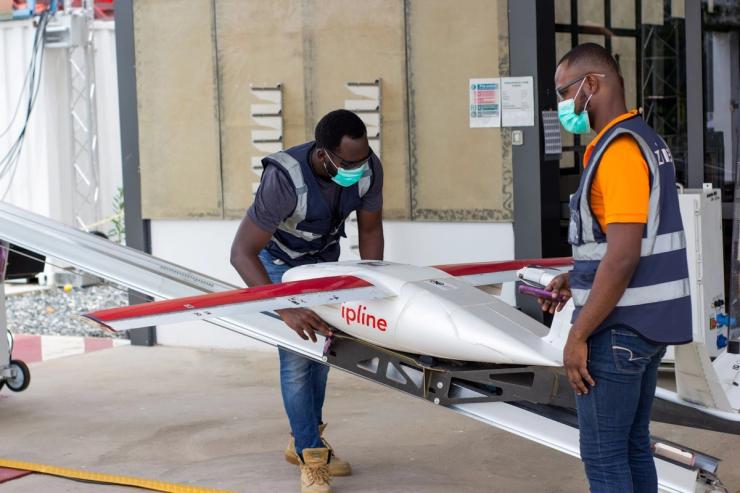
The 11-year old drone company is one of the few Silicon Valley startups that found its highest-profile markets in Africa rather than at home. Since launching in Rwanda a decade ago, it has built a business in Africa almost entirely on contracts with governments shipping vaccines, blood, and other supplies to remote clinics. The Trump administration just handed the company a $150 million grant to prove the MAGA thesis on aid.
On paper, Zipline is a perfect fit. Governments must sign commercial agreements that demonstrate demand and commit real money. In theory, the company grows, essential services reach communities, and US technology gains ground. In practice? Not so simple.
Take Ghana, Zipline’s flagship African client. Since 2018, the country has accumulated unpaid bills, which Zipline says topped $15 million and led to the company shutting down half of its bases. The new Ghanaian administration argues that over 95% of deliveries weren’t essential and 85% of target clinics weren’t remote enough to make drone transport a sensible cost. Zipline told Semafor it only delivers products that are authorized by government.
So, yes, alignment of interests, the holy grail of the America First approach, can be messy. Finding synergies across public policy, commercial interests, geopolitical reciprocity, and operational efficiency is easier said than done.
For instance: Zipline’s $150 million grant will only be fully disbursed if African governments sign expansion agreements, which could total as much as $400 million over five years. That number dwarfs a decade’s worth of drone-delivery profits on the continent. For this strategy to work, the evidence must show that the system is more cost-effective than the status quo which Zipline says it does, backing it up with multiple links to recent research. But I would argue it still only makes the most sense if a volume-shift away from niche emergency deliveries truly reflects public priorities rather than elite whims.
And that’s the real test. America First aid assumes partner countries can articulate transparent, evidence-driven priorities and defend them to their citizens. But in much of Africa, priority-setting still happens far from scrutiny. Without a critical public to keep leaders honest, even the most disciplined transactional model collapses into chaotic, opaque, and impossible-to-scale policymaking.
Trump’s aid doctrine isn’t incoherent. It’s ambitious, provocative, and potentially disruptive and transformative in parts. But it rests on an assumption that can’t be taken for granted: that client governments will do the hard policy work the model requires. The next three years will show whether that’s visionary. Or delusional.
Bright Simons is an honorary vice president at Imani, a think tank in Accra, Ghana and a visiting senior fellow at ODI Global, a London-based think tank.

Notable
- Zipline featured in Time Magazine’s most influential companies list in 2023.