





The News
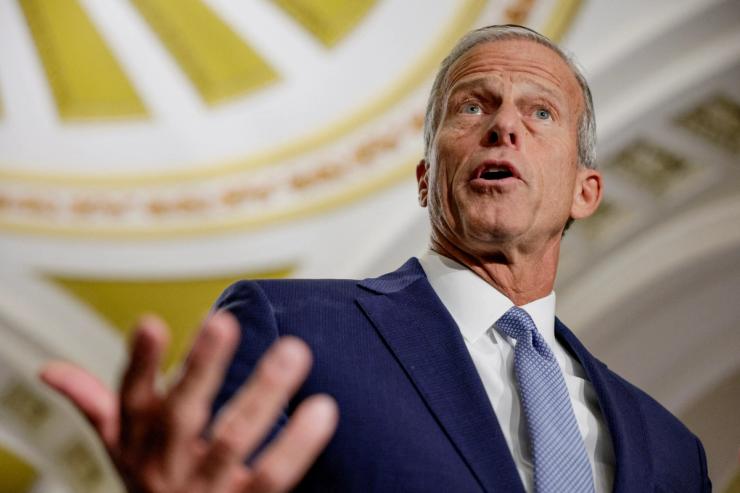
John Thune took criticism from President Donald Trump, agitated online conservatives, and occasionally frustrated some of his own members this year.
Yet his next leadership election is looking smooth compared with the past couple of bouts to lead the Senate GOP. In fact, Thune may actually run unopposed this year, regardless of how the midterms go.
“I’m not aware of anyone who wants the job. I certainly don’t,” Sen. Ron Johnson, R-Wis., told Semafor. “I don’t envy the leader’s task.” Sen. Rick Scott, R-Fla., who challenged Thune in 2024 and Mitch McConnell in 2022, told Semafor there’s “no wiggle room; I am not running for leader” this cycle. He said Thune is “probably the only person that’s going to run. But I always want to say if other people run and someone comes up with better ideas, you’ve got to listen to them. But I’m not running.”

Know More
The biggest headache for Thune was the Save America Act, a voter ID bill that lacked a strategy to become law in the Senate. Trump repeatedly leaned on Thune to kill the filibuster in order to pass it, and other senators wanted Thune to try to force Democrats to pull off a talking filibuster to block the bill.
Eventually, though, the effort and outrage over its stalled status faded away. With Democrats favored to win the House and potentially even take the Senate, the fight over killing the filibuster is back on ice.
That’s all good news for Thune, who says he’ll likely run for another term regardless of whether Republicans lose the Senate. If no one challenges him, it would be the first unanimous GOP leadership election since 2020. Notably, Johnson had backed Scott in previous leadership races.
Sen. Bernie Moreno, R-Ohio, told reporters on Thursday that Thune “will get elected pretty resoundingly.”
“Do I think he’s got broad support? Yes. I don’t think there’s an insurgent movement that’s against him,” Moreno said. “There’s not a single Republican running nationally that’s saying, ‘Hey, if you elect me, I’ll vote against John Thune as leader.’”
Several Democratic candidates say they won’t support Senate Minority Leader Chuck Schumer, D-N.Y., for another term as leader of their caucus. But no one is indicating they are looking to challenge Schumer, either, which means those could just be protest votes. Former Democratic leader Harry Reid received a handful of “no” votes in his leadership race after losing control of the Senate in 2014.
Republicans will have their leadership election on Nov. 10; Senate Democrats are likely to have theirs in early December, although the date isn’t set yet. The midterm results remain an X factor for both Thune and Schumer’s futures.