




The News
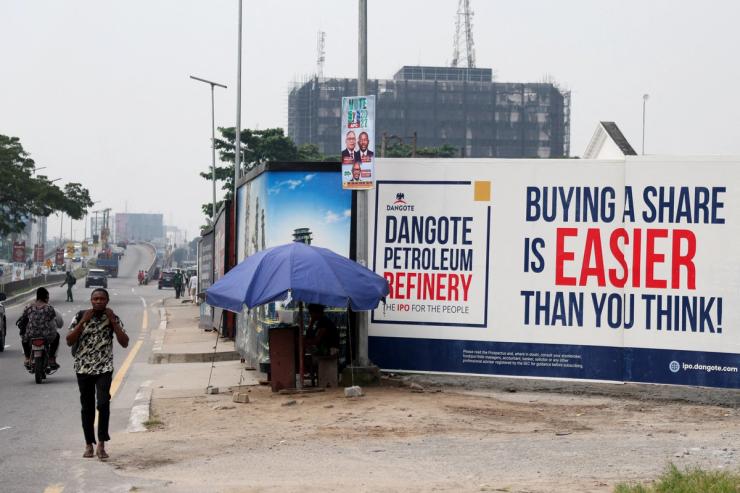
Kenyan investors hoping to participate in the Dangote refinery initial public offering now have access through a financial instrument being used for cross-border African investment for the first time on Nairobi’s bourse.
The use of global depositary receipts (GDRs), which allow backers to buy a stake in a foreign company without leaving their home market, bypasses regulatory barriers that have held up intra-African investment. The use of GDRs offers a template for exchanges across the continent to expand pan-African trade and broaden their investor bases.
After an extension of the IPO period was announced on Monday, Kenyan individuals and institutional investors will have until Oct. 27 to buy into their country’s $300 million allocation of Africa’s largest public offering.
The minimum entry price in Kenya was slashed from $824 to $4.12, matching what Nigerians were being offered. Announcing the extension, Dangote said he wanted greater African participation and highlighted the Kenyan arrangement that he hoped could be replicated.
African policymakers are keen to deepen capital markets as a way to mobilize more of the continent’s domestic resources to fund infrastructure projects and reduce borrowing costs.
In this article:

Know More
The refinery’s stock market debut was touted as a way for African investors to own a stake in the continent’s largest refining plant. But the prospectus for the $1.6 billion share shows it was not registered as a public offering outside Nigeria, Reuters reported. That has left investors relying on their own country’s regulations or finding workarounds using the few eligible online financial platforms. Reuters reported patchy take-up outside Nigeria, reflecting low levels of cross-border investment.
The Nairobi Securities Exchange’s (NSE) approach is structured around Standard Bank’s Kenya subsidiary Stanbic, which will hold the shares and issue the GDRs. These will be traded on the NSE in Kenyan shillings, and Stanbic will manage the foreign exchange conversion and pay out dividends.
Karimi Warui, vice president of investment banking at Renaissance Capital, which is overseeing the IPO in Kenya, told Semafor that the Dangote Group initially intended to pursue a conventional cross-listing approach to get on the NSE and other stock exchanges, but ultimately settled on GDRs for ease. Trying to deal with the rules and regulations of 10 different jurisdictions “became a bit onerous for them,” she added.
She said this approach in Kenya could inspire others. “I wouldn’t be surprised if companies that are already listed like [Kenyan telecoms company] Safaricom pursue GDRs in the future to tap into markets like South Africa and Nigeria,” she said. “I actually think we will see more of this now,” saying the IPO would “show regulators the need to work with financiers and issuers” to accelerate growth and integration of Africa’s financial markets.
Warui also emphasized the need for regulators to customize policies to fit African markets instead of copying Western regulators.
The use of GDRs comes amid a significant push to enhance retail investing in the country. Safaricom this year rolled out NSE trading on the mobile money service M-Pesa, helping drive retail participation in the IPO of the state-run Kenya Pipeline Company (KPC). Warui told Semafor that Renaissance Capital was copying the KPC blueprint for the Dangote IPO — with an online platform for share purchases during the offer period, and trading on the M-Pesa platform expected once it is listed on the NSE.
Besides Kenya, Uganda’s markets regulator has approved a restricted offer limiting participation to high net-worth individuals and professional investors. Botswana has been selected to host the southern African portion of the public offering, Bloomberg reported.

Step Back
Some analysts have cautioned that the GDRs could leave Kenyan investors exposed to FX risks as the GDR tracks the Lagos share price, which is in naira, meaning currency devaluation could significantly affect investors. Acknowledging the concerns, Warui noted that Dangote Refinery’s revenues were dollarized and that dividends could also be paid in dollars, mitigating the potential impact of naira devaluation.
Previous GDR listings by African companies have been outward, where issuers list the underlying shares on exchanges outside the continent — mostly on the London Stock Exchange (LSE) to attract Western capital.

Room for Disagreement
Sultan Mwangi, a Nairobi-based investor and financial researcher, predicted that participation in the Dangote IPO among Kenyan investors would be far lower than expected, especially among retail investors.
He attributed this to the handling of the IPO which he said had left investors “disappointed” despite initial excitement. Among issues he cited were inadequate investor education and a need to address concerns regarding the use of GDRs, especially over whether this will leave people exposed to fluctuations in the value of the naira. According to Mwangi, the extension of the IPO offer as well as lowering the minimum investment were a response to low uptake among retail investors.
“People were not convinced, and the amount of time available to explain it has not been enough,” he told Semafor. Dangote Industries has yet to respond to enquiries from Semafor on whether the lowering of the minimum investment was a response to underwhelming participation among Kenyan retail investors.

Notable
- African nations should turn to an estimated $4 trillion in capital held by domestic institutions, such as pension funds, to develop infrastructure, the Africa Finance Corporation has said.