




The News
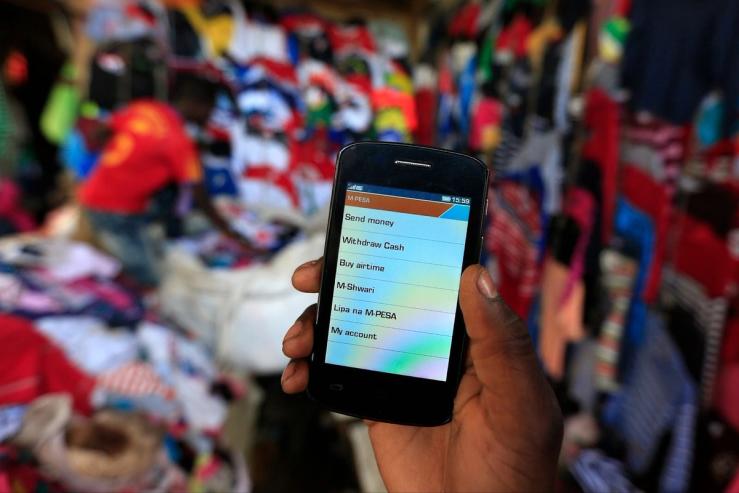
The Nairobi Securities Exchange is betting on mobile money platforms to attract more retail investors after ending a decade-long IPO drought, with leading telcos expected to soon roll out trading services on mobile money apps to widen access to capital markets.
Last week the government began selling a 65% stake in its state oil pipeline company on the NSE, aiming to raise $824 million in what could become East Africa’s biggest IPO in local-currency terms. Around 20% of the issued share capital has been set aside for retail investors, individuals who trade stocks for their own accounts. A second IPO by mid-tier lender Family Bank is expected later this year, with the company aiming to provide liquidity for existing shares.
Andrew Barden, chief executive of Wall Street Africa Group, a Nairobi-headquartered financial intelligence company, told Semafor that he expected mobile money platforms such as M-Pesa and Airtel Money to drive “a massive number of new retail traders coming into the NSE.” He described the KPC IPO as “a litmus test” for the NSE’s strategy to reach 9 million new retail traders by 2029.
Barden explained that latching on to mobile money services such as Safaricom’s ubiquitous M-Pesa would reduce the time required to onboard new investors from days to minutes by leveraging their existing details. He also noted that the NSE had last year removed its minimum 100-share purchase requirement for traders, allowing the sale of single units to broaden market access. “These two critical changes can now deeply accelerate the route-to-market for new retail traders,” he said.
Ian Mwangi, a Nairobi-based economist, said that new retail investors would have to be convinced to buy stocks instead of more traditional investments. “The NSE is largely a dividend-driven bourse, so there would have to be massive financial education to get people to see the benefits of investing in capital markets as opposed to traditionally preferred investments such as land, real estate, and small businesses,” he said.
In this article:

Know More
Retail investment participation in the NSE has been historically low. While there are more than 1.48 million retail trading accounts on the bourse, less than 10,000 were actively trading monthly as of 2024. To achieve its ambitious 9 million target, the exchange aims to hire at least 500 agents to support the onboarding of new clients, as well as ramping up financial literacy and “simplifying the investment process.”
Safaricom’s M-Pesa service boasts over 37 million monthly active users in Kenya, and in the six months to September 2025 recorded a total transaction value of $157 billion. Following its licensing by the NSE last month, Safaricom plans to integrate the trading service into its M-Pesa application via the Ziidi Trader mini-app. The NSE also licensed Airtel, which runs Kenya’s second most-used mobile money service, and the international online trading platform Capital.com, to offer the services.
Last year the NSE was ranked as Africa’s second-best performing stock market in dollar-adjusted returns, behind only Egypt’s exchange, with a roughly 52% return for investors. The performance was driven by significant gains recorded by blue-chip stocks such as Safaricom and leading banks including KCB Group and Equity, as well as lower interest rates in the country.

Martin’s view
While the introduction of mobile-first trading services is likely to drive significant participation by retail traders in Kenya’s capital markets, its success will also be tied to the pricing of the services including commission fees, details of which have not yet been announced.
Many have compared the introduction of trading on M-Pesa to the launch of Robinhood in the US in 2013. The app-based startup drew millions of new retail investors to the market including many young people. But Robinhood’s commission-free model was key to driving growth, forcing major online brokers such as Charles Schwab and E-Trade to eliminate trading fees. Traditional stockbrokers operating in Kenya are likely to be hit the hardest by the expansion of retail investing via mobile money, particularly if trading on mobile money will be both cheap and convenient.
The timing of the introduction of mobile money trading services is also key. More IPOs may be on the cards as Kenya’s government looks to privatize further state assets to fund infrastructure projects. Investment banks, for instance, are pushing the government to sell part of its stake in Safaricom to the public, instead of the planned sale of a 15% stake directly to South Africa’s largest mobile operator Vodacom.
Barden aptly observed that traditional stockbrokers facing disruption in Kenya would have to adapt to the new competition by exploring alternative business models, as some have been doing recently by introducing their own Money Market Funds — low-risk investment schemes that pool money from investors to put into short-term, high quality debt securities.

Room for Disagreement
Eric Ndubi, founder of the Nairobi-based financial literacy platform Best Pesa, said that new retail investors drawn to trading on mobile money platforms could be exposed to risks without adequate investment in financial literacy.
“Easier access without education can actually expose people to new risks — poor decision-making, unrealistic expectations, or being influenced by bad advice,” he said. “Turning M-Pesa into a trading gateway is a watershed moment for inclusion, but education is what will make that democracy sustainable.”

Notable
- Participation by local investors at the NSE hit a 15-year high in September last year, The Kenyan Wall Street reported.