




The News
Zambia signed a $1.5 billion health financing agreement with the US after separating it from a critical minerals deal that is still being negotiated. The health pact had been jeopardized by privacy concerns over sharing citizens’ data.
Zambia is among several African countries that have signed bilateral health deals under the Trump administration’s America First Global Health Strategy, but Africa’s second largest copper producer stands out for having publicly resisted key provisions and winning changes.
Foreign Minister Mulambo Haimbe said at the signing ceremony that the two memorandums of understanding “needed to be decoupled and this has been done.”
Washington said the deal was worth $2.49 billion, with Zambia committing $975 million in “new funding” and the US putting up $1.5 billion.
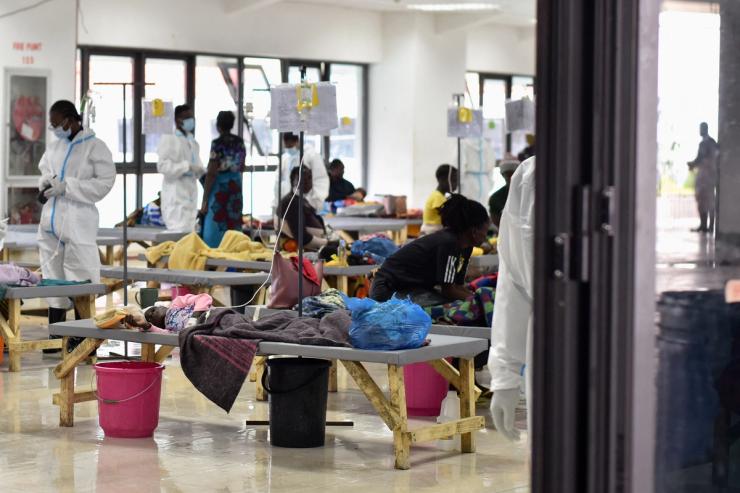
Global aid tumbled at its steepest rate on record last year as the US cut its budget by 57% when it dismantled the USAID model of unconditional funding, which researchers say has had an impact on health programs. A Lancet Global Health study published this week found that HIV testing dropped by more than 60% at four providers in Uganda and Zimbabwe, while treatment, which Washington had promised to protect, fell by about one third. “The safety net that was supposed to preserve life-saving treatment did not hold,” lead author Henry Cust said.

Know More
President Hakainde Hichilema, who secured a second five-year term in August, held out for months against the US demands requiring it to hand over biological specimens and patient data in exchange for the funding.
The deal strips out the specimen clause and restricts data sharing to monitoring and evaluation of US-funded programmes. “The government will not be sharing any specimens with the United States,” Health Minister Roma Chilengi said.
Zambia joins 35 countries, including several in Africa, which have signed the Trump administration’s America First Global Health Strategy that replaces the old USAID and PEPFAR system. Kenya was among the first to agree, but its courts suspended the deal last December, first due to the data clauses and then because of privacy issues and a lack of parliamentary approval. Ghana and Namibia refused to sign up over concerns about data and specimens, while Zimbabwe lost all US health aid last month.

Notable
- Think Global Health, published by New York-based foreign policy think tank Council on Foreign Relations, found total health spending falls in most deals as the US steps back, by about 14% by 2030 in eight countries, including Mozambique, Lesotho, and Eswatini.