



The News
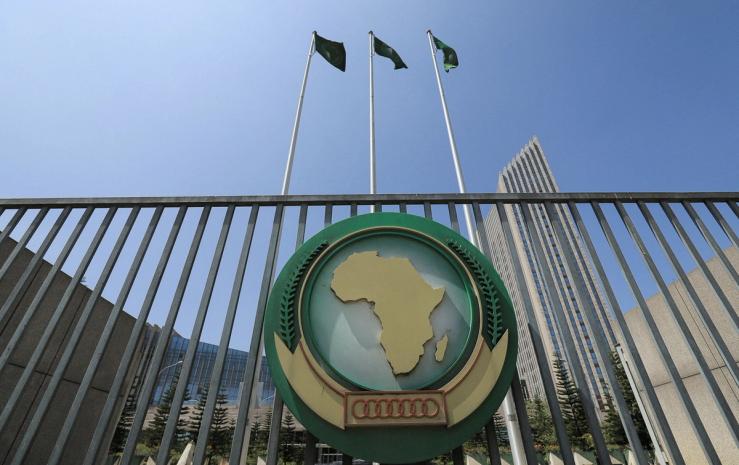
Africa’s long-planned credit rating agency launches in Mauritius on Wednesday, the continent’s most concrete answer yet to years of complaints that the world’s biggest agencies overstate African risk and drive up borrowing costs.
The creation of the Africa Credit Rating Agency (AfCRA) comes as global agencies face growing criticism for relying on offshore models that some African leaders and policymakers say misread local realities — a debate sharpened this year by Afreximbank’s public break with Fitch.
AfCRA will rate governments, cities and companies, and it is meant to complement the three US firms, which control 95% of global ratings markets.
The new ratings agency “will add another opinion in the market place of opinions,” said Marie-Antoinette Rose-Quatre, head of the AU body that incubated it. She called it “a very tangible outcome of our aspiration to build our own financial institutions”.
Only three African sovereigns hold investment grade ratings, according to a background note from the AU’s African Peer Review Mechanism (ARPM). Thirteen are rated at very high risk or in default, and 23 have no rating from the big agencies, which cuts them from international bond markets. The AU has also said the continent’s external debt service costs climbed from roughly $60 billion in 2010 to more than $160 billion in 2024.
In this article:

Know More
The launch is part of a wider push by developing countries, at the G20 and the UN, to change how global finance prices their risk. South Africa used its 2025 G20 presidency to put borrowing costs on the agenda.
In an op-ed published in Africa Renewal, the UN magazine, Rose-Quatre and Ahunna Eziakonwa, the UN secretary-general’s special adviser on Africa, said unfair ratings cost Africa $74.5 billion a year — an estimate which was first published by the UN Development Programme in 2023.
Key details of the new agency remain unclear. The APRM describes it as privately owned and self-funded but has not named its shareholders, chief executive, or board. Mauritius Commercial Bank and the pan-African lender Afreximbank took part in a 2025 meeting to raise support for the project. According to the APRM note, AfCRA “will require a licence” from Mauritius’ financial regulator.
People close to the project say trust will take time. “Credibility in credit rating is accumulated rather than declared,” said Daniel Cash, a UK-based law professor who has advised the APRM on credit ratings. The real test, he told Semafor, will come when AfCRA issues a rating that a member state, “particularly an influential one” strongly dislikes. “Independence is demonstrated at the point of disagreement.”
The launch also comes as global agencies expand on the continent. Moody’s owns GCR, the largest issuer of ratings in Africa, and in July S&P agreed to buy a majority stake in Nigeria’s Agusto & Co. S&P Global declined to comment, while Moody’s and Fitch did not respond to requests for comment.

Tiisetso’s view
For half a century, the cost of African borrowing has been set largely in New York by three firms that rate the 55 countries from a distance. AfCRA is the continent finally taking a seat at the table where its risk is priced.
Every 10 basis points shaved off a $1 billion Eurobond saves an issuer $1 million a year. Twenty-three states have no rating from the big agencies at all, which locks them out of mandates that require one. That’s the prize.
True, AfCRA has no track record and no named shareholders, but the quickest route to credibility runs through pain: an early, well-argued downgrade of one of the governments that cheered the launch.

Room for Disagreement
Critics question whether investors will trust any agency created by the governments it rates. David Lubin of UK think tank Chatham House asked whether AfCRA amounts to Africa “marking its own homework,” adding that fund managers compare African borrowers with the rest of the world and an African agency “does nothing” for them.
Misheck Mutize, AfCRA’s chief architect, acknowledged that the agency’s main role would be to steer Africa’s $4 trillion savings into African assets rather than changing how foreign investors see the continent.
“The challenge here is that this is the bare minimum disclosure required before international investors can even begin to take AfCRA seriously,” said Bright Simons, head of research at IMANI, a think tank based in Accra, writing on public policy platform Katanomics Society.

Notable
- Nigerian President Bola Tinubu made the case for an African rating agency, arguing that the Big Three misjudge African risk and that a homegrown agency could spot progress early, which the global firms would later confirm.