




The News
The US can still compete with China in markets where Beijing has an established foothold, US International Development Finance Corporation CEO Ben Black said Tuesday, arguing that Washington can take on risky investments abroad while also delivering value to American taxpayers.
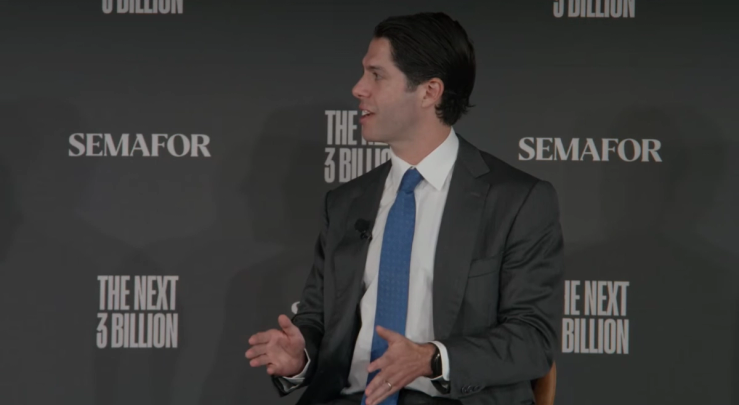
In conversation with Semafor’s Prashant Rao at The Next 3 Billion in New York, Black pointed to recent investments in African digital networks, Ukrainian energy storage, and uranium in Niger as examples of how the DFC is striking that balance.
One of the clearest tests, he said, is investing in Africa’s digital infrastructure, where Chinese companies like Huawei have already established a major presence.
Asked whether the US has effectively lost that competition given the extent of Chinese investment across the continent, Black insisted the US can still claw back ground.
“Just because you fell behind at one point doesn’t mean you cede the entire territory on the ground,” Black said, pointing to the recently announced investment in WIOCC Group, a pan-African digital infrastructure company.
“As we get to AI investment and the future of technology across Africa, not building on US-friendly rails would be madness,” he said. “And so when you have that room to do that, you’re not ceding all the territory. You can only grow further from there.”

Know More
The same logic also drives the DFC’s recent investments in Ukraine and Niger, Black said, emphasizing the need to structure deals around the risks inherent in those markets.
In Ukraine, the DFC is backing an energy-storage project that will use American battery technology to help strengthen the country’s power grid.
“We’re promoting US batteries, which is a very, very hard thing to do,” Black said. “At the same time, you’re building in redundancy and resilience because that’s some unsafe territory. So you have to underwrite deals that expect problems and hiccups in the road.”
The DFC’s recent deal in Niger, where the agency approved up to $414.2 million in financing for Canadian miner Global Atomic’s Dasa uranium project, required similar safeguards. Black said the financing is subject to multiple conditions before money can be disbursed.
“There are a lot of preconditions on the deal,” Black said. “But at the same time, it’s meeting a great need for US energy. It can power a lot of the renaissance in nuclear [energy] that is going on.”
Black argued that the investments would ultimately advance US interests abroad and deliver tangible benefits to Americans.
“It’s making a profit for the US taxpayer and meeting our strategic interests and those of our allies,” Black said. “Ultimately, we are always paid back.”