


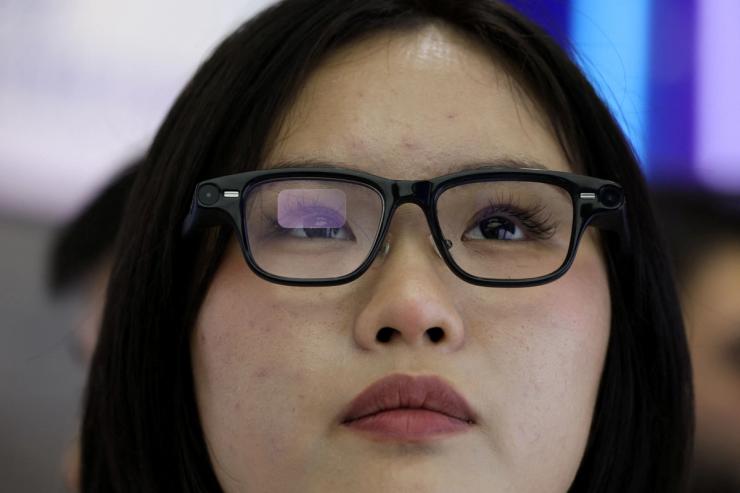
Chinese tech companies are pushing to integrate AI and coding tools into smart glasses as a global debate builds over the devices’ privacy and security implications. Alibaba Cloud announced a glasses edition of its AI coding platform last week, while Tencent is bringing its office agent to co-branded Rokid frames. As smart glasses tick up in popularity in China, the government has issued an industry code of conduct, which asks manufacturers to provide clear indicators when cameras or microphones are recording.
A similar dynamic is playing out in the US with Meta’s glasses, where the company disabled the camera on thousands of devices after some bad actors tampered with them to covertly record others, Semafor reported last week. Unlike in the US, where many workplaces are banning the glasses, Chinese companies that allow them face other security risks since they could in theory amass businesses’ data, including sensitive documents or internal codebases. Still, the country’s top-down regulatory system allows Beijing to more quickly step in if security and privacy issues get out of hand, a contrast from the US’ often slow-moving and piecemeal approach.