



Big Oil companies have always moonlighted as geopolitical risk assessment firms. That capability faces a big test now.
It takes guts to thrive in the oil business, where the wipeouts can be as spectacular as the slam dunks. Molecules are in the ground where they are, and engineering is not the only hurdle: Sometimes, a highly sophisticated navigation of political risk is required to get them out. Patrick Pouyanné, CEO of TotalEnergies, told me this year that he considers his company “not so risk-averse.” But he still won’t put its money anywhere that lacks “an economic framework and ecosystem where we feel comfortable” — a description he’s willing to apply to Iraq, for example, but not yet to Venezuela.
For the past decade, most Big Oil companies have kept their growth in check, doubled down in their existing strongholds, and tried to give more cash back to their shareholders — not exactly the wildcat spirit of yore. But now they’re under pressure, in large part because of geopolitical upheaval, to consider ventures that dial the risk variable back up. And when it comes to the Trump administration’s new drilling regime in Venezuela, “the real risk is not technological, it’s not geological,” said Vincent Piazza, senior energy analyst at Bloomberg Intelligence. “It’s exclusively political.”
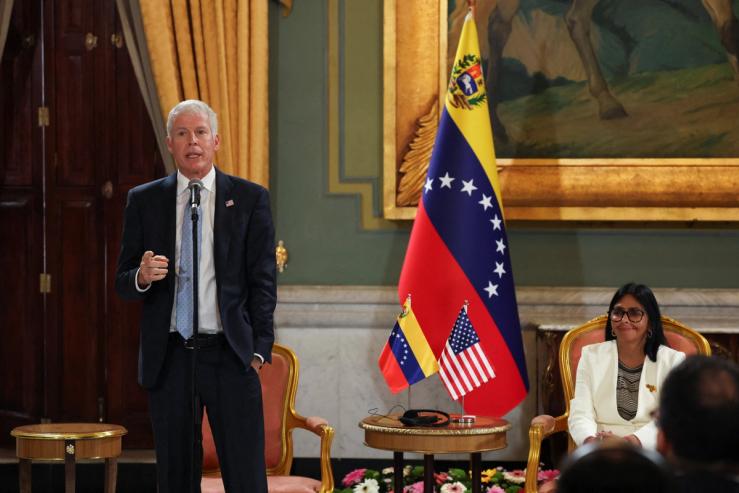
The scene in Caracas over the past week indicates that oil execs remain highly allergic to political risk. The city had a celebratory atmosphere, an industry insider who just returned from there told me, as US Energy Secretary Chris Wright led a delegation of American and European energy executives and flaunted a new deal for the Pentagon to take partial ownership of one of the world’s largest oil reserves. But the real excitement around private sector-led deals for companies like Chevron and GE Vernova to expand their operations there was offset by “a lot of apprehension” about the Trump administration deal, the insider said. Oil executives are still confused about how it will work, what the US government’s role will be, and whether it will use the deal to open new doors for them — or if the operation will be run more or less exclusively by and for Venezuelan oil magnate and Trump ally Alejandro Betancourt López.
It makes sense to be cautious when getting it wrong will cost you tens of billions of dollars. If political leaders in both Washington and Caracas expect more companies to go out on a limb before a more stable “ecosystem,” to use Pouyanné’s word, is in shape, they’ll likely be disappointed. “I think it’s a wise move to sit back,” Piazza said. “You have only two years of this administration. What happens next?”