




Tim’s view
Leading CEOs and officials spent the opening day of Semafor World Economy grappling with how to hardwire more resilience into the global energy system at a moment of unprecedented risk.
There are a lot of chokepoints in the energy market these days, from trade routes under threat of drone attack to maxed-out electric grids and China’s stranglehold on critical minerals. One lesson from Iran, several leaders said, is we can’t afford to sleep on these issues any longer. The first solution is build, baby, build.
“We are stupid in our industry, you know,” TotalEnergies CEO Patrick Pouyanné told me on stage. “We spent billions, we made plenty of risk maps identifying the possible Strait of Hormuz closure. None of us have built enough pipeline capacity to avoid it.” The reason the Iran war has been so disruptive, Pouyanné said, is that there is zero spare capacity in the fossil fuel supply chain.
But that may be changing. Infrastructure investors are increasingly willing to put near-term profits as a secondary consideration to redundancy and security, Baker Hughes CEO Lorenzo Simonelli told me. Another necessity is more adaptive insurance that can price in novel risks without completely freezing up, as has happened in the strait.
Neither of those things matter, however, without the rule of law.
Energy security is a game that takes decades to play out, and the best players want a clear view far into the future before making a move. New infrastructure can’t solve the problem if it’s not matched by durable good governance; replace the Strait of Hormuz with a new pipeline network, and someone could still blow it up if the region is unstable. Reflecting on Venezuela, US Energy Secretary Chris Wright said “there’s declining risk and massive reserves on the ground, so that’s a pretty fruitful environment for investment.” Pouyanné — whose company lost a lot of money in both Venezuela and Iran in the past — isn’t convinced: “We need to have an ecosystem in a country where we feel comfortable, because the billions we will invest need to deliver returns over the course of 20 years.”
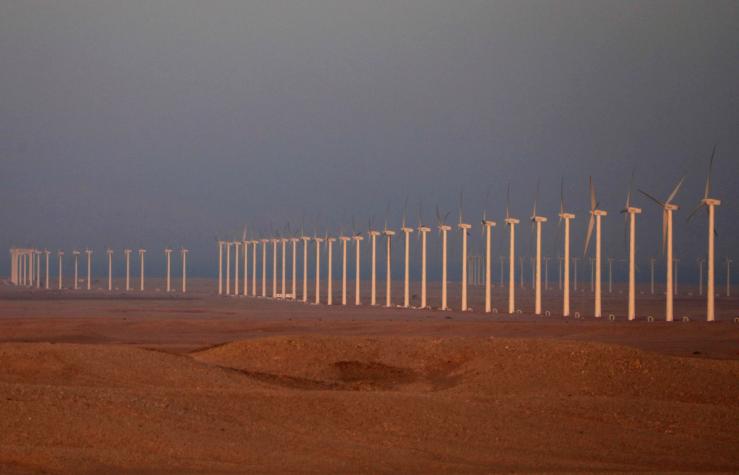
A final lesson is to accelerate the clean energy transition. I was in Egypt this month to report on how Chinese wind firms are rewiring the country’s grid to be more resilient to successive fossil fuel price shocks. Unlike Washington, Cairo can’t afford to be hawkish in its relationship with Beijing, and although Egypt poses numerous barriers to private investment, I found the energy community there to be refreshingly pragmatic and nonideological in its embrace of renewables.
Just don’t let the desert bite you back; when I visited a new wind farm near the Suez Canal, a significant portion of the safety briefing focused on venomous reptile avoidance.

Notable
- The US’s blockade of the Strait of Hormuz has as much to do with China as it does with Iran, writes Javier Blas for Bloomberg.