




Liz’s view
The NBA just showed corporate wrist-slappers how it’s done. The SEC, CFTC, OSHA, EPA, etc. should take some notes.
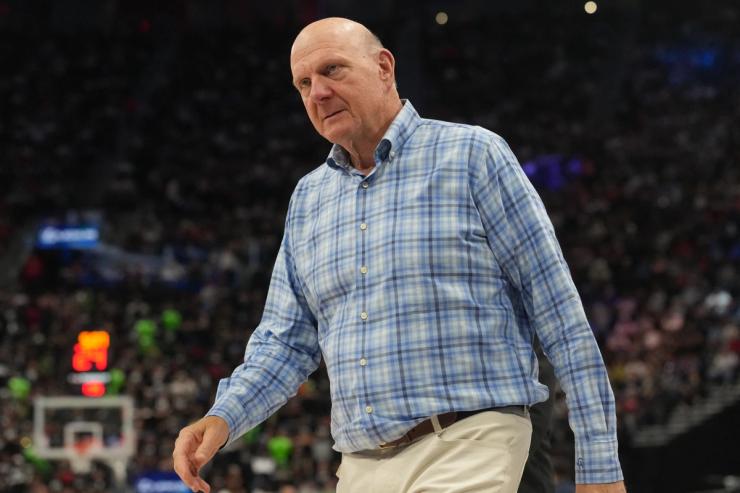
The penalty handed to the Los Angeles Clippers is the best I’ve seen as a reporter covering companies that sometimes behave badly. The Clippers will forfeit their next five first-round draft picks as penance for giving Kawhi Leonard “no-show” jobs, steered his way by team owner Steve Ballmer, to skirt the league’s salary cap.
The $30 million fine that comes along is nothing — it’s 10 days’ worth of the dividends Ballmer clips from his Microsoft stake — but the draft picks will likely exile the team to irrelevance for years. It’s a penalty box worthy of an architecture award.
It’s justice enough to win the approval of Jesse Eisinger, the ProPublica journalist who wrote the book on regulatory spinelessness. “A very successful punishment,” he tells me, because it “gets to the core of why these billionaires buy sports teams. They’ve been losers since high school so they want to be cool, to be literal winners and have trophies.” The Clippers being terrible will make Ballmer less cool and guarantee a chorus of boos from the $2 billion stadium the team just opened, which is going to be a lot emptier for a while.
Corporate watchdogs should do more of this. What if, instead of paying $250 million after mishandling big stock trades, Morgan Stanley simply wasn’t allowed to do those trades for a while? They’d be reminded of their screw-up every time Goldman Sachs printed a winner. A big tech company in trouble can’t recruit from Stanford or MIT for a few years. The Labor Department bans private-equity firms caught misbehaving from raising money from federal pension funds. Telecoms that overcharge are excluded from spectrum auctions. Media executives are banned from Sun Valley.
The two standout pieces of corporate punishment over the past decade hit companies where it hurt. An asset cap forced Wells Fargo to turn away business after its fake-accounts scandal and it fell behind Citigroup in size. The Federal Aviation Administration limited Boeing’s production of 737s after repeated safety failures, and the Airbus A320 became the best-selling jet in aviation history.
We’re living in an age of creative enforcement from Washington. More of it should actually sting. Bring back dunce caps.
In this article:

The View From Jesse Eisinger
“We have a scourge of elite impunity. So how to solve that? For white-collar crime, that means putting more rich (white) guys in prison. Elites need to suffer accountability for their wrongdoing. My argument in the white-collar context is fines don’t work.
But this was, on first impression, a very successful punishment. It gets to the core of why these billionaires buy sports teams: They’ve been losers since high school so they want to be cool, be literal winners and have trophies. The $30 million is trivial. What bites here is the draft picks. The thing that works about it is the status-stripping. The team is likely to lose a lot of games and Ballmer is deprived of the essence of being jock-adjacent.
In the regulatory context, I’ve been a fan of this kind of penalty box punishment. You cheat in the IPO business, you can’t do IPOs for five years. You get reminded of your punishment every day you come into work. It’s not writing a check and forgetting about it.”

Notable
- Gillian Zucker, Clippers team president, was also penalized for her role as a witness whose report contradicted physical evidence, highlighting the broad scope of the NBA’s punishments following the investigation, The Athletic reported.