




Liz’s view
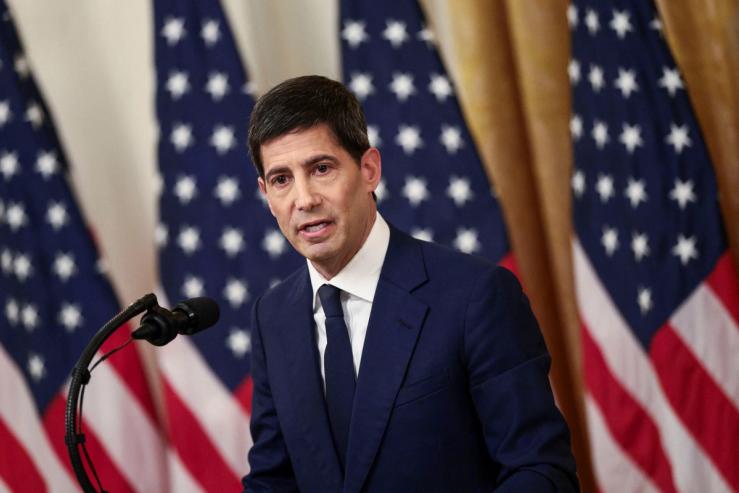
Hi, and welcome back. A lot happened while Rohan and I were on vacation, but the one thing still on my mind — freshly cleansed by Hudson Valley air — is Kevin Warsh’s speech in Jackson Hole.
The Fed chair argued the central bank should say less about what it’s thinking and where it’s heading, embracing the “constructive ambiguity” that Alan Greenspan trafficked in. (That’s Law 17, for fans of Robert Greene’s classic blueprint for wielding power: Cultivate an air of unpredictability.)
Warsh wants investors to “play the ball, not the referee” — to spend more time reading the economy and less time gaming out the Fed’s next move. The problem, Goldman’s chief economist noted, is that players who have only ever watched the ref don’t suddenly become great at the game. They just watch the ref worse and we get more volatility in the market.
Public companies ran this experiment before. A study of 96 firms that dropped earnings guidance between 2000 and 2006 found they suffered short-term stock hits but no real damage. A later study of 180 companies that suspended guidance when the pandemic hit in 2020 similarly found no lasting punishment. Investors either filled in the silence by giving more weight to analyst calls and alternative data sources, or simply grew comfortable with it. Warsh is betting on a bit of both for the Fed. Meanwhile US bond yields are rising as investors interpreted Warsh’s speech — “You can call it a trail map ... just don’t call it forward guidance,” he said, a bit futilely — as hawkish.
Companies that stopped issuing forecasts during the pandemic and never restarted weren’t a random sample. They were bad forecasters that constantly missed their own numbers, and Covid gave them an excuse to stop.
The Fed has been a bad forecaster for a while. Warsh is probably right that the “dot plot,” which tracks where Fed officials expect rates to go, is more trouble than it’s worth. It’s stopped anchoring expectations and become something to be wrong about, repeatedly.
The harder question is timing. Abandoning guidance in the middle of a crisis gets a pass that abandoning it on a clear day might not. The Fed’s current mess — sticky inflation, an AI capex boom overheating half the economy while the other half cools, a debt load that begs for lower rates — may be enough of a storm to justify pulling signals that markets have spent two decades depending on.

Notable
- Despite the Fed chair’s promise of a quieter Fed, one Deutsche Bank analyst said Warsh’s Jackson Hole speech “surprised us in its specificity about the economy and outlook and with its lean in a decidedly hawkish direction,” CNBC reported.
- Traders of fed funds futures now see a 66% chance of a quarter-point hike in September following Warsh’s speech, according to CME’s FedWatch tool.