



The Scoop
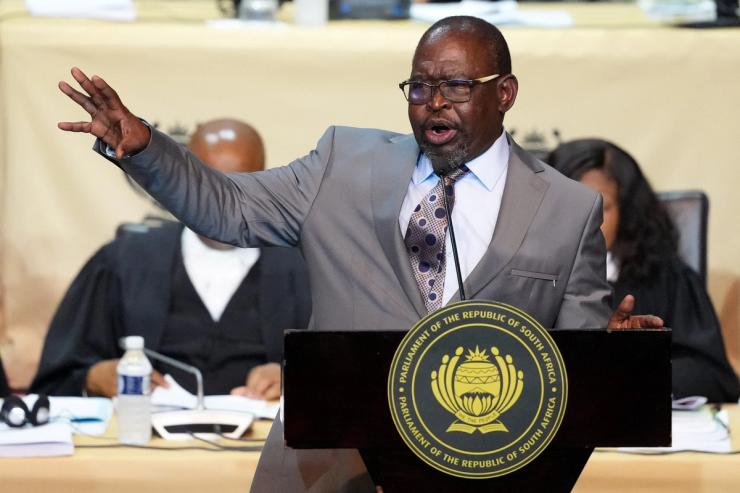
South Africa’s finance minister is weighing appointing political allies to chair Africa’s largest pension fund manager, two sources familiar with his thinking told Semafor, a move that would keep the state’s control over the $200 billion state-owned money manager.
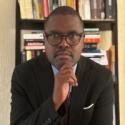
Enoch Godongwana is weighing either Zuku Godlimpi, deputy minister in the trade and industry department, or his counterpart in President Cyril Ramaphosa’s office, Seiso Mohai, to chair the Public Investment Corporation, the sources said. The PIC manages more than $200 billion in assets, primarily on behalf of civil servants, making it one of Africa’s most influential institutional investors.
Other board members being considered are Mike Brown, former CEO of South Africa’s top-4 lender Nedbank, and Phumzile Langeni, a former stockbroker who served on Ramaphosa’s team to attract private sector capital into the economy, the sources said.
The shakeup follows the resignation of board chair David Masondo, who is currently one of two deputy finance ministers, and several directors after a forensic audit by PwC flagged errors in a $34 million loan tied to Johannesburg’s Lanseria Airport. The report, which Semafor has seen, triggered a feud between Masondo and suspended CEO Patrick Dlamini, accelerating the board’s collapse.
Appointing a chair from outside the National Treasury departs from the convention of handing the PIC gavel automatically to the deputy minister and passes over the other deputy minister of finance, Ashor Sarupen of the coalition partner, the Democratic Alliance. Handing control of the state manager’s balance sheet to a coalition partner opposed to the ANC flagship Black Economic Empowerment policy in capital allocation would draw fierce opposition from the party and its supporters.

Know More
The finance ministry declined to address specific candidates, pointing to Godongwana’s statement that a new board will be appointed in consultation with the cabinet, adding that the PIC carries a “dual mandate of delivering commercial performance while safeguarding public interest.”
Godlimpi chairs the ANC’s sub-committee on economic transformation and aligns with efforts to direct pension assets toward state industrial policy. Mohai, a former provincial finance executive now in the planning ministry, offers administrative continuity.
The PIC governance crisis was triggered by a confidential audit from PwC into a loan deal for Lanseria Airport. The auditors found valuation errors that led to the PIC overpaying to settle a dispute over company shares. When Dlamini, the PIC CEO, ordered the investigation, a whistleblower accused him of launching it without board approval, leading to his suspension. Masondo used the PwC findings last month to refer the deal to the asset recovery unit of the police before stepping down.

Tiisetso’s view
South Africa’s Public Investment Corporation, custodian of $200 billion in civil servant pensions, is once again in the dock. A PwC audit detonated the board, suspended the CEO and forced Godongwana to hunt for a new chair. His short list – two ministers outside the National Treasury – breaks the convention of handing the gavel to the deputy finance minister.
Purists will cry foul. An independent inquiry into the PIC urged an independent, private sector chair to insulate the PIC from political meddling. Some will see Godongwana’s move as backsliding. But the harder truth is that state pension managers in emerging economies cannot operate in a vacuum.
The PIC is not CalPERS. It sits in a country throttled by crumbling infrastructure and anaemic growth. Pretending that $200 billion of domestic savings can be managed as a neutral portfolio, detached from policy, is fantasy. Malaysia’s EPF and Nigeria’s sovereign wealth authority face the same dilemma: either channel capital into roads, power plants and industrial committees or watch economies stagnate.
That does not excuse sloppy governance — the Lanseria fiasco shows the cost of weak controls. But it explains why Godongwana is resisting calls to parachute in a private sector heavyweight. For Pretoria, political alignment is the lever through which pension assets are mobilised for national priorities.
The PIC will never be a passive allocator of capital. It is, and will remain, a policy instrument. The challenge is to build guardrails that prevent abuse while recognizing that in emerging markets, pension funds are part of the development toolkit – not detached financial machines.

Room for Disagreement
The Democratic Alliance opposes political appointments to the board. Earlier this month, the DA proposed legislation seeking to ban political office bearers, and anyone who held political office in the preceding three years, from serving on the PIC board. It said the move will “depoliticize the PIC board and protect the pensions of South Africans.”
The OECD and the International Forum of Sovereign Wealth Funds mandate operational independence and insulation of national savings from short-term government fiscal or policy pressures.

Step Back
The PIC is an influential player in South African capital markets, holding minority stakes in blue- chip companies such as Anglo American, MTN Group and Absa, with Godowanga saying it is “systemically important”.
It holds over 10% of the total market capitalization of the Johannesburg Stock Exchange, and underwrites the bulk of Pretoria’s sovereign debt, meaning that any governance issues directly moves asset pricing across Africa’s deepest capital market.

Notable
- Nigeria’s Sovereign Investment Authority expanded its balance sheet to $3.4 billion in net assets for the 2025 financial year, signaling a shift in how West Africa’s largest economy uses sovereign capital to bridge domestic infrastructure deficits.