The UK’s new Prime Minister, Andy Burnham, wants to make British business great again. But businesses want to be where their customers and investors are, and with the UK’s wan economic growth and thinner capital markets, that’s increasingly elsewhere.
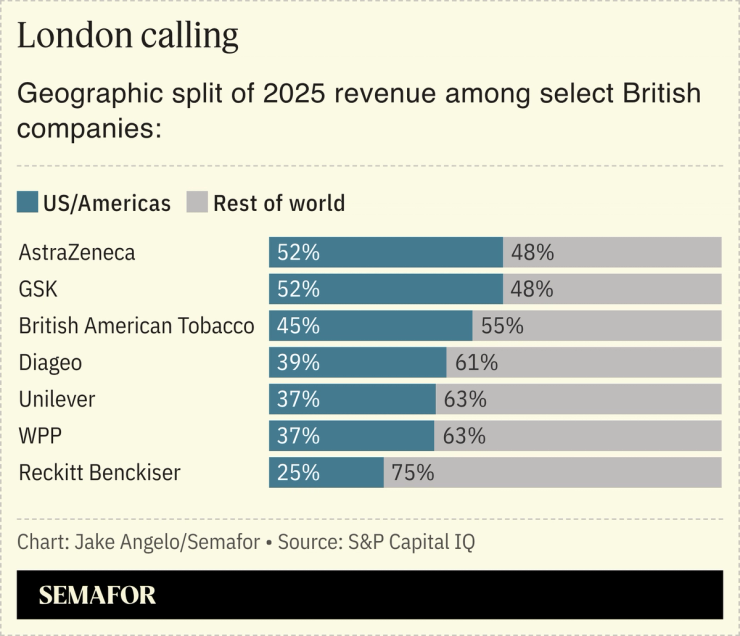
Many of Britain’s corporate crown jewels make more of their money in the US and fast-growing Asian markets than at home. Even consumer goods giant Reckitt Benckiser, with nearly 200-year-old roots in the UK, got two-thirds of its 2025 revenue from emerging markets and North America. Two British pharma giants, AstraZeneca and GSK, make more than half their money in North America, and their London-listed stocks trade at steep discounts to peers like Merck and Eli Lilly.
Downing Street has been pressuring top PE shops to keep their companies local, and the London Stock Exchange has rolled out sweeteners to coax companies to go public. But the problems start earlier: The UK has just three startups valued at $10 billion or more, versus 57 in the US, and the CEO of the biggest of them, Revolut, has blasted the UK’s tax and stock-market policies.
Burnham’s predecessors and his peers in Germany and France have similar ambitions, and their own headwinds to deal with. Good luck, Mr. Prime Minister.