




The News
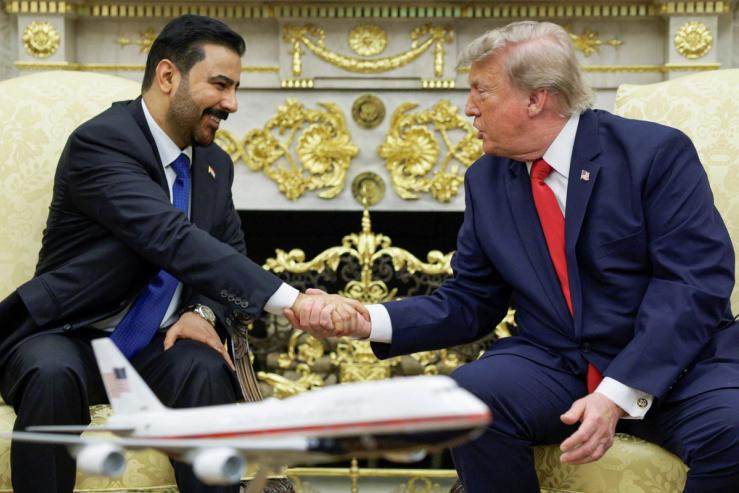
President Donald Trump extended a warm welcome this week to visiting Iraqi Prime Minister Ali al-Zaidi, the businessman-turned-politician central to the president’s effort to redefine the US-Iraq relationship around commerce rather than conflict.
Al-Zaidi will speak at a US Chamber of Commerce summit Friday with Energy Secretary Chris Wright, where organizers plan to announce $60 billion in commercial agreements between US companies and the Iraqi government and private businesses.
“That surpasses what we had hoped for in terms of the number of deals,” Steve Lutes, the Chamber’s vice president for Middle East Affairs, told Semafor.
Trump praised al-Zaidi, 41, in the Oval Office Tuesday, touting the “tremendous chemistry” between them.
“There are going to be a lot of deals,” Trump said, arguing Iraq has “tremendous potential because of their oil.”
Trump also suggested that the US no longer needs a military footprint in the country, saying the relationship should instead center on economic partnership.
Al-Zaidi’s visit parallels a trip by Saudi Crown Prince Mohammed bin Salman last November, when the White House announced hundreds of billions of dollars in private and public commitments by the two countries.
It’s a hallmark of Trump’s emerging Middle East strategy: using high-profile commercial diplomacy to deepen American influence in the region.
“We want US companies to understand that Iraq’s new prime minister is a businessman himself, and I think to an extent we’ve never seen before, he is prioritizing the commercial and economic pillar of our bilateral relationship,” Lutes said.
Energy will dominate the announced agreements Friday, which will span oil and gas, energy infrastructure, and power generation. Summit sponsors include GE Vernova, BP, Excelerate Energy, ExxonMobil, and Shell.
Additional deals are expected in information and communication technology, digital infrastructure, healthcare, and agriculture as Iraq seeks to build and diversify its economy, Lutes said.
“We’re seeing momentum and that open door like we’ve just never seen before,” Lutes said. “It’s incumbent on us as the US Chamber and US companies to rise to the invitation because if we don’t, certainly our global competition will.”
He described the moment “as a new day, a new era” for US-Iraq commercial ties.
In this article:

Know More
According to the summit agenda obtained by Semafor, Friday’s program is expected to include a “signing ceremony luncheon,” with remarks from Wright, before al-Zaidi “observe[s]” the announcement and signing of the agreements, MOUs, and partnership frameworks.
Still, Iraq presents a complicated test case for commerce-driven diplomacy. Despite Baghdad’s efforts to strengthen ties with Washington, Iraq maintains deep political, economic, and security ties with neighboring Iran. Tehran-backed militaries inside Iraq have repeatedly launched attacks against US forces and allies, including in the current conflict, and Iran wields significant influence within Iraq’s political system.
That contrast was on display last week, when the coffin of Iran’s former leader, Ayatollah Ali Khamenei, traveled to Iraq during his six-day funeral procession. Al-Zaidi himself attended the official reception.
Lutes acknowledged Iraq’s security challenges but argued they should not stand in the way of deeper commercial ties.
“The geopolitical challenges are difficult and take time to work through,” he said. “But there are opportunities for win-wins in the commercial lane.”
He said US companies understand the risks and are looking for long-term partnerships rather than quick, transactional deals.

Lauren’s view
Al-Zaidi has promised Trump he will ensure Iran-backed armed groups in Iraq have been disarmed by September, a deadline that will be extremely difficult to implement given the entrenched nature of the militias and their reluctance to give up their guns.
That makes the sequencing of Trump’s efforts striking: Washington is encouraging American companies to dramatically expand their presence in a country before its security environment has stabilized, and without any significant assurances of safety.