Nigeria faces the largest inflation shock among emerging markets this year, S&P said, citing higher energy and fertilizer prices triggered by the Iran war and El Niño.
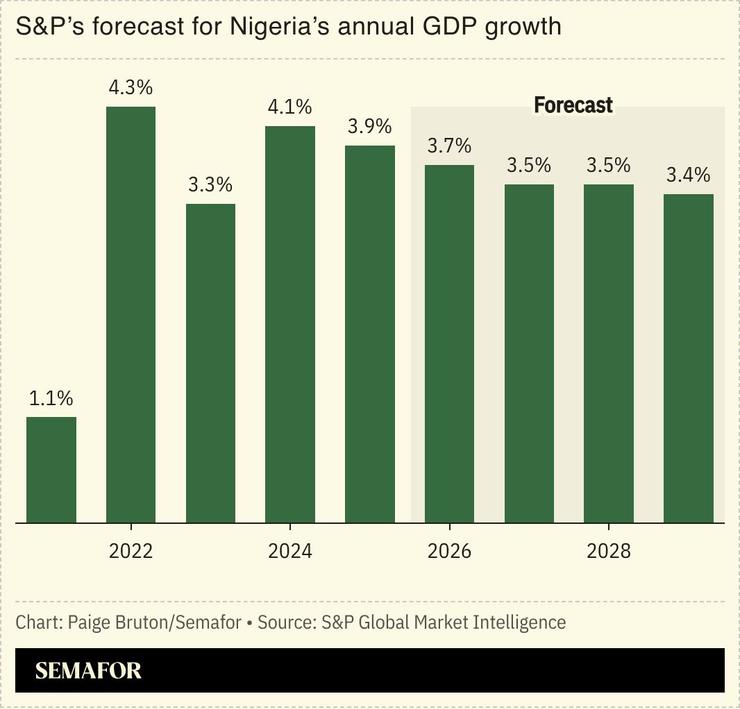
The ratings agency raised its forecast for Nigeria’s average inflation rate to 16.9% and trimmed GDP growth to 3.7%, citing a “stronger-than-expected passthrough from oil prices.” African economies have been hard hit by soaring oil prices sparked by the Iran war, and even as they have come down, costs at the petrol pump remain high.
S&P does not expect central banks in most emerging economies to “loosen monetary policy, and some may tighten policy,” including in South Africa, where the agency raised its average inflation forecast to 4.3% from 3.5% for 2026, and cut growth to 1.3%. South Africa already hiked its interest rate by 25 -basis points last month, as policymakers grappled with the global energy shock. Compounding the strains sparked by the Iran war and the Strait of Hormuz blockade is this year’s El Niño weather phenomenon, which experts warn could further squeeze African countries, especially soft commodity exporters.