




The Scoop
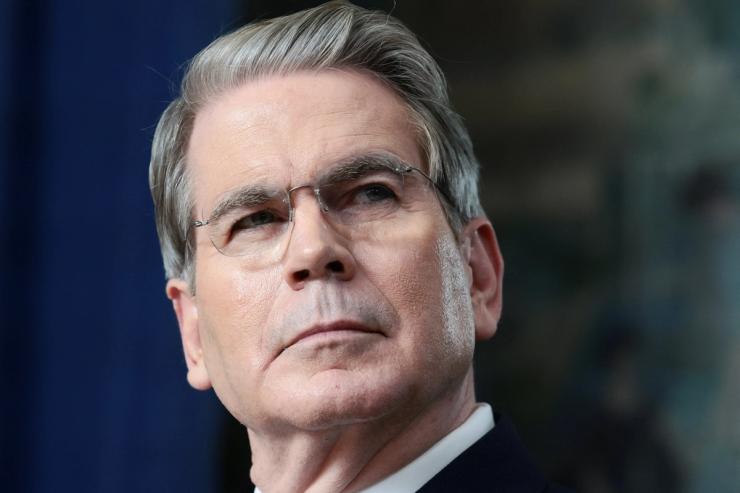
Treasury Secretary Scott Bessent pursued a more active role in artificial intelligence policy earlier this year after financial institutions warned advanced models could leave critical infrastructure vulnerable — including the Federal Reserve payment rails that enable them to send money back and forth, people familiar with the talks told Semafor.
Banks, whose leaders have long raised similar concerns, have been collaborating with the Treasury Department and Fed for years to develop other ways financial institutions could transfer funds in the event of a potentially disastrous outage. This spring, advanced models like Anthropic’s Mythos ramped up the pressure.
AI “is something that I think about every day at Treasury, because of AI, the financial system and our responsibility of guiding the American economy,” Bessent, who described himself as “one of the point people on our AI policy,” said at the Economic Club of New York this week.
“We think about the implications, and we are trying to optimize a very difficult calculus, in terms of innovation and safety, to get the proper equilibrium to make sure that we can maintain our lead” over China, Bessent added.
The former hedge fund manager huddled with the Fed’s then-chair, Jerome Powell, and the CEOs of systemically important banks in April to discuss the risks posed by Anthropic’s Mythos.
He’s spent the months since steering the Trump administration away from a hands-off approach, helping mold an executive order that established a voluntary review process for advanced models (and gave Treasury ownership of a new cyber clearinghouse).
The Fed referred a request for comment to Treasury. Treasury did not comment.
Anthropic is currently in talks with the Trump administration on how to bring Mythos — and its consumer equivalent, Fable — back online after the Commerce Department imposed export controls amid national security concerns. Those negotiations could delay implementation of the executive order.

Know More
Federally and state-chartered financial institutions with accounts at a Fed bank, known as master accounts, can use payment systems like Fedwire to send money instantly. Treasury itself uses the same method to transfer funds — as do a growing number of nonbanks, which banks have warned could also expose the systems to risk.
A handful of private-sector alternatives exist. But they don’t have the capacity for all transactions — meaning that if something like Fedwire goes offline, it could serve as a tripwire for the US economy.
Fedwire was used to make more than 54 million transfers totaling more than $283 trillion in the first quarter of 2026, according to Fedwire. That’s an average of 886,695 transfers a day averaging more than $5 million per transfer.

Notable
- The Trump administration asked OpenAI to limit the release of its new advanced AI model amid national security concerns, The Information reported.