


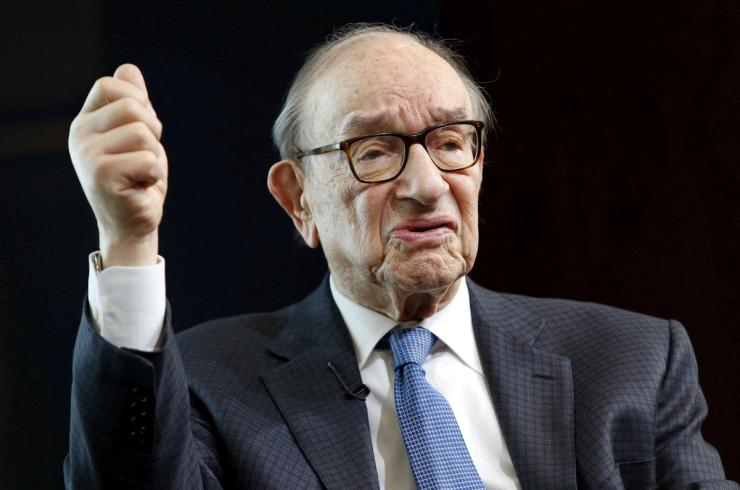
Alan Greenspan died Monday at 100 years old, and the obituaries have been kind. The former Fed chair lived long enough for his reputation to rebound from the 2008 crash, which was partly blamed on deregulation he encouraged. He’s being remembered as the Maestro of monetary policy.
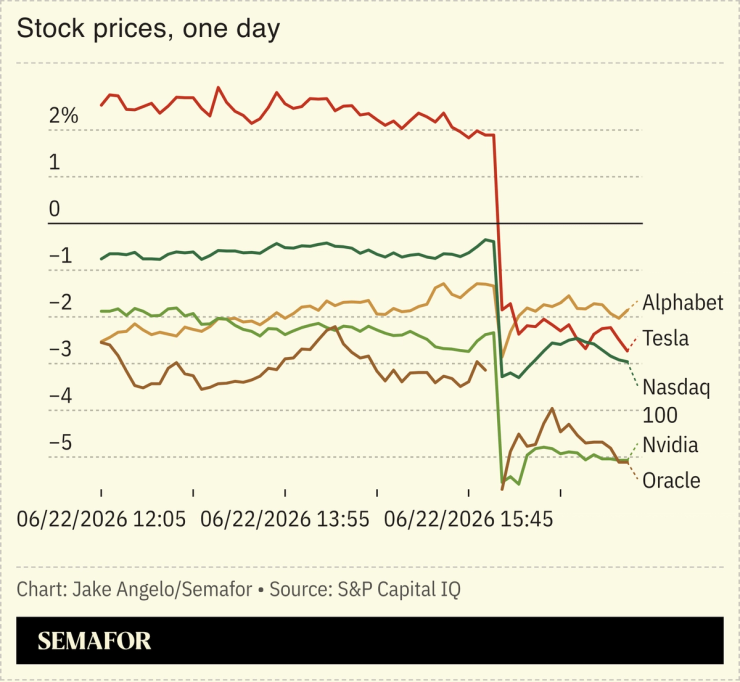
His less flattering legacy arrived on cue: Tech stocks are falling sharply as the market’s snooze button on AI spending fears times out again. Alphabet had its worst day in a year yesterday, and Nvidia, Oracle, and Tesla all opened sharply lower today — a slide that’s spilled over to South Korea’s electronics-heavy index. The question for permabulls and knife-catchers alike: Will the Fed bail them out?
The “Greenspan put” — the easy-money policies that time and again protected stockholders from their worst mistakes — may be tested in the months ahead. Starting after 1987’s Black Monday, markets came to believe that the Fed would cut rates whenever equity prices wobbled seriously enough, which made risk feel cheaper than it was. The policies were continued by Greenspan’s successors, breeding “a generation of investors that really never learned the price of being wrong,” as Citadel Securities President Jim Esposito told Semafor this spring.
Now Kevin Warsh runs the Fed, with the market pricing better than 60% odds of a rate hike by year-end and little to no chance of a cut. Whether investors have actually internalized that — or are still, somewhere, waiting for the Maestro’s ghost to ride to the rescue — is the question Greenspan leaves behind.